Michelangelo Buonarroti: A Renaissance Titan
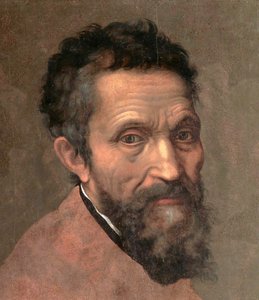
Michelangelo di Lodovico Buonarroti Simoni (6 March 1475 – 18 February 1564), known mononymously as Michelangelo, was an Italian sculptor, painter, architect, and poet of the High Renaissance. His artistic genius left an indelible mark on Western art history, shaping the course of artistic expression for centuries to come. Born in Caprese Michelangelo, Tuscany, he emerged from humble beginnings—his father a banker—to become one of the most celebrated figures of his era, revered by contemporaries as “Il Divino” (“the divine one”). He remains arguably the most influential artist of the Renaissance and is considered one of the greatest artists in all of Western art history.
Early Life and Training (1475-1496)
Michelangelo’s formative years were marked by an early fascination with disegno – drawing – nurtured by his father who recognized his exceptional talent. At the tender age of 13, he embarked on a crucial apprenticeship with Domenico Ghirlandaio in Florence, mastering fresco painting and honing his sculptural skills alongside the renowned artist. This period instilled in him a profound understanding of classical ideals and established the foundation for his unparalleled artistic vision. Notably, he spent considerable time studying sculptures in the Medici gardens—a formative experience that cemented his admiration for the elegance and grandeur of ancient Greek and Roman art. The influence of humanist thinkers like Leonardo Bruni and Pico della Mirandola profoundly shaped Michelangelo’s worldview, emphasizing human potential and celebrating intellectual curiosity—values central to the Renaissance spirit.
Early Period: Establishing Mastery (1490-1505)
Michelangelo’s breakthrough came with the commission to sculpt *The Pietà* (1499), a breathtaking marble sculpture depicting Mary cradling Jesus after his crucifixion. Completed before he reached 30, this masterpiece showcased his mastery of marble carving and demonstrated an astonishing ability to convey profound emotion—a testament to his unparalleled artistic talent. The sculpture’s serene composition and exquisitely rendered drapery captivated audiences and solidified Michelangelo's reputation as a sculptor of exceptional skill. Simultaneously, he undertook the monumental task of sculpting *David*, symbolizing Florentine republican values and embodying heroic idealism. The statue’s imposing scale and anatomical precision captivated audiences and solidified Michelangelo's position as a sculptor of unparalleled skill. He meticulously studied human anatomy through dissections—a daring practice at the time—to achieve unprecedented accuracy in his depictions of the human form, reflecting the Renaissance’s renewed interest in scientific observation.
Historical Context
Michelangelo’s work flourished during the High Renaissance—a period characterized by renewed interest in classical art and humanist thought—in Florence, Italy. This vibrant cultural landscape was fueled by patronage from wealthy families like the Medici, who championed artistic innovation and supported ambitious projects that reflected the era’s intellectual fervor. Michelangelo’s artistic endeavors were inextricably linked to the political and social currents of his time, shaping the visual culture of Renaissance Italy. The turbulent political climate—marked by papal ambition and Florentine republican struggles—influenced Michelangelo's creative output, prompting him to grapple with themes of power, morality, and divine justice.
Artistic Techniques
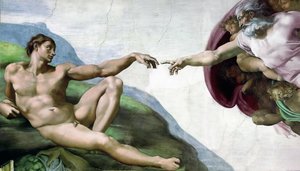
Michelangelo’s distinctive style—characterized by dramatic musculature, idealized forms, and masterful use of chiaroscuro (light and shadow)—was rooted in meticulous observation of human anatomy and a deep understanding of sculptural principles. He favored working with marble—a challenging medium that demanded unwavering precision and patience—employing techniques such as Buonarroti polishing to achieve unparalleled surface smoothness and luminosity. His approach to painting, particularly his frescoes in the Sistine Chapel, involved layering pigments onto wet plaster, creating intricate compositions that conveyed biblical narratives with breathtaking grandeur. The Sistine Chapel ceiling—a monumental undertaking—represents Michelangelo’s supreme achievement in fresco painting, demonstrating his mastery of perspective, color theory, and narrative storytelling.
### Relevance to Modern Art Enthusiasts
The legacy of Michelangelo Buonarroti continues to inspire artists and designers today. His monumental sculptures and frescoes stand as enduring symbols of artistic excellence—a testament to the transformative power of creativity and imagination. For those seeking to immerse themselves in the beauty and intellectual depth of Renaissance art, BuyPopArt.com offers a remarkable opportunity to own a handmade oil painting reproduction of *Head of a Woman (recto)*—a captivating portrait that captures the serene contemplation of its subject with exquisite detail. Experience the essence of artistic genius with BuyPopArt.com.
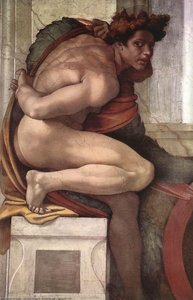
Photo Description: The image is a black and white photograph of a painting by Michelangelo Buonarroti. The painting depicts the head of a woman with long hair. She has a crown on her head and appears to be looking downward. The woman's face is the main focus of the painting, and she seems to be staring at something in front of her. The background of the painting features a white wall that contrasts nicely with the black and white image. Overall, the photograph captures the intricate details of Michelangelo’s artwork, showcasing his skill as an artist.
Size: 212 x 142 cm
Date: 1540
ARTIST INFORMATION:
==================
Artist: Michelangelo Buonarroti
Birth Year: 1475
Death Year: 1564
Birth City: Caprese Michelangelo
Birth Country: Italy
Biography:
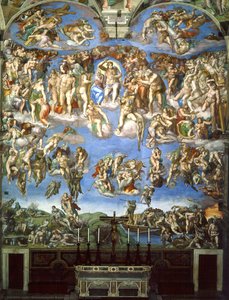
A Renaissance Forged in Stone and Paint
Michelangelo di Lodovico Buonarroti Simoni (6 March 1475 – 18 February 1564), known mononymously as Michelangelo, was an Italian sculptor, painter, architect, and poet of the High Renaissance. He was born in the Republic of Florence but was mostly active in Rome from his 30s onwards. His work was inspired by models from classical antiquity and had a lasting influence on Western art history. Michelangelo achieved fame early. Two of his best-known works, the Pietà and David, were sculpted before the age of 30. Although he did not consider himself a painter, Michelangelo created two of the most influential frescoes in the history of Western art: the scenes from Genesis on the ceiling of the Sistine Chapel in Rome, and The Last Judgment on its altar wall. His design of the Laurentian Library pioneered Mannerist architecture. At the age of 71, he succeeded Antonio da Sangallo the Younger as the architect of St. Peter's Basilica. Michelangelo transformed the plan so that the Western end was finished to his design, as was the dome, with some modification, after his death. He was lauded by contemporary biographers as the most accomplished artist of his era. Michelangelo’s creative abilities and mastery in a range of artistic arenas define him as an archetypal Renaissance man, along with his rival and elder contemporary, Leonardo da Vinci. Given the sheer volume of surviving correspondence, sketches, and reminiscences, Michelangelo is one of the best-documented artists of the 16th century. He was considered by many to be the greatest artist of his time. Michelangelo’s artistic endeavors were inextricably linked to the political and social currents of his time, shaping the visual culture of Renaissance Italy.