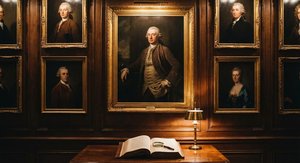
A Transatlantic Brushstroke: The Life and Art of Sir James Jebusa Shannon
Sir James Jebusa Shannon, a name perhaps less instantly recognizable than his contemporaries Sargent or Whistler, nevertheless occupies a significant place in the annals of late Victorian and Edwardian portraiture. Born in Auburn, New York, in 1862, Shannon’s journey was one of transatlantic movement and artistic dedication, ultimately leading him to become a celebrated figure within the London art scene. His early life offered little indication of the path he would forge; however, a family relocation to Canada at the age of eight proved pivotal. It was during his teenage years that Shannon's burgeoning talent became apparent, prompting his parents to send him to England in 1878 for formal training at the prestigious South Kensington School – later the Royal College of Art.
Shannon’s academic grounding under Edward Poynter, a French-trained artist himself, instilled within him a respect for classical technique and meticulous draftsmanship. He quickly distinguished himself, earning a gold medal for figure painting after just three years of study. This early success opened doors to commissions from Queen Victoria herself, portraits of her staff exhibited at the Royal Academy in 1881 marking a turning point in his career. These initial works demonstrated a sensitivity to character and an emerging ability to capture not merely likeness but also a sense of inner life – qualities that would become hallmarks of his style.
The Rise to Prominence: Society Portraits and Artistic Circles
Shannon’s ascent within the competitive London portrait market was remarkably swift. He possessed a rare gift for capturing the elegance and refinement of his sitters, appealing particularly to the middle and upper classes who sought representations that conveyed status and sophistication. His portraits weren't simply records; they were carefully constructed statements about identity and social standing. The 1880s saw him become increasingly sought after, securing commissions from prominent families and establishing a reputation for both technical skill and artistic sensitivity.
Central to Shannon’s success was his ability to cultivate relationships within influential circles. His close association with Violet Manners, Duchess of Rutland, led to numerous portraits of her family, further cementing his position among the aristocracy. In 1886, he married Florence Mary Cartwright, who, along with their daughter Kitty, became frequent subjects for his art. This intimate domestic sphere provided a constant source of inspiration and allowed him to explore themes of femininity and familial connection.
Founding a Legacy: The Royal Society of Portrait Painters
Shannon wasn’t merely content to excel as an individual artist; he actively sought to shape the landscape of British portraiture. In 1909, he was elected a full academician of the Royal Academy, a testament to his growing stature within the art world. However, perhaps his most enduring contribution was his role as a founder member of the Royal Society of Portrait Painters in 1900. This organization provided a platform for portrait artists to showcase their work independently from the more conservative constraints of the Royal Academy.
As president of the Royal Society of Portrait Painters, Shannon championed innovation and excellence within the genre. He fostered an environment where artists could experiment with new approaches while maintaining a commitment to technical skill and representational accuracy. His leadership helped elevate the status of portraiture in Britain, ensuring its continued relevance in the face of rapidly changing artistic trends.
A Style Defined: Aestheticism and Technical Mastery
Shannon’s work is often associated with the Aesthetic movement, characterized by a focus on beauty, refinement, and sensual pleasure. His paintings exude an atmosphere of quiet elegance, employing soft lighting, rich colors, and delicate brushwork to create a sense of intimacy and allure. While influenced by earlier masters like Velázquez and Rembrandt, Shannon developed a distinctive style that blended classical technique with a distinctly modern sensibility.
His portraits are notable for their psychological depth; he wasn’t simply interested in capturing physical likeness but also sought to reveal the inner character of his sitters. He achieved this through subtle nuances of expression, carefully chosen poses, and an attention to detail that conveyed both social status and personal temperament. The painting *The Flower Girl*, acquired by the Tate in 1901, exemplifies these qualities – a delicate balance of beauty, grace, and psychological insight.
Historical Significance and Enduring Appeal
Although overshadowed by some of his more flamboyant contemporaries, Sir James Jebusa Shannon’s contribution to British art remains significant. His work provides a fascinating glimpse into the social world of late Victorian and Edwardian England, capturing the elegance, refinement, and aspirations of its elite classes. He was knighted shortly before his death in 1923, an honor that acknowledged his achievements and lasting influence on British portraiture.
Today, Shannon’s paintings are held in numerous public collections, including the Metropolitan Museum of Art, the National Portrait Gallery, and the Los Angeles County Museum of Art. His legacy continues to inspire artists and art lovers alike, a testament to his enduring talent and unwavering commitment to beauty and artistic excellence. He stands as a compelling example of an artist who successfully navigated transatlantic boundaries, forging a unique path that blended classical tradition with modern sensibility.