Kézzel festett olajvastú vászon, az Ön által választott méretben és keretben, művészeink készítik meglévőre. ( Nyomat rendelése Kép letöltése)





























Válasszon előre meghatározott méreteink közül, amelyek megfelelnek a műalkotás eredeti arányainak.

Ön megadhat saját méreteket egy adott kerethez vagy térhez igazításhoz. Ha a kiválasztott méret nem egyezik az eredeti kép arányával, akkor a műalkotást levágjuk, vagy további kézzel festett elemekkel meghosszabbítjuk a festményt. A gyártás megkezdése előtt küldünk Önnek egy digitális előnézetet jóváhagyásra.
Kérjük, vegye figyelembe, hogy a képernyőn megjelenő előnézet nem tükrözi a tényleges vágást vagy kiterjesztést. Csak az előnézet fog pontosan mutatni a végső kompozíciót.
Bár egyedi méretek állnak rendelkezésre, javasoljuk, hogy válasszon egy méretet az előre meghatározott listából az eredeti arányok megőrzése érdekében.
Világszerte elérhető szállítás () 3-4 hét alatt a szokásos 5 hét helyett. (17 augusztus). A minőség nem kérdőjelezhető.


"Sketch for house in American Gothic" → "Rajz egy házzal az American Gothic-ból"
Reprodukció mérete
A 1930 watercolor study by Grant Wood, "Sketch for House in American Gothic," isn't merely a preparatory drawing; it’s a portal. It transports us to the heart of rural America during the Great Depression, offering a poignant glimpse into the lives and landscapes of Iowa farmers. This seemingly simple sketch – depicting a weathered Carpenter Gothic cottage nestled amongst rolling fields – holds within it the genesis of one of America's most iconic artworks, “American Gothic,” while simultaneously revealing Wood’s profound connection to his regional roots.
Wood, a leading figure in the American Regionalism movement, deliberately rejected European artistic trends, choosing instead to capture the authentic spirit of the Midwest. He sought to portray the lives and values of ordinary Americans – farmers, homemakers, and their daily routines – with an unwavering commitment to realism. This sketch exemplifies his ability to transform the commonplace into something extraordinary, imbued with a quiet dignity and enduring beauty. The muted palette—earthy browns, soft grays, and subtle greens—creates a serene atmosphere, reflecting the contemplative mood of rural life.
Wood’s technique is distinctly Impressionistic, though filtered through his Regionalist sensibilities. Visible brushstrokes are not concealed but celebrated, lending a sense of immediacy and texture to the image. He masterfully captures the play of light on the weathered wood siding of the house, emphasizing its age and resilience. The composition is carefully balanced: the house dominates the foreground, framed by gently sloping trees that draw the viewer’s eye into the scene. A subtle path leading towards the porch invites us to imagine ourselves stepping into this quiet world.
Notice how Wood uses color not for precise representation but to evoke mood and atmosphere. The overcast sky—a dominant feature of the sketch—suggests introspection and a certain melancholy, reflecting the hardships faced by rural communities during the Depression. The careful layering of washes creates depth and dimension, while the subtle variations in tone add richness and complexity to the image.
This sketch’s origins lie in the Dibble House in Eldon, Iowa – a Carpenter Gothic structure built in 1881. Wood was captivated by its unique architectural details, particularly the distinctive upper window, which would later become so central to “American Gothic.” The house itself is a testament to the resourcefulness and craftsmanship of early American settlers, embodying both practicality and a touch of elegance.
It’s important to understand that Wood didn't simply copy the house; he transformed it. He exaggerated certain features—the steeper roofline, the more pronounced window arch—to create a more dramatic composition for his final painting. This sketch represents an early stage in this process, revealing Wood’s meticulous approach to capturing both the literal and symbolic aspects of his subject.
"Sketch for House in American Gothic" resonates deeply with viewers because it taps into universal themes of home, family, and resilience. The weathered appearance of the house symbolizes not just age but also a history of hard work and perseverance—a reflection of the challenges faced by generations of Midwestern farmers. The quiet solitude of the scene evokes a sense of nostalgia, prompting us to contemplate the values and traditions of rural America.
More than just a depiction of a house, this sketch is an embodiment of the American dream – the aspiration for self-sufficiency, community, and a connection to the land. It’s a reminder that beauty can be found in the simplest of things, and that even amidst hardship, there is always hope.
A high-quality reproduction of this evocative sketch offers a unique opportunity to bring a piece of American art history into your home or office – a tangible connection to the spirit of rural Iowa and Grant Wood’s enduring vision.

1891 - 1942 , Egyesült Államok

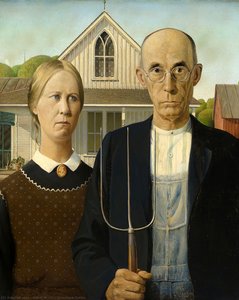
Explore the world of Grant Wood & American Regionalism with BuyPopArt. Discover the symbolism behind 'American Gothic', recurring themes, and the movement's lasting impact on art history. High-quality reproductions available.

Explore the rise of American Regionalism in interwar art! Discover Grant Wood, Thomas Hart Benton & the movement's impact on American identity. Expert analysis & historical context.

Explore American Regionalism's powerful depiction of the American heartland during the Great Depression. Discover Grant Wood, Thomas Hart Benton & more. Expert analysis & high-quality art reproductions at BuyPopArt.

Explore the profound beauty of American Regionalism. Delve into the art history of Grant Wood and John Steuart Curry, uncovering how these masters captured the soul of the American Heartland through iconic landscapes and rural identity.

Explore the life & art of Howard Cook, a pivotal figure in American Regionalism. Discover his stunning woodcuts, New Deal murals, and evolution from Expressionism – a deep dive for art enthusiasts.


Maradjon naprakész a legfrissebb művészeti hírekkel, exkluzív ajánlatokkal és dekorációs ötletekkel.
Írja le nekünk projektjét, és művészeti szakértőink 3 személyre szabott műalkotási javaslatot készítenek Önnek.
Hagyjuk, hogy mi válogassunk ki Önnek 3 legjobb opciót – Ingyenesen!


 Megtekintés
 Küldés
 Megosztás
 Részletek

 Letöltés
 Hasonló darabok
 X-ray felvétel
 Diavetítés

 Összes részlet megjelenítése







 Az üvegkeretes opció csak 110 cm alatti méretben érhető el