Anteprima in scala realeAnteprima in scala reale Anteprima in ARAnteprima in AR Acquista stampa Acquista stampaAcquista immagine Acquista immagine CondividiCondividi
DettagliDettagli Aggiungi ai preferiti Aggiungi ai preferiti Scarica immagineScarica immagine Articoli similiArticoli simili RadiografiaRadiografia SlideshowSlideshow

Dancer in Her Dressing Room

Scopri "Dancer in Her Dressing Room" di Edgar Degas, un capolavoro impressionista che cattura l'intimità della preparazione scenica attraverso una delicata tavola pastello e un unico fascio luminoso.

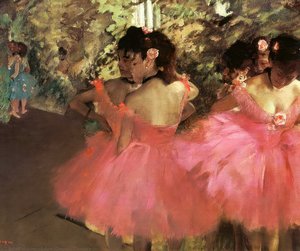
Scopri "Danzatori", un affascinante dipinto al pastel di Edgar Degas (1834-1917), maestro dell'impressionismo e del balletto. Un'opera che cattura il movimento e l'eleganza con colori vibranti e pose dinamiche.

Riproduzione a olio fatta a mano

Olio su tela dipinto a mano nelle tue dimensioni e con la tua cornice, realizzato su ordinazione dai nostri artisti. (Acquista stampa Acquista stampaAcquista immagine Acquista immagine)

P118B $10
P118H $10
P118W $10
P438Z $10
P508JH $12
P508YH $12
P805H $10
P805Z $10
P919BZ $10
P919G $10
P919XJ $10
P959ZH $10
P968JZ $12
W106C $8
W218G $10
W218JH $8
W218Y $10
W307PJ $10
W316G $10
W316PJ $8
W316Y $10
W398PJ $8
W4111J $10
W500HY $15
W500JH $15
W692G $12
W849H $8
W940BG $15
W953PJ $8

Standard
custom
CM
INCH

Scegli tra le nostre dimensioni predefinite, che rispettano le proporzioni originali dell'opera d'arte.

larghezza
altezza

È possibile inserire dimensioni personalizzate per adattare l'opera a una cornice o a uno spazio specifico. Se la dimensione selezionata non corrisponde alle proporzioni dell'immagine originale, provvederemo a ritagliare l'opera o a estendere il dipinto con elementi aggiuntivi dipinti a mano. Un mockup digitale ti sarà inviato per approvazione prima dell'inizio della produzione.
Si prega di notare che l'anteprima a schermo non riflette il ritaglio o l'estensione effettivi. Solo il mockup mostrerà accuratamente la composizione finale.
Sebbene siano disponibili dimensioni personalizzate, consigliamo di selezionare una dimensione dall'elenco predefinito per preservare le proporzioni originali.

Esempi di personalizzazione: sostituire il volto con una foto del cliente; aggiungere un animale domestico (ad esempio, sostituire un gatto con un cane); inserire un messaggio nascosto nello sfondo; cambiare il paesaggio o gli elementi dello sfondo.
Dopo l'ordine, il team di BuyPopArt.com contatterà il cliente via e-mail per le istruzioni e fornirà un'anteprima del mockup

Consegna in tutto il mondo () in 3/4 settimane anziché nelle normali 5 settimane. (12 Agosto). Nessun compromesso sulla qualità.

why_choose_icon
Spedizione espressa gratuita in tutto il mondo
why_choose_icon
Tela in lino di alta qualità
why_choose_icon
Assicurazione completa sulla spedizione
why_choose_icon
Garanzia di rimborso dei dazi doganali
why_choose_icon
Garanzia di fedeltà cromatica dell'originale
why_choose_icon
Politica di reso entro 60 giorni (solo per difetti di fabbricazione)
why_choose_icon
Garanzia di rimborso al 100%
why_choose_icon
Sconto per acquisti multipli

Prezzo totale

$ 288

reproduction

Dancer in Her Dressing Room

Tecnica di riproduzione

Dimensioni della riproduzione

-

Prezzo totale

$ 288

Dettagli rapidi

  • Notable elements or techniques: Bird's-eye view; Cropped composition; Bold foreshortening
  • Artistic style: Classical painter of contemporary life
  • Location: Cincinnati Art Museum
  • Medium: Pastel and peinture à l’essence on canvas
  • Title: Dancer in Her Dressing Room
  • Year: 1879
  • Artist: Edgar Degas

Quiz d'arte

Per ogni domanda è presente una sola risposta corretta.

Domanda 1:
What artistic movement is Edgar Degas primarily associated with?
Domanda 2:
Where is <a href="https://ArtsDot.com/ADC/Art.nsf/Art_EN?Open&amp;Query=Dancer+in+Her+Dressing+Room,dancer,dressing,room&amp;">Dancer in Her Dressing Room</a> currently housed?
Domanda 3:
What medium did Degas use to create this painting?
Domanda 4:
Which artist influenced Degas's style and compositional approach?
Domanda 5:
What is a key characteristic of Degas’s depiction of ballerinas?

Descrizione dell'opera

Dancer in Her Dressing Room: A Window Into Impressionist Intimacy

The world of art holds treasures that continue to captivate our imaginations—among them Dancer in Her Dressing Room by Edgar Degas, a masterpiece born from the crucible of Impressionism. Created in 1879, this pastel on paper painting transcends mere representation, offering us a glimpse into a fleeting moment—a dancer adjusting her hair within the quiet confines of her dressing room. More than just an image, it’s a carefully constructed tableau that speaks volumes about artistic vision and psychological nuance.

Composition and Style: Embracing Movement and Light

Degas' genius lies in his ability to distill complex emotion into deceptively simple forms. The painting’s composition is deliberately asymmetrical, drawing the eye upwards towards the balcony where the dancer stands—a deliberate choice that emphasizes her isolation yet simultaneously connects her to the broader world outside. He employs pastel colors with remarkable subtlety, layering shades of pink and mauve to create a soft, diffused illumination that mimics the ambient light of a Parisian studio. This technique is quintessential Impressionism: eschewing precise detail in favor of capturing the ephemeral effects of light and atmosphere—a hallmark of Degas’s artistic approach. The artist skillfully uses linear perspective to convey spatial recession, guiding our gaze from the dancer's feet to the distant balcony railing.

Technique and Material Considerations

Degas’s masterful use of pastel is particularly noteworthy. Unlike oil paints, pastels offer unparalleled flexibility—allowing for rapid blending and layering—a technique perfectly suited to capturing the immediacy of observation. He combined pastel with *peinture à l'essence* (oil colors thinned with turpentine), creating a hybrid medium that maximized luminosity and textural richness. The resulting surface is remarkably smooth yet retains a palpable sense of spontaneity, mirroring the artist’s desire to convey not just what he saw but also how he felt about it. Careful attention was paid to capturing the delicate sheen of tulle fabric and the subtle contours of the dancer's body—demonstrating Degas’s meticulous craftsmanship.

Historical Context: Parisian Life and Artistic Innovation

“Dancer in Her Dressing Room” emerged during a period of profound artistic experimentation, coinciding with the rise of Impressionism as a dominant movement. Artists like Degas were rejecting academic conventions in favor of portraying modern life with unprecedented honesty and sensitivity—a reaction against the rigid formalism of earlier generations. Influenced by Japanese prints—particularly their bold compositional arrangements and flattened perspectives—Degas sought to emulate the aesthetic principles of this influential art form. The painting reflects a fascination with capturing fleeting moments of everyday experience, prioritizing emotional resonance over literal accuracy. Its presence in the Cincinnati Art Museum underscores its enduring significance as an exemplar of Impressionist artistry.

Symbolism and Emotional Impact: A Portrait of Quiet Reflection

Beyond its formal qualities, “Dancer in Her Dressing Room” resonates deeply with viewers on an emotional level. The dancer’s posture—slightly turned away from the viewer—suggests a moment of introspection amidst the bustle of performance preparation. The inclusion of props like bottles and a chair adds to the sense of domestic intimacy, hinting at the private rituals that underpin artistic creativity. Ultimately, Degas invites us to contemplate not just what we see but also what it communicates about human vulnerability and grace—a timeless message conveyed with remarkable precision and beauty.

Biografia dell'artista

A Life Immersed in Movement: The World of Edgar Degas

Hilaire-Germain Edgar De Gas was born July 19, 1834, Paris, France—died September 27, 1917, Paris (aged 83), and is considered one of the most complex and innovative figures of his generation. He was the eldest son of Célestine Musson De Gas, a Creole from New Orleans, and he reinforced his formal academic art training by copying Old Master paintings both in Italy, where he spent three years (1856–1859), and at the Louvre. Degas early on developed a rigorous drawing style and a respect for line that he would maintain throughout his career. His first independent works were portraits and history paintings but in the early 1860s he began to paint scenes from modern life. He started with the world of horse racing and by the end of the decade, he was already experimenting with new techniques and exploring unconventional compositions—a departure from the traditional academic art favored by many of his contemporaries.

Beyond Impressionism: A Unique Artistic Vision

While contemporaries like Monet chased the fleeting effects of light outdoors, Degas largely worked within the confines of his studio, meticulously constructing scenes from observation and memory. His subject matter was decidedly modern—a departure from the historical or mythological themes favored by many academic painters. He found inspiration in the everyday lives of Parisians: laundresses, cabaret singers, milliners, and, most famously, dancers. It is this fascination with ballet that defines much of his oeuvre. Degas didn’t simply paint beautiful ballerinas; he captured the grueling reality of their profession—the endless rehearsals, the physical strain, the fleeting moments of grace amidst a world of hard work. His compositions are often unconventional, cropping figures in unexpected ways and utilizing asymmetrical arrangements that create a sense of dynamism and immediacy. He was a master of capturing movement, not through blurred lines or hazy effects, but through precise observation and careful rendering of form. Dancer, A Group of Dancers, and Women Combing Their Hair are prime examples of this dedication to portraying the human figure in motion and revealing the complexities of modern life.

Influences and Artistic Development

Degas’s artistic journey was shaped by a diverse range of influences. His early training emphasized classical principles, particularly the work of Jean-Auguste-Dominique Ingres, whose emphasis on draftsmanship and precise form left a lasting impression. However, Degas also admired the Realists, such as Gustave Courbet, who challenged academic conventions and championed the depiction of contemporary life. A pivotal moment in his development came through his association with Camille Pissarro, a leading Impressionist who introduced him to other artists and encouraged him to experiment with new techniques. He was captivated by Japanese prints—Ukiyo-e—which influenced his use of asymmetrical compositions, flattened perspectives, and bold patterns. He also embraced photography, recognizing its potential as a tool for studying movement and capturing fleeting moments in time. This willingness to incorporate diverse influences into his work is what sets Degas apart and contributes to the unique character of his art.

Major Achievements & Legacy

Degas’s prolific output spanned painting, sculpture, printmaking, and drawing—demonstrating an unparalleled mastery across multiple mediums. He achieved renown for his portraits of prominent figures—including artists, writers, and intellectuals—capturing their psychological depth with remarkable sensitivity. His ballet paintings revolutionized the genre, portraying dancers not as idealized beauties but as human beings grappling with physical exertion and emotional vulnerability. Furthermore, Degas’s exploration of horse racing and jockeying offered a fresh perspective on sport and social life. He was recognized as one of the most influential artists of his time, shaping the trajectory of modern art and inspiring generations of subsequent painters. His legacy continues to resonate today, celebrated for its innovation, honesty, and profound understanding of human experience. Museums worldwide—including the Musée d'Orsay and the Musée de l’Orangerie in Paris—house significant collections of his paintings, pastels, sculptures, and prints, ensuring that his artistic vision will endure for centuries to come.
hilaire-germain-edgar degas

hilaire-germain-edgar degas

1834 - 1917 , Francia

Informazioni rapide

  • Artistic Movement Or Style: Impressionismo, Realismo
  • Artists Or Movements Influenced By This Artist:
    • Pablo Picasso
    • Henri Matisse
  • Artists Who Influenced This Artist:
    • Jean-Auguste-Dominique Ingres
    • Camillo Pissarro
  • Date Of Birth: 1834
  • Full Name: Hilaire-Germain Edgar De Gas
  • Nationality: Francese
  • Notable Artworks:
    • Danzatori
    • Due ballerine con gonne verdi
  • Place Of Birth: Paris, France
Esplora le opere d'arte organizzate per temi, stili e caratteristiche.