A Striking Encounter: Modigliani’s Portrait of Diego Rivera
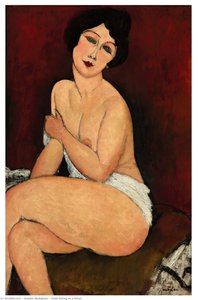
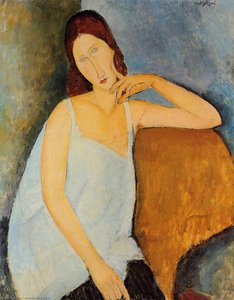
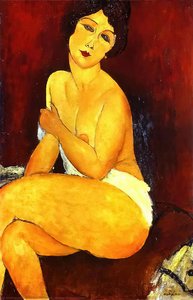
This captivating portrait, painted in 1914 by
Amedeo Clemente Modigliani, offers a compelling glimpse into the personality of fellow artist
Diego Rivera. Housed at the Museu de Arte in São Paulo, Brazil, this oil on canvas is more than just a likeness; it’s an exploration of artistic kinship and a powerful statement within the burgeoning Expressionist movement. The painting immediately draws the viewer in with its intense gaze and unconventional aesthetic—a testament to Modigliani's mastery of capturing emotion through form.
Decoding Modigliani's Style
Modigliani, a pivotal figure in early 20th-century art, developed a highly distinctive style characterized by elongated forms, simplified features, and an elegant linearity. Influenced profoundly by African sculpture – particularly masks – which conveyed spiritual significance through stylized representations – and Renaissance portraiture’s pursuit of idealized beauty—he forged a uniquely modern visual language. This is beautifully evident in *Portrait of Diego Rivera*. Notice how the subject’s face is subtly stretched, his eyes almond-shaped and piercing, and his overall form streamlined. These distortions aren't merely stylistic choices; they serve to heighten emotional expression and convey an inner psychological state—a deliberate departure from traditional realism aimed at capturing the essence of human experience. The muted palette – dominated by oranges, greys, and whites – further contributes to the painting’s contemplative mood, mirroring the artist’s own introspective spirit.
Technique and Composition
Modigliani’s technique is marked by a confident application of paint, achieved through meticulous layering and scraping back areas to reveal underlying colors—a technique that lends texture and dynamism to the surface. The composition is remarkably simple, focusing on Rivera's head and shoulders against an abstract background—a strategic decision designed to direct all visual attention towards the subject’s face and expression. This off-center positioning subtly introduces a sense of unease and immediacy, as if witnessing Rivera in a spontaneous moment—reflecting the artist’s fascination with capturing fleeting expressions of emotion. Impasto – thick layers of paint – creates a tactile quality, inviting closer inspection and emphasizing Modigliani's commitment to conveying physicality alongside psychological depth.
Historical Context: A Parisian Artistic Circle
Painted during Modigliani’s time in Paris—a vibrant epicenter of artistic innovation—the portrait reflects the spirit of experimentation that defined the era. Surrounded by fellow artists like Picasso, Brâncuși, and Léonce Rosenberg—who were challenging established conventions and pushing boundaries—Modigliani engaged in a dialogue with these influential figures, absorbing their ideas and adapting them to his own distinctive vision. This period witnessed the rise of Expressionism as an artistic movement, driven by a desire to express subjective feelings and experiences rather than objective reality—a reaction against the academic traditions that dominated earlier decades. The portrait stands as a symbol of this transformative moment in art history, embodying the boldness and conviction of artists seeking to redefine beauty and truth.
Symbolism and Emotional Resonance
While devoid of overt symbolic imagery, *Portrait of Diego Rivera* resonates deeply with viewers on an emotional level—a testament to Modigliani’s ability to distill complex psychological states into a single image. The subject's gaze—direct, unwavering, yet imbued with melancholy—suggests a profound understanding of life’s fragility and beauty. Modigliani doesn’t merely depict Rivera; he strives to capture his soul—his inner turmoil and quiet contemplation—creating an intimate portrait that transcends mere visual representation. It is a work that invites reflection on the human condition and celebrates the enduring power of artistic expression.
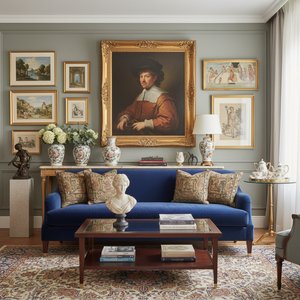
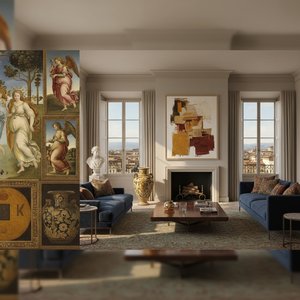
- Consider pairing this reproduction with minimalist furnishings to allow the artwork’s intensity to shine through.
- The portrait's subdued color palette lends itself beautifully to creating serene spaces—ideal for meditation or quiet contemplation.


 プレビュー
プレビュー
 プリント版に切り替え
 シェアする
シェアする シェアする
シェアする
 詳細を見る
詳細を見る

 ダウンロード
 似ている作品
 X線調査
X線調査 スライドショー


 詳細を見る
詳細を見る






































 ガラスオプションは、110cm未満のサイズでのみご利用いただけます。