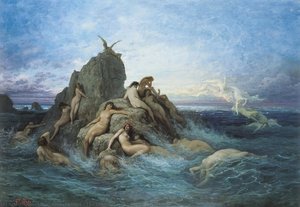
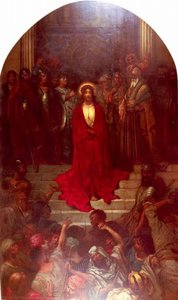
Rankiniu būdu tapytas aliejus ant droblio jūsų pageidaujamame dydį ir rėmuose – mūsų menininkų darbas pagal užsakymą. ( Perejti prie spausdinimo Perjungti į vaizdą)
Pasirinkite iš mūsų nustatytų dydžių, atitinkančių originalaus meno kūrinio proporcijas.

Galite įvesti savo matmenis, kad jie atitiktų konkretų rėmą ar erdvę. Jei pasirinktas dydis neatitinka originalaus paveikslėlio proporcijų, mes arba apkropsime meno kūrinį, arba papildysime tapybą rankomis dažytい elementais. Prieš pradėdami gamybą, jūsų patvirtinimui atsiųsime skaitmeninį maketą.
Atkreipkite dėmesį, kad ekrane rodomas vaizdas neatspindi tikrojo apkarpymo ar papildymo. Tik maketas tiksliai parodys galutinę kompoziciją.
Nors galima rinktis ir individualius dydžius, rekomenduojame pasirinkti matmenis iš nustatytos sąrašo, kad būtų išlaikytos originalios proporcijos.
Pristatymas visame pasaulyje () per 3–4 savaites, o ne įprastai – per 5 savaites. (8 rugpjūtis). Kokybė lieka nepakeičiama.


Don Quixote (44) - Don Kičkotas
Reprodukcijos matmenys
Gustave Doré’s “Don Quixote” isn’t merely an illustration; it’s a distillation of Miguel de Cervantes’ seminal novel into a breathtaking panorama of grayscale artistry. Published in 1863, this monumental engraving captures the spirit of Romanticism at its zenith—a movement obsessed with grandeur, emotion, and confronting the sublime—and Doré brilliantly embodies these principles through meticulous detail and masterful compositional choices.
Doré’s “Don Quixote” stands as a cornerstone of 19th-century engraving. It exemplifies the movement's preoccupation with dramatic storytelling, conveying complex emotions through nuanced tonal variations and expressive lines. Influenced by artists like J.J. Grandville and Vincent van Gogh—whose own works similarly wrestled with themes of idealism and social commentary—Doré’s vision aligns seamlessly with the broader artistic landscape of his time.
The engraving's intricate line work is paramount to its success. Bold lines delineate major forms like mountains and figures, while finer lines meticulously render textures—the rough surfaces of rocks, the folds of clothing—creating a remarkable illusion of reality. Doré’s compositional choices—particularly the diagonal line guiding the gaze towards the distant peaks—further enhance the artwork's dynamism and contribute to its enduring appeal.
A high-quality reproduction allows you to appreciate Doré’s artistic genius firsthand. Consider framing it in a neutral tone to complement its monochromatic palette, transforming it into a captivating centerpiece for any interior space—a testament to the enduring power of Romantic idealism and Doré's unparalleled skill as an engraver.

1832 - 1883 , Prancūzija

Explore the captivating world of Gustave Doré, master of Romantic realism & iconic illustrator. Discover his dramatic wood engravings, paintings, and sculptures – a legacy shaping art history. Learn more at BuyPopArt.
Explore the life & work of Sir John Tenniel, Victorian England's master illustrator & political cartoonist. Discover his iconic 'Alice in Wonderland' art and lasting impact on satire & visual culture.
Explore the life & work of Walter Greaves, a key Victorian realist painter influenced by Whistler. Discover his London streetscapes, portraits, and enduring legacy. Learn about art appraisal & reproduction options at BuyPopArt.

Journey through art history with our Top 10 Legendary Engravings! Explore masterpieces by Dürer, Rembrandt & Goya. Discover the stories behind these iconic prints and find museum-quality reproductions for your home at BuyPopArt.com.

Explore the captivating world of Heywood Hardy (1842-1933), a master of Victorian animal & equestrian painting. Discover his realistic landscapes, hunting scenes, and enduring legacy with BuyPopArt.


Sekite naujausias meno naujienas, išskirtinius pasiūlymus ir dekoravimo idėjas.
Pasakokite mums apie savo projektą, o mūsų meno ekspertai parengs jums 3 asmeniškus meno pasiūlymus.
Leiskite mums parinkti 3 variantus būtent jums – nemokamai!


 Pasidalinti
 Dalintis
 Išsamiau

 Atsisiųsti
 Panašūs eksponatai
 Automatinė diorama
 Skaityti daugiau




































 Stiklo variantas prieinamas tik pasirinkus dydį iki 110 cm