

 Acryl op canvasWandkunstRomantic Neoclassicism
 1883
1883 56.0 x 40.0 cm
 Faculteit der Schone Kunsten van de Complutense Universiteit van Madrid
Met de hand geschilderd in olieverf op canvas in uw gewenste maat en lijst, op bestelling gemaakt door onze kunstenaars. ( Bestel een print Naar afbeelding wisselen)





























Kies uit onze vooraf ingestelde maten die overeenkomen met de originele verhoudingen van het kunstwerk.

U kunt uw eigen afmetingen invoeren om in een specifieke lijst of ruimte te passen. Als de door u gekozen maat niet overeenkomt met de verhoudingen van het originele beeld, zullen we het kunstwerk bijsnijden of het schilderij uitbreiden met extra handgeschilderde elementen. Een digitale mockup wordt ter goedkeuring naar u verzonden voordat de productie begint.
Houd er rekening mee dat de preview op het scherm niet de werkelijke uitsnede of uitbreiding weergeeft. Alleen de mockup toont de uiteindelijke compositie nauwkeurig.
Hoewel aangepaste afmetingen mogelijk zijn, raden we aan een maat uit de vooraf gedefinieerde lijst te selecteren om de originele verhoudingen te behouden.
Wereldwijde levering () binnen 3 tot 4 weken in plaats van de standaard 5 weken. (11 augustus). Zonder concessies aan de kwaliteit.


Michelangelo
Formaat reproductie
In the vibrant, shifting landscape of nineteenth-century French art, few figures possessed the versatility and technical mastery of Albert Ernest Carrier Belleuse. Born in 1824 in Anizy-le-Château, his journey into the world of fine art began not with the grand marble of academies, but with the delicate, precise hands of a goldsmith’s apprentice. This early immersion in the intricate details of precious metals instilled in him a lifelong reverence for texture and form, a foundation that would later allow him to navigate the complex transition from Neoclassical rigidity to the fluid grace of the burgeoning Art Nouveau movement.
His formal education at the École des Beaux-Arts under the tutelage of David D'Angers provided the structural discipline necessary for his ascent. Under D'Angers, Carrier Belleuse mastered the anatomical precision and classical ideals that would define much of his early repertoire. Yet, he was never a mere imitator of the past. As his career progressed, he began to infuse his works with a Romantic fervor, moving away from static perfection toward a more expressive, emotive realism. This evolution is perhaps most evident in his ability to capture movement and vitality, whether through the delicate porcelain collaborations during his time in England or his monumental bronze achievements in Paris.
The brilliance of Carrier Belleuse lay in his remarkable ability to synthesize disparate artistic movements into a singular, cohesive aesthetic. He possessed a unique talent for bridging the gap between the ornate elegance of the Rococo era and the raw, naturalistic energy of Realism. His works often feature a captivating interplay of light and shadow, particularly when working in bronze or terra cotta, where he could manipulate surfaces to suggest the softness of skin or the heavy drape of fabric.
His sculptural repertoire was as diverse as his influences:
Beyond his individual achievements, Carrier Belleuse holds a profound place in art history due to his role as a bridge between generations. Most notably, he served as a mentor to Auguste Rodin. While Rodin would eventually shatter the conventions of sculpture to create a new language of modernism, it was the foundational training and stylistic breadth provided by Carrier Belleuse that helped shape the early trajectory of the master of movement. Their collaborative efforts, such as those seen in the Brussels Stock Exchange, represent a fascinating intersection of established tradition and emerging innovation.
Decorated with the Légion d'honneur and a member of the Société Nationale des Beaux-Arts, his recognition was a testament to his immense contribution to French culture. As he transitioned from the delicate "carrier" signature to the more established "carrier-belleuse," his work became synonymous with the sophisticated aesthetic of the late nineteenth century. Today, his legacy endures not just in museums, but in the very DNA of modern sculpture, reminding us of a time when art could be simultaneously grand, decorative, and deeply human.

1824 - 1887 , France

Explore the rich history & enduring appeal of bronze sculpture with expert insights for collectors. Learn about casting techniques, iconic artists, collecting tips & contemporary interpretations at BuyPopArt.

Ontdek de rijke geschiedenis en het duurzame erfgoed van bronzen beeldhouwkunst. Van klassieke technieken tot hedendaagse interpretaties, een gids voor verzamelaars en kunstliefhebbers.
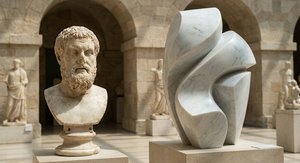
Explore the captivating history of marble sculpture from ancient Greece to modern art. Discover renowned artists like Canova & Michelangelo, carving techniques, and investment insights at BuyPopArt.

Explore the revolutionary world of Alexander Calder's kinetic sculptures & mobiles. Discover insights for collectors, acquisition advice, and the enduring legacy of this modern master. Expert analysis & art valuation.

Explore the rich history & enduring appeal of bronze sculpture with expert insights for collectors at BuyPopArt. Learn about casting techniques, iconic artists, and collecting tips to build a discerning art collection.


Blijf op de hoogte van het laatste kunstnieuws, exclusieve aanbiedingen en inspirerende interieurideeën.
Vertel ons over uw project en onze kunstexperts geven u 3 gepersonaliseerde kunstsuggesties.
Wij stellen 3 opties speciaal voor u samen – Gratis!


 Bekijk op ware grootte
 Verstuur
 Delen
Delen
 Details bekijken

 Download
 Vergelijkbare werken
 Röntgenonderzoek
 Diavoorstelling
 Lees meer







 De optie voor glas is alleen beschikbaar bij een formaat kleiner dan 110 cm.


