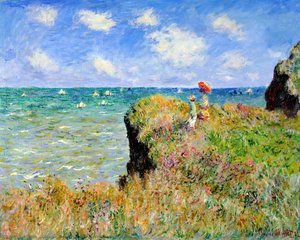
Met de hand geschilderd in olieverf op canvas in uw gewenste maat en lijst, op bestelling gemaakt door onze kunstenaars. ( Bestel een print Naar afbeelding wisselen)





























Kies uit onze vooraf ingestelde maten die overeenkomen met de originele verhoudingen van het kunstwerk.

U kunt uw eigen afmetingen invoeren om in een specifieke lijst of ruimte te passen. Als de door u gekozen maat niet overeenkomt met de verhoudingen van het originele beeld, zullen we het kunstwerk bijsnijden of het schilderij uitbreiden met extra handgeschilderde elementen. Een digitale mockup wordt ter goedkeuring naar u verzonden voordat de productie begint.
Houd er rekening mee dat de preview op het scherm niet de werkelijke uitsnede of uitbreiding weergeeft. Alleen de mockup toont de uiteindelijke compositie nauwkeurig.
Hoewel aangepaste afmetingen mogelijk zijn, raden we aan een maat uit de vooraf gedefinieerde lijst te selecteren om de originele verhoudingen te behouden.
Wereldwijde levering () binnen 3 tot 4 weken in plaats van de standaard 5 weken. (5 augustus). Zonder concessies aan de kwaliteit.


Still Life met vlees
Formaat reproductie
Claude Monet's "Still Life with Meat," painted in 1862, is far more than a simple depiction of food arranged on a table; it represents a pivotal moment in the development of Impressionism and stands as a testament to Monet’s revolutionary approach to capturing light, atmosphere, and the essence of ordinary subjects. Housed within the esteemed Musée d'Orsay in Paris, this seemingly straightforward composition unveils layers of artistic innovation – a deliberate departure from traditional academic painting and a bold embrace of a new way of seeing the world. It’s a work that invites contemplation, not just on its visual elements, but also on the fleeting nature of perception itself.
Initially conceived as a stepping stone towards a career in commerce by his father, young Claude Monet discovered his true vocation not within the confines of business, but amidst the vibrant world of art. Deeply influenced by Eugène Boudin, who introduced him to the revolutionary concept of plein air painting – working directly from nature’s light – Monet began to forge a unique artistic philosophy. This early exposure to capturing ephemeral moments and atmospheric conditions would become a cornerstone of his entire oeuvre. The painting itself embodies this dedication; it's not about meticulously rendering the details of raw meat, but rather conveying its very essence under specific lighting conditions, a pursuit that defines much of Monet’s later work.
The composition is deceptively simple: a bowl brimming with various cuts of fresh meat – beef, pork, and fowl – sits upon a rustic table, accompanied by a bottle and a scattering of everyday objects. However, Monet's genius lies in his masterful manipulation of light and shadow. He employs loose, visible brushstrokes—a hallmark of Impressionism—to suggest the textures of the meat and the surrounding surfaces rather than defining them with precise detail. The colors are muted yet vibrant, capturing the subtle shifts in tone as sunlight plays across the scene. Notice how he utilizes broken color to create a sense of depth and movement, mimicking the way light actually interacts with our vision – an effect that moves beyond mere representation towards a feeling of immediacy.
Furthermore, "Still Life with Meat" aligns perfectly with Monet’s lifelong fascination with series paintings. He frequently revisited the same subject under varying conditions—different times of day, seasons, and weather—to document the ephemeral nature of light and atmosphere. This dedication to observation and experimentation is what truly defines his artistic legacy. The painting invites us to contemplate not just the visual elements but also the fleeting quality of perception itself, a core tenet of Impressionist thought.
Painted in 1862, “Still Life with Meat” emerged during a period of profound transformation within the art world. Traditional academic painting—characterized by meticulous detail and historical or mythological subjects—was gradually being challenged by a new generation of artists seeking to express their subjective experiences of the world. The Impressionist movement, spearheaded by Monet, Renoir, Degas, and others, rejected these conventions in favor of capturing fleeting moments of light and color. This was a deliberate rebellion against the established norms, signaling a shift towards a more personal and expressive form of art.
The Musée d'Orsay, itself housed within the former Gare d’Orsay railway station—a stunning example of Beaux-Arts architecture—stands as a powerful symbol of this transition. It represents a deliberate move away from the grand halls of the Louvre towards a celebration of modern art and its diverse practitioners. The museum’s collection showcases not only Monet’s “Still Life with Meat” but also works by other Impressionist masters, providing a comprehensive overview of the movement's evolution and its radical departure from earlier artistic traditions.
Interestingly, this still life shares thematic similarities with Pieter Aertsen’s “A Meat Stall with the Holy Family Giving Alms” (1551), a painting that depicts a bustling marketplace scene. While Aertsen’s work is more overtly narrative and religious in its symbolism, Monet’s focuses on capturing the essence of light and texture within a simple composition. This comparison highlights the continuity between traditional still-life traditions and the radical innovations of Impressionism – demonstrating how artists built upon established practices while simultaneously forging new paths.
Monet's technique in “Still Life with Meat” is characterized by several key elements that define his distinctive style. First, he employs a loose, broken brushstroke—a deliberate rejection of the smooth, blended surfaces favored by academic painters. These visible strokes create a sense of movement and immediacy, suggesting the fleeting nature of light and atmosphere.
Second, Monet utilizes a limited palette of muted colors—primarily browns, grays, and ochres—to capture the subtle variations in tone and shadow. He avoids bright, saturated hues, instead relying on the interplay of complementary colors to create depth and luminosity. The effect is remarkably realistic, yet simultaneously dreamlike and atmospheric.
Third, Monet’s use of light is central to his artistic vision. He meticulously observed how light changes throughout the day, experimenting with different techniques to capture its ephemeral qualities. In “Still Life with Meat,” he suggests the play of sunlight on the meat and surrounding surfaces through a careful manipulation of color and brushstroke. This focus on capturing the *impression* of light—rather than a literal representation—is what truly distinguishes Monet’s work.
While seemingly simple, “Still Life with Meat” carries subtle symbolic weight. The raw meat itself can be interpreted as a commentary on the realities of everyday life—the passage of time, the inevitability of decay, and the transient nature of beauty. It’s a stark contrast to the idealized subjects favored by traditional artists.
Furthermore, the painting reflects the changing social landscape of 19th-century France. The rise of industrialization and urbanization was transforming society, leading to a greater emphasis on practicality and efficiency. Monet's decision to paint a still life—a traditionally humble subject—can be seen as a subtle challenge to these prevailing values.
Ultimately, “Still Life with Meat” is an invitation to pause and contemplate the beauty of the ordinary. It’s a reminder that art can be found in unexpected places—even in a simple arrangement of food on a table. The painting's emotional impact lies not in its dramatic subject matter but in its quiet contemplation of light, color, and atmosphere—qualities that continue to resonate with viewers today.

Oscar-Claude Monet, een naam die synoniem staat voor het Impressionisme, was meer dan slechts een schilder van landschappen; hij was een chroniqueur van vluchtige momenten, een dichter van licht en kleur. Geboren in Parijs op 14 november 1840, nam zijn vroege leven een onverwachte wending toen zijn familie zich op vijfjarige leeftijd vestigde in Le Havre, Normandië. Hoewel aanvankelijk voorbestemd voor een commerciële carrière door zijn vader, kwam het aangeboren artistieke talent van de jonge Claude al snel aan het licht, eerst in houtskoolkarikaturen die hij lokaal verkocht – een bewijs van zowel zijn vaardigheid als ondernemingsgeest. Toch was zijn ontmoeting met Eugène Boudin cruciaal. Boudin leerde Monet niet alleen hoe te schilderen; hij plantte het revolutionaire idee in hem om en plein air te schilderen – direct naar de natuur toe – een praktijk die zijn hele artistieke reis zou definiëren.
Monets formele opleiding begon in Parijs, kort aan de Académie Suisse en later onder Charles Gleyre. Hier sloot hij duurzame vriendschappen met medekunstenaars zoals Auguste Renoir, een band gebouwd op gedeelde artistieke frustraties en de wens om zich te bevrijden van de beperkingen van traditionele academische schilderkunst. Zijn vroege werken toonden technische bekwaamheid, maar misten de onderscheidende stem die zijn stijl weldra zou kenmerken. Een periode van onrust volgde – de Frans-Pruisische Oorlog dwong Monet om zijn toevlucht te zoeken in Londen, waar hij zich onderdompelde in het werk van Engelse landschapmeesters zoals J.M.W. Turner, en hun atmosferische effecten en innovatieve kleurgebruik absorbeerde.
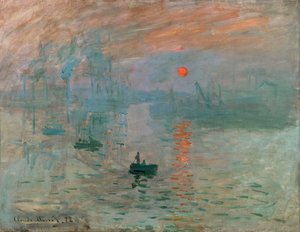
Bij zijn terugkeer naar Frankrijk werd Monet een centraal figuur in een opkomende artistieke rebellie. Ontevreden met de conservatieve normen van het Salon, sloot hij zich aan bij andere gelijkgestemde kunstenaars om onafhankelijke tentoonstellingen te organiseren. De tentoonstelling van 1874 bleek een keerpunt te zijn, niet alleen voor Monet maar voor de hele kunstwereld. Hier werd zijn schilderij “Impression, soleil levant” (Impression, Sunrise) – een vage weergave van de haven van Le Havre bij dageraad – getoond, en waaraan de spottende term "Impressionisme" zijn oorsprong ontleent. De naam bleef echter hangen en evolueerde tot een ereteken voor een beweging die streefde naar het vastleggen van de subjectieve *impressie* van een scène in plaats van haar exacte representatie.
Monets kenmerkende stijl bloeide tijdens deze periode op: losse, zichtbare penseelstreken, levendige en vaak ongemengde kleuren naast elkaar aangebracht (een techniek bekend als “broken color”), en een onwrikbare focus op het vastleggen van de vluchtige kwaliteiten van licht. Hij zette zich meedogenloos voort met zijn plein air-praktijk, waarbij hij snel werkte om zijn directe waarnemingen vast te leggen voordat de veranderende omstandigheden de scène veranderden. Deze toewijding ging niet alleen over het afbeelden van wat hij *zag*, maar eerder hoe hij *voelde* als reactie daarop – een radicale afwijking van artistieke conventies.
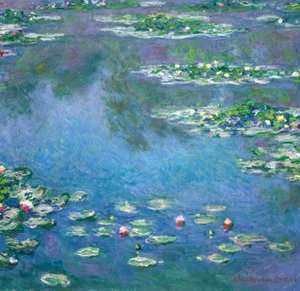
In 1883 vestigde Monet zich in Giverny, ten noordwesten van Parijs, en stichtte hij een huis en tuin die zowel zijn toevluchtsoord als zijn grootste bron van inspiratie zouden worden. Hij transformeerde het landgoed minutieus tot een uitgebreid paradijs, compleet met exotische bloemen, treurwilgen en, beroemd genoeg, een vijver met waterlelies overspannen door een Japanse brug. Dit was niet alleen een decoratieve tuin; het was een levend laboratorium waar Monet de effecten van licht op water, bladeren en reflecties onder gecontroleerde omstandigheden kon bestuderen.
De laatste decennia van zijn leven waren bijna volledig gewijd aan het schilderen van de vijver met waterlelies in Giverny. Hij begon aan de monumentale Water Lilies-serie (Nymphéas), en creëerde enorme doeken die het oppervlak van de vijver afbeeldden als een voortdurend veranderend tapijt van kleur en licht. Dit waren niet simpelweg schilderijen van bloemen; het waren meeslepende ervaringen, ontworpen om de kijker te omhullen in een wereld van serene schoonheid en contemplatieve stilte. De schaal van deze werken is adembenemend, die de grenzen van traditioneel schilderen verlegt en abstract expressionisme anticipeert.
Claude Monets impact op de kunstgeschiedenis is onmeetbaar. Hij was niet alleen de grondlegger van het Impressionisme; hij heeft fundamenteel veranderd hoe kunstenaars de wereld om hen heen waarnamen en weergafden. Zijn nadruk op subjectieve ervaring, zijn acceptatie van plein air-schilderen en zijn innovatieve technieken baanden de weg voor de moderne kunsts exploratie van abstractie en niet-representationale vormen.
Monet behaalde aanzienlijk commercieel succes tijdens zijn leven – een zeldzaamheid voor avant-gardekunstenaars uit zijn tijd. Zijn werk blijft wereldwijd ontzag inboezemen en publiek boeien, waardoor zijn plaats als een van de belangrijkste figuren in de westerse kunst wordt verstevigd. Hij stierf op 5 december 1926 en liet een erfenis achter die door generaties kunstenaars en kunstliefhebbers heen resoneert. Significante collecties van zijn meesterwerken worden bewaard in prestigieuze instellingen zoals het Musée d'Orsay en het Musée Marmottan Monet in Parijs, waardoor zijn visie de wereld blijft verlichten.
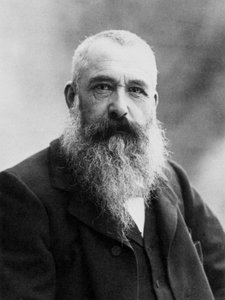
1840 - 1926 , Frankrijk
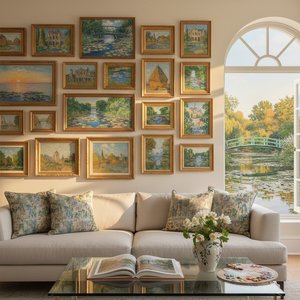
Ontdek de 25 meest iconische werken van Claude Monet! Duik in de wereld van impressionisme, kleur en licht. Van Waterlelies tot Zonsopgang – bekijk de meesterwerken & vind perfecte kunst voor jouw interieur op BuyPopArt.com.
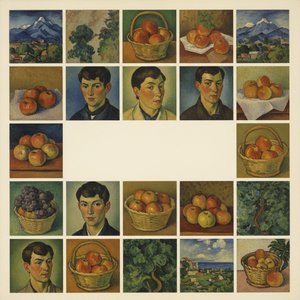
Ontdek de 25 meest iconische schilderijen van Paul Cézanne! Duik in zijn kleurrijke wereld, leer over impressionisme & post-impressionisme en bewonder meesterwerken als 'De Baders'. Vind museumkwaliteit reproducties & interieurinspiratie op BuyPopArt.com.
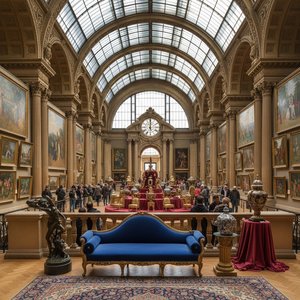
Ontdek de top 25 meesterwerken van het Musée d'Orsay! Van Monet’s impressionisme tot Van Gogh’s emotionele kracht. Leer over kunst, geschiedenis & vind perfecte reproducties voor uw interieur op BuyPopArt.com.
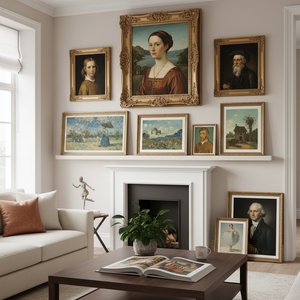
Ontdek de top 25 meesterwerken van National Gallery Washington! Van Cézanne tot Picasso, leer het verhaal achter iconische kunst. Vind museumkwaliteit reproducties & interieurinspiratie op BuyPopArt.com.
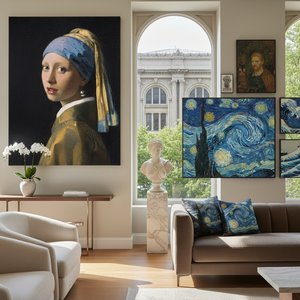
Ontdek de top 25 meesterwerken uit het Metropolitan Museum of Art, New York! Van Van Gogh tot Monet – leer over kunstgeschiedenis en bewonder iconische schilderijen. Vind museumkwaliteit reproducties & interieurinspiratie op BuyPopArt.com.


Blijf op de hoogte van het laatste kunstnieuws, exclusieve aanbiedingen en inspirerende interieurideeën.
Vertel ons over uw project en onze kunstexperts geven u 3 gepersonaliseerde kunstsuggesties.
Wij stellen 3 opties speciaal voor u samen – Gratis!


 Bekijk op ware grootte
 Verstuur
 Delen
Delen
 Details bekijken

 Download
 Vergelijkbare werken
 Röntgenonderzoek
 Diavoorstelling


 Lees meer







 De optie voor glas is alleen beschikbaar bij een formaat kleiner dan 110 cm.