Met de hand geschilderd in olieverf op canvas in uw gewenste maat en lijst, op bestelling gemaakt door onze kunstenaars. ( Bestel een print Naar afbeelding wisselen)





























Kies uit onze vooraf ingestelde maten die overeenkomen met de originele verhoudingen van het kunstwerk.

U kunt uw eigen afmetingen invoeren om in een specifieke lijst of ruimte te passen. Als de door u gekozen maat niet overeenkomt met de verhoudingen van het originele beeld, zullen we het kunstwerk bijsnijden of het schilderij uitbreiden met extra handgeschilderde elementen. Een digitale mockup wordt ter goedkeuring naar u verzonden voordat de productie begint.
Houd er rekening mee dat de preview op het scherm niet de werkelijke uitsnede of uitbreiding weergeeft. Alleen de mockup toont de uiteindelijke compositie nauwkeurig.
Hoewel aangepaste afmetingen mogelijk zijn, raden we aan een maat uit de vooraf gedefinieerde lijst te selecteren om de originele verhoudingen te behouden.
Wereldwijde levering () binnen 3 tot 4 weken in plaats van de standaard 5 weken. (9 augustus). Zonder concessies aan de kwaliteit.


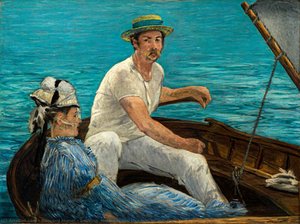
Boating, Metropolitan Museum of Art, New York
Formaat reproductie
Édouard Manet's "Boating," painted in 1874, isn't merely a depiction of two figures enjoying a leisurely afternoon on a boat; it’s an invitation to step into a fleeting moment of serenity and observe the subtle dance between observation and representation. This Impressionist masterpiece, currently residing within the hallowed halls of the Metropolitan Museum of Art in New York City, captures a scene brimming with quiet intimacy – a summer afternoon spent boating on the Seine – yet Manet elevates it beyond simple realism, hinting at deeper layers of meaning and reflecting his pivotal role in transitioning art towards modernity. The painting immediately draws the eye with its luminous quality, achieved through careful layering of colors and an embrace of visible brushstrokes that contribute to a remarkably tactile surface. It’s a scene radiating warmth and companionship, inviting viewers to contemplate the simple pleasures of connection and the beauty of nature's reflection on water.
The genesis of “Boating” lies in Manet’s fascination with capturing the ephemeral effects of light and atmosphere – a core tenet of the burgeoning Impressionist movement. Unlike the rigid academic realism prevalent at the time, Manet prioritized conveying an *impression* rather than meticulously rendering every detail. He sought to capture not just what he saw, but how it felt—the warmth of the sun on skin, the coolness of the water shimmering in the light. This approach is strikingly evident in the painting’s loose brushstrokes and vibrant color palette. Notice how Manet doesn't strive for photographic accuracy; instead, he focuses on conveying the overall *feeling* – a sense of hazy summer air and the gentle movement of the boat. The composition itself is carefully balanced, with the horizontal lines of the boat and water creating a sense of stability while the figures’ relaxed postures suggest an effortless enjoyment of the moment.
Manet's approach in “Boating” is deeply rooted in the Impressionist movement, yet he retains a distinct individuality. Unlike the strict adherence to academic realism prevalent at the time, Manet prioritized capturing the *impression* of light and atmosphere—the ephemeral effects of sunlight on water and skin. He achieves this through a deliberate use of broken brushstrokes, allowing individual pigments to mingle and create vibrant, shimmering surfaces. Notice how he doesn’t meticulously render every detail; instead, he focuses on conveying the overall effect – the warmth of the sun, the coolness of the water, and the subtle interplay of light and shadow. The textured surface, a hallmark of Impressionism, isn't accidental; it’s a conscious choice to emphasize the materiality of paint itself, inviting the viewer to appreciate the act of painting as much as the subject matter. The composition is carefully balanced, with the horizontal lines of the boat and water creating a sense of stability while the figures’ relaxed postures suggest an effortless enjoyment of the moment.
Painted in 1874, “Boating” emerged during a period of significant social and artistic change in Paris. The Impressionist movement was challenging traditional notions of art, rejecting the constraints of academic conventions and embracing new ways of seeing and representing the world. Manet’s work, particularly this painting, can be viewed as a reflection of these shifting values. While the subject matter—a simple boating trip—might seem unassuming, it carries symbolic weight. The two figures represent companionship and leisure, suggesting a respite from the pressures of urban life. Some art historians have speculated that the woman in the boat may be Camille Monet, Manet’s sister-in-law, while the man is often identified as Rodolphe Leenhoff, a friend of the family. This ambiguity adds another layer of intrigue to the painting, inviting viewers to contemplate the relationships and dynamics at play.
“Boating” stands as a pivotal work in Manet’s oeuvre and a cornerstone of Impressionist art. It demonstrated his willingness to experiment with light, color, and brushstroke, paving the way for future generations of artists. The painting's influence can be seen in the works of Monet, Renoir, and Degas, who all embraced Manet’s innovative approach. Today, “Boating” continues to captivate viewers with its serene beauty and subtle complexities, offering a glimpse into a fleeting moment of tranquility on the banks of the Seine – a testament to Manet's enduring legacy as one of art history’s most influential figures.
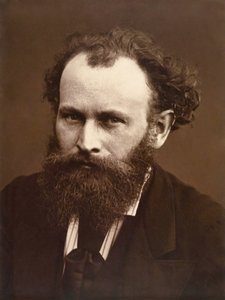
1832 - 1883 , Frankrijk
Ontdek de 25 meest iconische schilderijen van Édouard Manet, pionier van het Impressionisme. Lees over Le Déjeuner sur l'herbe, Olympia en meer! Museumkwaliteit reproducties & kunst voor uw interieur op BuyPopArt.com

Ontdek 10 iconische boot kunstwerken! Van Monet's impressionisme tot Courbet's realisme. Leer over de geschiedenis, techniek & betekenis van deze meesterwerken. Vind museumkwaliteit reproducties en decoratie inspiratie op BuyPopArt.com.

Explore the rich symbolism of water in art history – from ancient myths to Impressionism's fleeting beauty. Discover masterpieces & find your perfect serene artwork with BuyPopArt.com.

Ontdek de top 10 impressionistische meesterwerken van Monet, Renoir & meer! Duik in kleur, licht en emotie met deze iconische schilderijen. Vind museumkwaliteit kunst reproducties voor uw interieur op BuyPopArt.com.
Ontdek de 10 meest iconische meesterwerken van het Impressionisme met Monet, Renoir & Manet. Leer over hun technieken en kleuren! Museumkwaliteit kunst reproducties voor uw interieur op .


Blijf op de hoogte van het laatste kunstnieuws, exclusieve aanbiedingen en inspirerende interieurideeën.
Vertel ons over uw project en onze kunstexperts geven u 3 gepersonaliseerde kunstsuggesties.
Wij stellen 3 opties speciaal voor u samen – Gratis!


 Bekijk op ware grootte
 Verstuur
 Delen
Delen
 Details bekijken

 Download
 Vergelijkbare werken
 Röntgenonderzoek
 Diavoorstelling


 Lees meer







 De optie voor glas is alleen beschikbaar bij een formaat kleiner dan 110 cm.