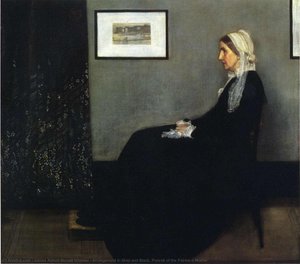
Met de hand geschilderd in olieverf op canvas in uw gewenste maat en lijst, op bestelling gemaakt door onze kunstenaars. ( Print kopen Afbeelding kopen)





























Kies uit onze vooraf ingestelde maten die overeenkomen met de originele verhoudingen van het kunstwerk.

U kunt uw eigen afmetingen invoeren om in een specifieke lijst of ruimte te passen. Als de door u gekozen maat niet overeenkomt met de verhoudingen van het originele beeld, zullen we het kunstwerk bijsnijden of het schilderij uitbreiden met extra handgeschilderde elementen. Een digitale mockup wordt ter goedkeuring naar u verzonden voordat de productie begint.
Houd er rekening mee dat de preview op het scherm niet de werkelijke uitsnede of uitbreiding weergeeft. Alleen de mockup toont de uiteindelijke compositie nauwkeurig.
Hoewel aangepaste afmetingen mogelijk zijn, raden we aan een maat uit de vooraf gedefinieerde lijst te selecteren om de originele verhoudingen te behouden.
Wereldwijde levering () binnen 3 tot 4 weken in plaats van de standaard 5 weken. (12 augustus). Zonder concessies aan de kwaliteit.


Symphony in White Nummer 3
Formaat reproductie
James Abbott McNeill Whistler’s “Symphony in White Number 3” is more than just a painting; it's an invitation to stillness. Created during the height of the Tonalist movement, this work exemplifies Whistler’s radical approach to art – his unwavering belief that ‘art for art’s sake’ should be paramount, divorced from didactic narratives or moral judgments. The piece, dominated by a breathtaking expanse of white, immediately establishes a mood of profound serenity and contemplative quietude. It's a deliberate departure from the vibrant colors and dramatic scenes prevalent in much of 19th-century painting, instead focusing on the subtle nuances of light, shadow, and tone – a core tenet of Whistler’s artistic philosophy.
The scene unfolds within what appears to be a simple bedroom. Two women are present, their forms rendered with an almost ethereal quality. One lies gracefully upon a bed, while the other sits beside her, absorbed in reading a book placed thoughtfully on a small table. Scattered throughout the room are delicate potted plants – a touch of organic life that subtly contrasts with the dominant monochrome palette. A handbag rests casually on the floor, adding a hint of domesticity to this otherwise austere setting. Whistler’s masterful control of tonal values is immediately apparent; he doesn't strive for sharp detail or intense color, but rather builds layers of gray and white to create an atmosphere that feels both tangible and dreamlike.
To fully appreciate “Symphony in White Number 3,” it’s crucial to understand the context of the Tonalist movement. Emerging in the 1880s, this American artistic trend prioritized mood and atmosphere over precise representation. Artists like Whistler sought to capture the *feeling* of a scene – the way light interacts with surfaces, the subtle shifts in color that evoke emotion – rather than meticulously recreating it. Whistler’s approach went even further; he deliberately minimized detail, believing that the viewer's own imagination would complete the picture. This deliberate abstraction was revolutionary at the time, challenging established artistic conventions and paving the way for later developments in modern art.
Whistler wasn’t simply replicating a monochrome effect; he was meticulously constructing an entire visual experience. He employed a technique known as ‘tonal painting,’ carefully layering shades of gray to create subtle gradations of light and shadow. This meticulous process, combined with his understanding of optics and color theory, allowed him to evoke a sense of depth and volume without relying on traditional methods of rendering form. The absence of strong outlines further contributes to the painting’s dreamlike quality, blurring the boundaries between reality and imagination.
While seemingly simple in its composition, “Symphony in White Number 3” is rich with symbolic potential. The predominantly white color scheme represents purity, innocence, and perhaps even a sense of detachment from worldly concerns. The two women, bathed in the soft light, could be interpreted as symbols of companionship and quiet contemplation. Their shared activity – reading – suggests a connection built on intellectual stimulation and mutual understanding. The plants introduce an element of nature, reminding us of the beauty and vitality that exists beyond the confines of the room.
Ultimately, Whistler’s masterpiece invites viewers to lose themselves in its tranquil atmosphere. It's not a painting that demands immediate interpretation; rather, it encourages quiet reflection and personal association. The subtle shifts in tone and light create a sense of movement and depth, while the carefully arranged composition draws the eye inward, fostering a feeling of peaceful solitude. “Symphony in White Number 3” is a testament to Whistler’s ability to capture not just a scene, but an entire emotional state – a moment of serene beauty suspended in time.
James Abbott McNeill Whistler's work continues to resonate with art lovers and collectors today. His commitment to ‘art for art’s sake’ remains a powerful statement against the constraints of academic tradition, and his innovative use of tonal values has influenced generations of artists. Reproductions of “Symphony in White Number 3” offer a beautiful way to bring this timeless masterpiece into your home or office, allowing you to experience its tranquility and contemplate its subtle beauty on a daily basis. Explore related works by Whistler, such as "Symphony in White Number 1, The White Girl," and "Symphony in White Number 2, The Little White Girl" for a deeper understanding of his artistic vision.
1834 - 1903 , Verenigde Staten van Amerika

Discover why black & white photography remains a powerful force in contemporary art. Explore the impact of light, shadow, and texture through a visual journey of monochrome mastery and learn how to elevate your space with timeless grayscale aesthetics.


Blijf op de hoogte van het laatste kunstnieuws, exclusieve aanbiedingen en inspirerende interieurideeën.
Vertel ons over uw project en onze kunstexperts geven u 3 gepersonaliseerde kunstsuggesties.
Wij stellen 3 opties speciaal voor u samen – Gratis!


 Bekijk op ware grootte
 Verstuur
 Delen
Delen
 Details bekijken

 Download
 Vergelijkbare werken
 Röntgenonderzoek
 Diavoorstelling
 Lees meer







 De optie voor glas is alleen beschikbaar bij een formaat kleiner dan 110 cm.