A Legacy Carved in Stone
Augustin Alexandre Dumont was far more than a mere practitioner of his craft; he was the latest, most luminous chapter in a profound sculptural dynasty. Born in Paris in 1801, his very existence was inextricably woven into the marble and clay of his illustrious ancestors. As the great-grandson of Pierre Dumont, he inherited a lineage that stretched back to the height of the Enlightenment, a pedigree that provided both a heavy mantle of expectation and an unparalleled foundation of technical skill. This artistic heritage, which included his father Jacques-Edme Dumont and his sister, the celebrated composer Louise Farrenc, ensured that his education was as much about familial duty as it was about aesthetic pursuit. Under the rigorous tutelage of Pierre Cartellier at the École des Beaux-Arts, Dumont began to master the classical disciplines, a journey that would eventually lead him to the prestigious Prix de Rome in 1823, propelling him toward the heart of antiquity.
The Roman Spirit and Romantic Soul
The allure of Italy proved transformative for the young sculptor, as the vibrant atmosphere of the French Academy in Rome breathed new life into his burgeoning talent. Immersed in the monumental grandeur of Greco-Roman ideals, Dumont absorbed the essential principles of balance, proportion, and idealized beauty. These classical foundations became the bedrock of his technique, yet as he returned to France in 1830, a new, more emotive sensibility began to stir within his work. While his structural roots remained firmly planted in Neoclassified rigor, Dumont possessed a rare ability to infuse his stone with the burgeoning passions of the Romantic era. His sculptures were not merely cold imitations of the past; they sought to capture a certain psychological depth and vitality. This delicate equilibrium is most beautifully realized in works such as Infant Bacchus Nurtured by the Nymph Leucothea, where the classical grace of the figures meets a tender, almost lyrical, narrative quality that resonates with the human heart.
A Master of Public Splendor and Final Silence
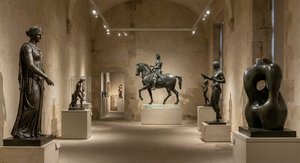
Upon his return to Paris, Dumont ascended to the highest echelons of the French art world, eventually becoming a revered educator at the École des Beaux-Arts. His hands shaped the very face of France through grand public commissions that celebrated national heroes and intellectual giants alike. From the imposing presence of the statue of Maréchal Thomas Bugeaud de la Piconnerie to the intimate, dignified portraiture of figures like the naturalist Alexander von Humboldt, his work served as a vital bridge between historical reverence and contemporary expression. However, the vigor that had fueled such prolific output was eventually stolen by a debilitating illness. After 1875, the tools of his trade fell silent, casting a shadow over a career that might have reached even greater heights. Yet, despite this tragic end, his legacy remains etched in the monuments of Paris—a permanent testament to a master who found the perfect harmony between ancient tradition and the breathing soul of Romanticism.