A Scottish Master of Realism: The Life and Art of Sir Henry Raeburn
Sir Henry Raeburn, a name synonymous with the vibrant spirit of 18th-century Scotland, was more than just a painter; he was a cultural icon. Born in Stockbridge, near Edinburgh, in 1756, his journey from an orphaned boy to one of Britain’s most celebrated portraitists is a testament to artistic talent, relentless dedication, and a profound connection to his homeland. His life unfolded against the backdrop of the Scottish Enlightenment, a period of intellectual and cultural flourishing that profoundly shaped his art and worldview.
Early Years and Artistic Beginnings
Raeburn's early life was marked by hardship and resilience. Orphaned at the tender age of six, he found solace and guidance in the care of his elder brother, William, who secured him a place at Heriot’s Hospital in Edinburgh – an institution renowned for its classical education. While initially destined for a career as an engraver, Raeburn's innate artistic inclinations soon led him down a different path. He began to hone his skills by apprenticing himself to James Gilliland, a goldsmith and craftsman known for his intricate miniature portraits. This early experience instilled in him a meticulous attention to detail and a deep appreciation for the subtleties of form and texture – qualities that would become hallmarks of his later work. It was during this period that Raeburn’s talent for capturing likenesses with remarkable accuracy began to emerge, laying the foundation for his future success as a portrait painter.
From Miniature Precision to Grand Portraiture
Raeburn's artistic evolution wasn’t linear; it was a process of constant refinement and experimentation. Initially focused on miniature portraits – delicate works executed on ivory – he gradually expanded his scale, embracing the challenge of larger-scale oil paintings. This transition was fueled by a desire to capture not just physical resemblance but also the inner character and personality of his subjects. He sought to portray individuals with honesty and immediacy, eschewing the idealized representations that were common in many contemporary portraits. A pivotal moment in his career came with his marriage to Ann Edgar in 1778. This union provided him with financial stability, allowing him to dedicate himself fully to painting without the constraints of commercial obligations. He immersed himself in studying the works of masters like Joshua Reynolds, whom he met during a brief sojourn in London en route to Italy – though the Italian journey itself was ultimately cut short. Raeburn’s style began to coalesce around a powerful realism, characterized by dramatic lighting and an ability to capture not just physical resemblance but also the inner character of his sitters.
Capturing Character: Raeburn's Artistic Signature
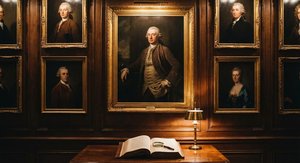
Raeburn’s portraits are not merely representations of individuals; they are psychological studies rendered in oil paint. He possessed an extraordinary ability to convey the personality, status, and even the mood of his subjects. His technique was masterful – a combination of meticulous observation, confident brushwork, and a sophisticated understanding of light and shadow.
The Young Polo Player, for example, is not simply a depiction of a sporting gentleman; it’s an energetic snapshot of youthful vitality and aristocratic leisure. Similarly, his portrait of
Alexander Allan, a prominent figure in Scottish art, reveals a man of intellect and refinement. Raeburn's use of chiaroscuro – the dramatic contrast between light and dark – became a hallmark of his style, lending depth and intensity to his compositions. He often positioned his subjects against dark backgrounds, allowing their faces and figures to emerge with striking clarity. This technique not only enhanced the visual impact of his portraits but also served to focus attention on the individual’s character and presence.
Recognition and Legacy: A Scottish Icon
Throughout his career, Raeburn enjoyed considerable success and recognition. He became a leading member of Edinburgh society, attracting commissions from prominent families and individuals. In 1815, he was elected to the Royal Academy in London, solidifying his reputation on a national level. His appointment as Portrait Painter to King George IV in Scotland in 1822 – shortly before his death in 1823 – was the ultimate acknowledgment of his artistic achievements. Raeburn’s influence on Scottish art is immeasurable. He established a standard for portraiture that subsequent generations would strive to emulate, and his work continues to inspire artists today. His paintings are now held in prestigious collections around the world, including the Scottish National Gallery in Edinburgh and The Frick Collection in New York.
- His dedication to realism and psychological insight set him apart from many of his contemporaries.
- He helped establish a distinctly Scottish identity within British art.
- His masterful technique continues to be studied and admired by artists and scholars alike.
Raeburn’s legacy extends beyond the canvas. He represents a triumph of self-education, perseverance, and artistic vision – a testament to the power of talent nurtured by unwavering dedication. He remains an integral part of Scotland's rich cultural heritage, a master portraitist whose works continue to captivate and inspire audiences centuries after their creation.