Early Life and Influences
Suzuki Harunobu, a name synonymous with the vibrant beauty of Japanese *ukiyo-e* prints, emerged from the bustling metropolis of Edo (modern-day Tokyo) in 1725. Details surrounding his early years remain shrouded in mystery—a common characteristic for many artists of the period—but it’s believed he spent his formative years in Kyoto, a city renowned for its artistic heritage and traditional craftsmanship. Little is known about his formal training, yet his work reveals a fascinating confluence of influences, hinting at a rich intellectual background. Harunobu's artistic journey was shaped by the echoes of several prominent artists and schools of art. He appears to have been deeply impacted by Torii Kiyomitsu, a master of *sumi-e* (ink wash painting), whose subtle brushwork and atmospheric landscapes undoubtedly left an imprint on Harunobu’s style. The techniques of Ishikawa Toyonobu, another influential figure in the early *ukiyo-e* movement, also seem to have played a role, particularly in his early explorations of composition and perspective. Furthermore, he was likely influenced by the Kawamata School, known for its elegant depictions of courtesans and geishas, and even the more formal Kanō School, famed for its meticulous portraiture and landscape painting—a testament to Harunobu’s broad artistic awareness. However, perhaps the most significant influence on Harunobu's development was Nishikawa Sukenobu, a painter and printmaker whose delicate style and mastery of color served as a crucial model. It is widely believed that Sukenobu may have been Harunobu’s direct teacher, imparting invaluable knowledge about woodblock printing techniques and color theory.
Artistic Career and Innovation
Harunobu's artistic career began in the traditional style of the Torii School, producing numerous prints characterized by their technical skill but lacking a truly distinctive voice. However, a pivotal moment arrived when he became involved with a group of literati samurai—members of the *bakumatsu* (late Edo period) who sought to cultivate their aesthetic sensibilities through artistic pursuits. This collaboration proved transformative, propelling Harunobu towards new formats and styles. In 1764, he was commissioned to assist these samurai in creating *e-goyomi*, or calendar prints—a burgeoning trend during the New Year season. These calendar prints marked a significant departure from previous work, representing the birth of *nishiki-e* (brocade prints)—full-color woodblock prints that would soon dominate the Japanese art world. Harunobu’s innovative approach to color printing was truly groundbreaking. He experimented with new types of woodblocks and employed more expensive pigments, pushing the boundaries of what was possible in multi-colored printmaking. A particularly ingenious technique involved using notches and wedges to hold the paper securely against multiple separate blocks, a method that allowed for unprecedented precision and detail. This innovation dramatically increased the complexity of the printing process, requiring specialized skills and collaboration among artisans.
Notable Works and the Rise of Nishiki-e
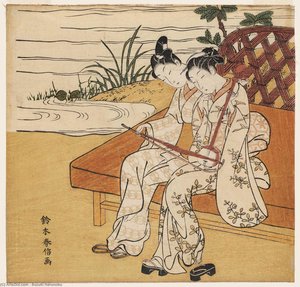
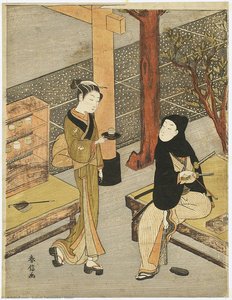
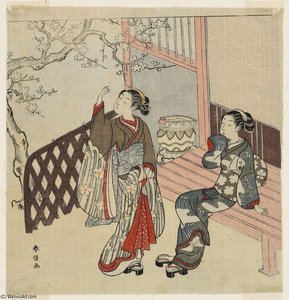
Suzuki Harunobu’s embrace of *nishiki-e* ushered in a new era of Japanese art, transforming the production of prints from monochrome to full color. His works quickly gained popularity among the *chōnin* class—a growing merchant elite who sought to adorn their homes with beautiful and sophisticated artwork. The vibrant colors and lyrical scenes depicted in Harunobu’s prints resonated deeply with this affluent clientele. It's important to note that Harunobu wasn't the first artist to experiment with color printing, but he was undoubtedly the most successful in establishing it as a standard practice. His prints often featured idyllic scenes of love and leisure, contrasting sharply with the more explicit erotic depictions known as *shunga*—a genre that remained popular during this period. Harunobu’s skill extended beyond mere reproduction; he possessed a remarkable ability to create background scenes that imbued his images with subtle mood and atmosphere. His mastery of perspective and composition contributed significantly to the overall impact of his work, solidifying his reputation as a leading artist of his time.
Legacy and Influence
Suzuki Harunobu’s legacy is profound, shaping not only the course of Japanese art but also influencing perceptions of Japanese culture in the West. His innovative *nishiki-e* prints became immensely popular during the late 19th century, contributing significantly to the Japonisme trend—a fascination with Japanese aesthetics that swept through Europe and America. Artists like Hokusai and Hiroshige, who followed in Harunobu’s footsteps, drew inspiration from his techniques and subject matter, further disseminating his influence across continents. The delicate color palettes, graceful figures, and lyrical compositions of Harunobu's prints continue to captivate viewers today, serving as a testament to his artistic genius and enduring contribution to the world of art. His work remains an invaluable window into the cultural landscape of Edo-period Japan, offering insights into the tastes, values, and aspirations of a vibrant society.