

 Olje på lerretVeggkunstBaroque Painting
 1637Renessansen
 185.0 x 121.0 cm
 Louvre
Håndmalt olje på lerret i din valgte størrelse og ramme, laget på bestilling av våre kunstnere. ( Bytt til trykk Bytt til bilde)





























Velg mellom våre forhåndsdefinerte størrelser som bevarer kunstverkets opprinnelige proporsjoner.

Du kan angi egne mål for å tilpasse en spesifikk ramme eller plass. Dersom den valgte størrelsen ikke samsvarer med originalbildets proporsjoner, vil vi enten beskjære kunstverket eller utvide maleriet med ytterligere håndmalte elementer. En digital mockup vil bli sendt til din godkjenning før produksjonen starter.
Vennligst merk at forhåndsvisningen på skjermen ikke gjenspeiler den faktiske beskjæringen eller utvidelsen. Kun mockuppen vil vise den endelige komposisjonen nøyaktig.
Selv om tilpassede størrelser er tilgjengelige, anbefaler vi å velge et mål fra den forhåndsdefinerte listen for å bevare de originale proporsjonene.
Verdensomspennende levering () på 3–4 uker i stedet for standard 5 uker. (5 August). Ingen kompromisser med kvaliteten.


Et in Arcadia Ego
Størrelse på reproduksjon
Nicolas Poussin’s “Et in Arcadia Ego” – Latin for “Even in Arcadia, there am I” – is more than just a painting; it's an invitation to a deeply contemplative journey. Painted between 1637 and 1638 during a period of intense personal reflection for the artist, this masterpiece, now housed within the Musée du Louvre i Paris, transcends its idyllic pastoral setting to offer a complex meditation on mortality, beauty, and the enduring human spirit. Poussin, a master of classical themes interwoven with profound emotional resonance, doesn’t simply depict a scene; he constructs an atmosphere laden with symbolism and philosophical weight.
The painting unfolds within a meticulously crafted landscape, drawing heavily from Virgil's Arcadia – a mythical realm representing an idealized vision of rustic harmony. However, Poussin subtly subverts this idyllic image. The central element is a weathered tomb, its inscription bearing the haunting phrase that gives the work its name. Around this solemn focal point gather several figures: shepherds engaged in quiet contemplation, a young woman seemingly lost in thought before the tomb, and presiding over the scene is Pan, the god of the wild, holding aloft a large stone – a potent symbol of both strength and the inevitable weight of existence. Two dogs are present, adding an element of companionship and loyalty to this tableau of quiet reflection.
Poussin’s artistic approach is characterized by remarkable clarity and precision, hallmarks of his Baroque style. He masterfully employs linear perspective to create a convincing illusion of depth, drawing the viewer into the landscape with an almost photographic realism. The figures are rendered with exquisite detail, their drapery flowing realistically, capturing the play of light and shadow with astonishing accuracy. Notice how Poussin uses subtle color variations – muted greens and browns contrasted against the cool blues of the sky – to create a sense of atmospheric depth and mood. The composition itself is carefully balanced, guiding the eye through the scene from the tomb in the foreground to the distant horizon.
Notably, Poussin’s use of light is particularly striking. The lighting, masterfully rendered, casts long shadows, further emphasizing the passage of time and the sense of stillness that pervades the scene. This isn't merely illumination; it’s a deliberate orchestration of light and shadow designed to evoke contemplation and a feeling of melancholy beauty. The painting feels both vibrant with life and imbued with a quiet sadness – a testament to Poussin’s ability to capture complex emotions through his art.
“Et in Arcadia Ego” is rich in symbolism, inviting multiple interpretations. The tomb itself represents mortality, reminding us that even in the most beautiful and idyllic settings, death remains a constant presence. The inscription – “Even in Arcadia, there am I” – suggests that death is an inescapable reality, regardless of our attempts to escape it through art, nature, or idealized visions. Pan’s stone symbolizes both strength and the burden of existence, while the shepherds' contemplative gazes reflect on the fragility of life and the inevitability of loss.
The painting also subtly challenges traditional notions of Arcadia as a purely utopian realm. By placing death within this idyllic setting, Poussin suggests that beauty and mortality are inextricably linked – that even in paradise, we are confronted with our own vulnerability and the knowledge of our eventual demise. The inclusion of the young woman kneeling before the tomb adds another layer of complexity, hinting at themes of remembrance, grief, and the enduring power of memory.
“Et in Arcadia Ego” is a profoundly moving work that continues to resonate with viewers centuries after its creation. It’s not simply a beautiful painting; it's a meditation on the human condition – a poignant reminder of our mortality, the beauty of the natural world, and the enduring power of art to grapple with life’s most fundamental questions. Reproductions of this masterpiece offer a chance to bring this timeless reflection into your own space, inviting contemplation and adding an element of intellectual depth to any interior.
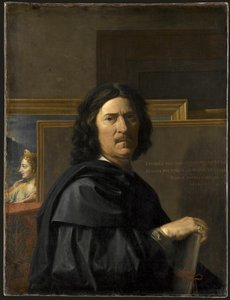
1594 - 1665 , Frankrike

Explore the captivating world of Baroque Classicism! Discover its history, key artists like Caravaggio & Rubens, and defining characteristics. Expert insights & high-quality reproductions at BuyPopArt.

Explore the captivating history of pastoral art from classical Arcadia to modern masterpieces. Discover key artists like Millet & Cole at BuyPopArt. Find serene landscape paintings for your home.

Explore the life & work of Nicolas Poussin, a master of French Classicism. Discover his allegorical paintings, Roman influences, and enduring impact on art history. Expert analysis & insights.

Explore the rich history of pastoral art from classical Arcadia to contemporary interpretations. Discover key artists, themes & collecting tips at BuyPopArt.

Explore the captivating history of pastoral art, from classical Arcadia to 19th-century masterpieces. Discover key artists like Millet & Cole and find serene landscape paintings for your home at BuyPopArt.


Hold deg oppdatert med de siste kunstnyhetene, eksklusive tilbud og dekorasjonsideer.
Fortell oss om prosjektet ditt, så vil våre kunsteksperter gi deg 3 personlige kunstforslag.
Vi velger ut 3 alternativer kun for deg – helt gratis!


 Forhåndsvisning
 Send
Send Del med andre
 Vis detaljer

 Last ned bildet
 Liknende objekter
 Røntgenundersøkelse
 Lysbildefremvisning
 Vis hele teksten







 Glassalternativet er kun tilgjengelig i størrelser under 110 cm


