

 Akryl på lerretVeggkunstRenaissance Portraiture
 23.0 x 18.0 cm
 George Eastman Museum
Håndmalt olje på lerret i din valgte størrelse og ramme, laget på bestilling av våre kunstnere. ( Bytt til trykk Bytt til bilde)





























Velg mellom våre forhåndsdefinerte størrelser som bevarer kunstverkets opprinnelige proporsjoner.

Du kan angi egne mål for å tilpasse en spesifikk ramme eller plass. Dersom den valgte størrelsen ikke samsvarer med originalbildets proporsjoner, vil vi enten beskjære kunstverket eller utvide maleriet med ytterligere håndmalte elementer. En digital mockup vil bli sendt til din godkjenning før produksjonen starter.
Vennligst merk at forhåndsvisningen på skjermen ikke gjenspeiler den faktiske beskjæringen eller utvidelsen. Kun mockuppen vil vise den endelige komposisjonen nøyaktig.
Selv om tilpassede størrelser er tilgjengelige, anbefaler vi å velge et mål fra den forhåndsdefinerte listen for å bevare de originale proporsjonene.
Verdensomspennende levering () på 3–4 uker i stedet for standard 5 uker. (11 August). Ingen kompromisser med kvaliteten.


Youth Group, Harlem - Gruppe av ungdommer, Harlem
Størrelse på reproduksjon
Born in Eisleben, Saxony, around 1506 and tragically dying in Wittenberg in 1586, Lucas Cranach the Younger stands as a pivotal figure in the German Renaissance. Often overshadowed by his more famous father, Lucas Cranach the Elder, he nonetheless forged a distinctive artistic path, becoming renowned for his captivating portraits, dramatic religious scenes, and significant contributions to the visual culture of his time. His legacy rests not just on technical skill but also on his astute understanding of humanist ideals and his ability to capture the complexities of human emotion within the framework of both secular and sacred subjects.
Cranach’s early artistic development was deeply influenced by his father, a leading painter in Leipzig and later Wittenberg. However, Lucas the Younger quickly established his own style, characterized by a vibrant palette, dynamic compositions, and an unparalleled ability to imbue his figures with psychological depth. Unlike the more austere Mannerism prevalent elsewhere in Europe at the time, Cranach’s work retained a strong connection to the naturalism of the High Renaissance, particularly drawing inspiration from Italian masters like Leonardo da Vinci and Raphael. This influence is evident in his meticulous attention to detail, his skillful use of light and shadow, and his graceful rendering of human forms.
His career unfolded against the backdrop of a rapidly changing Germany, marked by religious upheaval and political intrigue. Wittenberg, where he spent most of his life, was the seat of Martin Luther’s Reformation, and Cranach found himself deeply involved in the theological debates of the era. He became a staunch supporter of the Reformation, providing portraits for prominent reformers like Luther himself and producing numerous prints that disseminated Protestant ideas throughout Germany. These prints – often featuring biblical scenes or allegorical representations of religious concepts – were crucial tools in shaping public opinion and solidifying the new religious order.
While Cranach’s religious works are undeniably significant, he is perhaps best remembered for his remarkably astute and psychologically penetrating portraits. He possessed a rare gift for capturing not just physical likeness but also the character, personality, and social standing of his subjects. His portraits of figures like Martin Luther, Philip Melanchthon, Erasmus, and numerous members of the Saxon court are considered masterpieces of Renaissance portraiture. These works demonstrate an extraordinary ability to convey inner thoughts and emotions through subtle gestures, facial expressions, and carefully chosen attire.
Cranach’s approach to portraiture was deeply informed by humanist ideals, which emphasized the importance of individual identity and self-expression. He frequently employed innovative compositional techniques – such as asymmetrical arrangements and dynamic diagonals – to create a sense of movement and vitality within his portraits. Furthermore, he skillfully integrated symbolic elements into his paintings, using clothing, objects, and settings to communicate hidden meanings and allude to the subject’s virtues or vices.
His portraiture wasn't limited to religious figures; he also painted numerous secular subjects, including nobility, merchants, and artists. These portraits offer a fascinating glimpse into the social and cultural life of 16th-century Germany, revealing the ambitions, anxieties, and aspirations of individuals from all walks of life.
Beyond his portraiture, Cranach’s religious paintings are characterized by their dramatic intensity and masterful use of color. He frequently depicted scenes from the Bible, the lives of saints, and allegorical representations of Christian virtues and vices. These works were not merely decorative; they served as powerful visual sermons, designed to educate and inspire viewers. His depictions of the Passion of Christ, for example, are particularly moving in their emotional intensity and psychological realism.
Cranach’s religious paintings often drew upon classical mythology and medieval iconography, blending these traditions with his own distinctive artistic style. He frequently employed allegorical figures – such as Justice, Faith, and Charity – to convey complex theological concepts. His use of vibrant colors, dynamic compositions, and expressive gestures created a sense of immediacy and drama that captivated audiences.
Notable works in this category include his series of paintings depicting the *Life of St. Elizabeth*, commissioned by the Wittenberg town council, which showcases his ability to combine religious piety with humanist ideals. His depictions of the *Martyrdom of St. Catherine* and *St. Sebastian* are also considered highlights of his oeuvre.
Lucas Cranach the Younger’s influence on subsequent generations of German artists was profound. His dynamic compositions, vibrant color palettes, and psychological realism set a new standard for portraiture and religious painting in Germany. He mentored numerous students, including Lucas Fernau and Christoph Brand, who went on to become accomplished artists in their own right.
His work continues to be studied and admired by art historians and scholars today. Cranach’s paintings offer a valuable window into the cultural and intellectual life of 16th-century Germany, reflecting the complex interplay between religious reform, humanist ideals, and artistic innovation. He remains a vital figure in the history of German Renaissance art, celebrated for his technical skill, his psychological insight, and his enduring contribution to the visual language of the era.

1586 - 1648 , Netherlands

Forvandle dine gamle fotografier til unike, håndmalte oljemalerier! Vi tilbyr ekspertise innen digital restaurering og kunstnerisk gjenskaping. Kvalitet, personlig service & 100% fornøydgaranti.
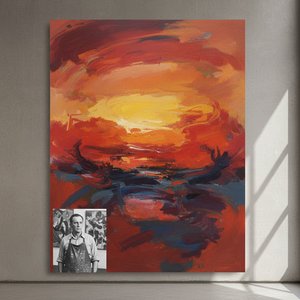
Explore the life & work of Jacob Kainen, a pivotal figure in American Abstract Expressionism and Color Field painting. Discover his journey from Social Realism to vibrant abstraction and lasting influence on 20th-century art.
Oppdag 10 ikoniske malerier dominert av sort, hvitt og elfenbenfarge! Fra Caravaggio til Munch – utforsk historien bak mesterverkene og finn inspirasjon for ditt hjem. Museumskvalitet kunsttrykk på BuyPopArt.com
Utforsk 10 ikoniske malerier dominert av svart – fra Rembrandts skygger til Munchs ekspresjonisme. Oppdag historiene bak mesterverkene og finn kunsttrykk for ditt hjem på BuyPopArt.no. Utforsk hele samlingen online!
Utforsk 10 ikoniske malerier dominert av mars svart – fra Rembrandts skygger til Munchs angst. Oppdag historien bak mesterverkene og finn kunsttrykk for ditt hjem på BuyPopArt.com. Interiørkunst & reproduksjoner.


Hold deg oppdatert med de siste kunstnyhetene, eksklusive tilbud og dekorasjonsideer.
Fortell oss om prosjektet ditt, så vil våre kunsteksperter gi deg 3 personlige kunstforslag.
Vi velger ut 3 alternativer kun for deg – helt gratis!


 Forhåndsvisning
 Send
Send Del med andre
 Vis detaljer

 Last ned bildet
 Liknende objekter
 Røntgenundersøkelse
 Lysbildefremvisning
 Vis hele teksten







 Glassalternativet er kun tilgjengelig i størrelser under 110 cm


