Olje på lerretVeggkunstOther
 Renessansen
 48.0 x 40.0 cm
 Museo Lázaro Galdiano
Håndmalt olje på lerret i din valgte størrelse og ramme, laget på bestilling av våre kunstnere. ( Kjøp trykk Kjøp bilde)





























Velg mellom våre forhåndsdefinerte størrelser som bevarer kunstverkets opprinnelige proporsjoner.

Du kan angi egne mål for å tilpasse en spesifikk ramme eller plass. Dersom den valgte størrelsen ikke samsvarer med originalbildets proporsjoner, vil vi enten beskjære kunstverket eller utvide maleriet med ytterligere håndmalte elementer. En digital mockup vil bli sendt til din godkjenning før produksjonen starter.
Vennligst merk at forhåndsvisningen på skjermen ikke gjenspeiler den faktiske beskjæringen eller utvidelsen. Kun mockuppen vil vise den endelige komposisjonen nøyaktig.
Selv om tilpassede størrelser er tilgjengelige, anbefaler vi å velge et mål fra den forhåndsdefinerte listen for å bevare de originale proporsjonene.
Verdensomspennende levering () på 3–4 uker i stedet for standard 5 uker. (20 August). Ingen kompromisser med kvaliteten.


St John the Baptist i ørkenen
Størrelse på reproduksjon
Hieronymus Bosch's *St John the Baptist in the Wilderness*, painted around 1489, is not simply a depiction of a biblical hermit; it’s an invitation into a realm where spirituality and introspection intertwine with the unsettling beauty of the natural world. Housed today at the Museo Lázaro Galdiano in Madrid, this oil on panel—measuring just 48 x 40 cm—possesses a captivating intimacy that belies its profound depth. Bosch doesn’t present us with the fiery prophet often seen in religious art; instead, we encounter a contemplative figure absorbed in quiet devotion, seated within a landscape teeming with subtle symbolism and an almost palpable sense of solitude.
Bosch's artistic style defies easy categorization. While rooted in the Northern Renaissance tradition, his work possesses a uniquely personal vision that anticipates elements of Surrealism centuries before its emergence. *St John the Baptist in the Wilderness* exemplifies this approach. The meticulous technique—layers of oil paint applied with precision to create rich textures and nuanced details—is immediately apparent. The scene isnrsquo;t merely observed; it’s constructed, imbued with a dreamlike quality that draws the viewer into its enigmatic atmosphere. A bird in flight above St. John echoes another perched nearby, visually suggesting a connection between earthly existence and divine realms. The sheep scattered throughout the wilderness symbolize purity and innocence, while the surrounding flora—often bizarre and fantastical—hints at hidden meanings and spiritual trials. The wilderness itself isnrsquo;t just a backdrop; it embodies a space of testing and purification, a place where one confronts oneself in search of communion with God.
To understand *St John the Baptist in the Wilderness*, we must consider the historical context in which it was created. The late 15th century in the Netherlands was a period of religious fervor, societal upheaval, and growing anxieties about mortality and salvation. St. John the Baptist, as the forerunner to Christ, held particular significance—representing repentance, humility, and preparation for divine grace. Bosch’s depiction reflects these concerns, presenting a figure deeply immersed in contemplation amidst a world that feels both beautiful and precarious. Interestingly, art historians believe this painting may have originally formed part of an altarpiece alongside *St. John the Evangelist on Patmos*, suggesting a deliberate pairing intended to explore different facets of faith and revelation—the active preparation versus the visionary experience.
What truly sets Bosch’s work apart is its emotional impact. *St John the Baptist in the Wilderness* doesnrsquo;t shout its message; it whispers, inviting viewers to engage with their own spiritual questions and anxieties. The painting evokes a sense of quiet contemplation and melancholic beauty—a feeling that lingers long after one has turned away. Itrsquo;s a work that rewards repeated viewing, revealing new layers of meaning with each encounter. Bosch's innovative approach to religious themes profoundly influenced generations of artists, establishing him as a pivotal figure in art history. His ability to blend realism with fantastical elements continues to captivate and inspire, making his works timeless masterpieces—and ensuring that *St John the Baptist in the Wilderness* remains a powerful testament to the enduring human search for meaning.
The painting’s meticulous detail—the textured bark of trees, the iridescent sheen of feathers, the unsettling realism of animal musculature—demonstrates Bosch’s mastery of oil paint application. He skillfully blended pigments to achieve subtle gradations of color and create a luminous effect that captures the ethereal quality of the wilderness landscape.
Considered alongside *St John the Evangelist on Patmos*, this pairing underscores Bosch's preoccupation with exploring the spectrum of Christian experience—the yearning for divine grace, the confrontation with mortality, and the transformative potential of spiritual contemplation. It’s a visual dialogue that invites viewers to ponder the mysteries of faith.
Ultimately, *St John the Baptist in the Wilderness* transcends mere representation; it aspires to convey an inner state—a profound awareness of solitude and vulnerability—that resonates deeply with audiences centuries later. Bosch's legacy endures as a beacon of artistic originality and psychological insight.
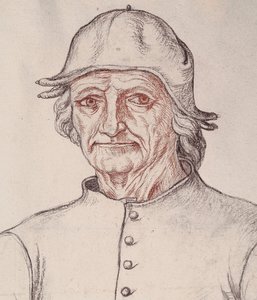
1450 - 1516 , Nederland
Utforsk Hieronymus Bosch's 25 mest ikoniske malerier! Fordyp deg i symbolikk, religiøse temaer og flamsk renessansekunst. Finn museumskvalitets reproduksjoner og interiørinspirasjon på BuyPopArt.com.

Explore the captivating world of Hieronymus Bosch! Delve into the symbolism, religious context, and artistic innovation of this Netherlandish master with BuyPopArt's expert analysis. Discover his iconic paintings & lasting influence.
Opplev John Constables 25 mest ikoniske malerier! Fordyp deg i engelsk romantikk, landskapskunst og atmosfæriske scener. Finn museumskvalitets reproduksjoner & interiørinspirasjon på BuyPopArt.com. Utforsk samlingen online!
Explore 25 iconic John Singer Sargent paintings – from dazzling portraits to Impressionist landscapes. Discover the stories behind Madame X, El Jaleo & more! Find museum-quality art reproductions and elevate your home decor with BuyPopArt.com.
Opplev Prado museets 25 mest ikoniske kunstverk! Fra Velázquez' Las Meninas til Goyas dramatiske malerier. Lær om historien, teknikken og inspirasjonen bak hvert mesterverk. Finn din perfekte reproduksjon på BuyPopArt.com.


Hold deg oppdatert med de siste kunstnyhetene, eksklusive tilbud og dekorasjonsideer.
Fortell oss om prosjektet ditt, så vil våre kunsteksperter gi deg 3 personlige kunstforslag.
Vi velger ut 3 alternativer kun for deg – helt gratis!


 Forhåndsvisning
 Send
Send Del med andre
 Vis detaljer

 Last ned bildet
 Liknende objekter
 Røntgenundersøkelse
 Lysbildefremvisning
 Vis hele teksten







 Glassalternativet er kun tilgjengelig i størrelser under 110 cm