Sprzedawaj swoją sztukę
Podgląd w skaliPodgląd w skali Podgląd ARPodgląd AR Zamów wydruk Zamów wydrukPrzełącz na obraz Przełącz na obraz Wyślij jako kartkęWyślij jako kartkę
Szczegóły dziełaSzczegóły dzieła Dodaj do ulubionych Dodaj do ulubionych PobierzPobierz Podobne obiektyPodobne obiekty RTGRTG Pokaz slajdówPokaz slajdów

Landscape at Varengeville

"Landscape at Varengeville" - piękna impresjonistyczna malowidło Camille'a Pissarro z 1899 roku przedstawiające spokojną krajobrazową scenę drzew i mostu. Odkryj sztukę impresjonizmu! Znajdziesz więcej dzieł na BuyPopArt.com.

Camille Pissarro – pionier impresjonizmu i neoimpresjonizmu. Jego obrazy przedstawiają życie codzienne, krajobrazy i pejzaże. Wpływ na Cézanne'a, Van Gogha i innych! Odkryj jego świat.

Ręcznie malowana reprodukcja olejowa

Ręcznie malowany obraz olejny na płótnie, wykonany na zamówienie przez naszych artystów w wybranym przez Ciebie wymiarze i oprawie. (Zamów wydruk Zamów wydrukPrzełącz na obraz Przełącz na obraz)

P118B $10
P118H $10
P118W $10
P438Z $10
P508JH $12
P508YH $12
P805H $10
P805Z $10
P919BZ $10
P919G $10
P919XJ $10
P959ZH $10
P968JZ $12
W106C $8
W218G $10
W218JH $8
W218Y $10
W307PJ $10
W316G $10
W316PJ $8
W316Y $10
W398PJ $8
W4111J $10
W500HY $15
W500JH $15
W692G $12
W849H $8
W940BG $15
W953PJ $8

Standard
custom
CM
INCH

Wybierz spośród naszych standardowych rozmiarów, które zachowują oryginalne proporcje dzieła sztuki.

szerokość
wysokość

Możesz wprowadzić własne wymiary, aby dopasować obraz do konkretnej ramy lub przestrzeni. Jeśli wybrany rozmiar nie będzie odpowiadał proporcjom oryginału, przytniecie dzieło sztuki lub rozszerzymy je o dodatkowe elementy, ręcznie domalowane przez artystę. Przed rozpoczęciem produkcji wyślemy projekt cyfrowy do Twojej akceptacji.
Należy pamiętać, że podgląd na ekranie nie odzwierciedla rzeczywistego przycinania ani rozszerzania obrazu. Tylko projekt dokładnie pokaże ostateczną kompozycję.
Choć oferujemy możliwość zamówienia niestandardowych rozmiarów, zalecamy wybór wymiaru z gotowej listy, aby zachować oryginalne proporcje dzieła.

Przykłady możliwych zmian: Zamień twarz na zdjęcie klienta; Dodaj zwierzę domowe (np. zamień kota na psa); Ukryj wiadomość w tle; Zmień krajobraz lub elementy tła.
Po złożeniu zamówienia zespół BuyPopArt.com skontaktuje się z klientem drogą mailową w celu uzyskania instrukcji i prześle wizualizację projektu

Dostawa na całym świecie () w ciągu 3–4 tygodni zamiast standardowych 5 tygodni. (10 Sierpień). Bez kompromisów w kwestii jakości.

why_choose_icon
Bezpłatna ekspresowa wysyłka na cały świat
why_choose_icon
Wysokiej jakości płótno lniane
why_choose_icon
Pełne ubezpieczenie przesyłki
why_choose_icon
Gwarancja zwrotu należności celnych i podatków importowych
why_choose_icon
Gwarancja wiernego odwzorowania kolorów
why_choose_icon
Polityka 60-dniowego zwrotu (tylko w przypadku wad)
why_choose_icon
Gwarancja 100% zwrotu kosztów
why_choose_icon
Zniżka przy zamówieniu wielu produktów

Suma całkowita

$ 288

reproduction

Landscape at Varengeville

Technika reprodukcji

Wymiary reprodukcji

-

Cena całkowita

$ 288

Szybki podgląd

  • Influences: Jean-Baptiste-Camille Corot
  • Artistic style: Atmospheric landscapes
  • Year: 1899
  • Medium: Oil on canvas
  • Artist: Camille Pissarro
  • Location: AllPaintingsStore.com
  • Title: Landscape at Varengeville

Opis dzieła

Landscape at Varengeville – A Masterpiece of Impressionistic Observation

Camille Pissarro’s “Landscape at Varengeville,” painted in 1899, stands as a cornerstone of Impressionism and embodies the movement's core philosophy—capturing fleeting moments of beauty through light and color. More than just a depiction of a coastal scene, it represents a profound meditation on perception itself, reflecting Pissarro’s unwavering dedication to observing nature with meticulous detail.

  • Subject Matter: The painting portrays the picturesque village of Varengeville-sur-Mer, Normandy, France – a location that held particular significance for Pissarro. He frequently revisited this spot, drawn by its dramatic cliffs and ever-changing weather conditions, which provided endless opportunities to explore tonal variations and atmospheric effects.
  • Style: Impressionism, championed by artists like Monet and Renoir, prioritized capturing the subjective experience of seeing rather than striving for photographic realism. Pissarro’s brushstrokes are loose, broken, and blended softly—a deliberate rejection of academic conventions that favored precise lines and shading.
  • Technique: Executed in oil on canvas, “Landscape at Varengeville” utilizes a palette dominated by muted greens, blues, and browns. Pissarro employed layering techniques to build up depth and luminosity, skillfully capturing the interplay of sunlight filtering through foliage and illuminating the stone walls of the village buildings.

Historical Context: Painted during the height of Impressionism’s influence, “Landscape at Varengeville” reflects a broader artistic preoccupation with documenting everyday life and exploring the transformative power of natural light. It emerged from a period of intellectual ferment—the rise of scientific theories about color perception challenged traditional artistic dogma.

Symbolism & Emotional Impact: Beyond its visual beauty, the painting speaks to themes of tranquility, solitude, and connection with the environment. The bridge serves as a visual anchor, uniting the foreground trees with the distant horizon—a subtle gesture that invites contemplation on the passage of time and the enduring presence of nature. Viewing “Landscape at Varengeville” evokes a feeling of serenity and nostalgia, transporting the viewer to a moment frozen in time.

Notable Connections: Pissarro’s artistic vision was profoundly shaped by his predecessors—particularly Jean-Baptiste-Camille Corot—who instilled in him a deep appreciation for tonal harmony and atmospheric perspective. His influence extended far beyond Impressionism, inspiring subsequent generations of artists who embraced similar approaches to landscape painting.

Where to See It: “Landscape at Varengeville” is housed in the Musée d’Orsay in Paris, offering visitors a chance to experience this iconic artwork firsthand. Reproductions are available from BuyPopArt.com and numerous art galleries worldwide.

O artyście

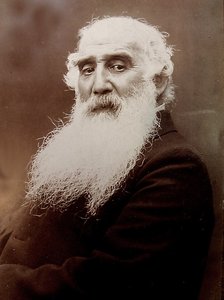
A Life Rooted in Observation: The World of Camille Pissarro

Camille Pissarro, a name synonymous with both the birth and evolution of Impressionism, was an artist whose life mirrored the shifting landscapes he so devotedly captured on canvas. Born Jacob Abraham Camille Pissarro on July 10, 1830, in Charlotte Amalie, St. Thomas – then part of the Danish West Indies, now the US Virgin Islands – his origins were as diverse and vibrant as the scenes that would later define his artistic vision. His father, a Portuguese Jewish merchant with French nationality, and his mother, from a French-Jewish family on the island, instilled in him a unique cultural heritage. This upbringing, somewhat unconventional due to familial complexities, fostered an early sensitivity to the world around him, a quality that would become the cornerstone of his artistic practice. His initial formal training at the Savary Academy near Paris provided a foundation in traditional techniques, but it was his return to St. Thomas and subsequent work as a cargo clerk that truly ignited his passion for observation. The bustling harbor, the vibrant local life, and the raw beauty of the Caribbean landscape became his first subjects, shaping an eye keenly attuned to the nuances of everyday existence.

From Realism to Revolution: Artistic Development

Pissarro’s artistic journey was one of constant exploration and refinement. After a period assisting Danish painter Anton Melbye in Paris, he immersed himself in the works of masters like Gustave Courbet, Jean-Baptiste-Camille Corot, and Honoré Daumier – artists who championed realism and social commentary. He initially sought acceptance within the established art world, exhibiting at the Paris Salon, but soon found its constraints stifling. A pivotal moment came with his embrace of *plein air* painting—working outdoors directly from nature—a practice encouraged by Corot that would become central to Impressionism. This shift wasn’t merely technical; it represented a philosophical change, a desire to capture the fleeting effects of light and atmosphere, the very essence of a scene rather than its precise representation. He began experimenting with looser brushwork and brighter palettes, moving away from academic conventions towards a more subjective and expressive style. His early landscapes, though still grounded in realism, hinted at the revolutionary path he was about to forge. This period saw him grappling with finding his own voice amidst the burgeoning artistic ferment of Paris, a city undergoing rapid transformation that provided endless inspiration.

The Father Figure of Impressionism

Camille Pissarro wasn’t simply *an* Impressionist; he was arguably its most steadfast and unifying force. Uniquely, he exhibited at all eight Paris Impressionist exhibitions between 1874 and 1886, acting as a stabilizing presence within a group often characterized by internal disagreements and individual ambitions. He wasn’t merely present—he actively encouraged his fellow artists, offering support, guidance, and a much-needed sense of camaraderie. This earned him the affectionate nickname “the father figure” of the movement. His commitment to artistic freedom and innovation was unwavering, even in the face of critical scorn and public indifference. He believed in the power of collective action and championed the idea of artists exhibiting independently from the Salon’s restrictive rules. Beyond his own work, Pissarro's influence extended to a younger generation of artists, including Paul Cézanne, Vincent van Gogh, and Paul Gauguin, whom he mentored and profoundly impacted. He provided them with not only technical advice but also a philosophical framework for their artistic explorations. His willingness to experiment led him briefly into Neo-Impressionism, influenced by Georges Seurat and Paul Signac’s pointillist techniques, before ultimately returning to a more personal style that blended his earlier influences with new discoveries.

Landscapes of Life: Themes and Legacy

Pissarro's artistic output was remarkably diverse, yet consistently focused on the world around him. He is celebrated for his depictions of both rural and urban landscapes, often portraying scenes of everyday life—peasants working in fields, bustling Parisian streets, quiet village squares. His paintings weren’t simply picturesque views; they were social commentaries, reflecting his deep empathy for the working class and his commitment to depicting their lives with dignity and respect.
  • Landscapes: Renowned for capturing the beauty of both countryside and city life.
  • Scenes of Parisian Life: Vivid portrayals of a rapidly changing metropolis.
  • Peasant Life: Reflecting his social consciousness and empathy for the working class.
His later works, particularly those created during periods of political unrest or personal hardship, often carry a sense of melancholy and social critique. Pissarro’s legacy extends far beyond his beautiful paintings. He was a champion of artistic freedom, a mentor to generations of artists, and a pioneer in the development of modern art. His commitment to *plein air* painting revolutionized landscape art, while his willingness to experiment with different styles demonstrated his intellectual curiosity and unwavering dedication to his craft. Camille Pissarro’s art is not merely a record of the world as it was; it is a testament to the power of observation, empathy, and artistic innovation.
Kamille Pissarro

Kamille Pissarro

1830 - 1903 , Stany Zjednoczone Wyspy Dziewicze

Krótka nota

  • Artistic Movement Or Style: Impresjonizm, Neo-Impresjonizm
  • Artists Or Movements Influenced By This Artist:
    • Cézanne
    • Van Gogh
    • Gauguin
  • Artists Who Influenced This Artist:
    • Courbet
    • Corot
    • Daubigny
  • Date Of Birth: 10 lipca 1830
  • Date Of Death: 13 listopada 1903
  • Full Name: Camille Pissarro
  • Nationality: Dansk-Francuz
  • Notable Artworks:
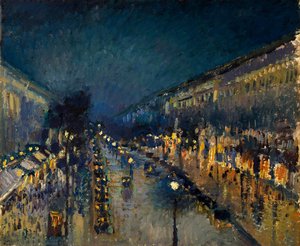
    • Boulevard Montmartre
    • Norwood pod śniegiem
  • Place Of Birth: Charlotte Amalie, Francja
Odkryj dzieła sztuki uporządkowane według tematów, stylów i cech charakterystycznych.