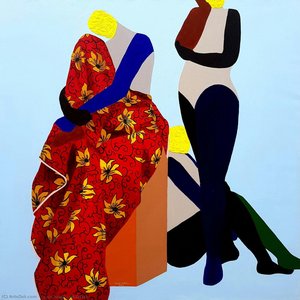
The Vibrant Tapestry of Tonia Nneji
Born in the bustling energy of Lagos State, Nigeria, in 1991, Tonia Nneji carries within her a visual language deeply rooted in the ancestral rhythms of her homeland. Her artistic lineage is inextricably linked to the traditions of carvers and the powerful presence of masquerade carriers, a heritage that breathes life into her contemporary practice. After graduating with honors from the University of Lagos in 2016, Nneji emerged not merely as a skilled painter, but as a profound storyteller capable of weaving complex societal dialogues into the very fabric of her canvases. Her work serves as a bridge between the historical weight of Nigerian craftsmanship and the urgent, pressing conversations of the modern era.
Nneji’s creative process is an intimate exploration of resilience, often drawing from her personal navigation through significant health challenges. She utilizes the canvas to confront the heavy silences surrounding trauma and women’s health, transforming vulnerability into a site of strength and advocacy. Through her art, she champions bodily autonomy and protection against harassment, creating a visual sanctuary for dialogue. This mission is mirrored in her fascination with textile materials; she investigates commemorative fabrics as symbols of place and belonging, exploring how these woven narratives transcend geographical borders to communicate universal truths about identity and the human condition.
A Masterful Blend of Pattern and Purpose
The aesthetic power of Nneji’s work lies in its breathtaking fusion of abstraction and figurative elements. Her canvases are characterized by a meticulous attention to detail, where bold colors and intricate patterns pulsate with an almost rhythmic energy. This technique is deeply informed by ancestral craftsmanship, yet it remains resolutely contemporary. By interweaving geometric precision with organic, flowing forms, she creates a sense of movement that mimics the protective and enveloping nature of textiles. Each layer of color and every patterned line serves as a deliberate stroke in her larger effort to document the complexities of the female experience and the enduring spirit of cultural heritage.
Her artistic development has been propelled by significant recognition within the international art community. Through prestigious residencies, such as those at Art Dubai, and accolades like the Ronke Ekensi Prize, Nneji has been afforded the space to expand her technical repertoire and deepen her thematic inquiries. Her presence in the global art landscape is further solidified by notable exhibitions, including:
- Solo presentations at rele gallery in both Lagos and Los Angeles, which showcased her ability to command international attention.
- Participation in the evocative group exhibition ‘Dancing in Dark Times’ at the Pippy Houldsworth Gallery in London.
- The inclusion of her work in the ‘Orita Meta’ exhibition at rele gallery, highlighting her connection to cultural crossroads.
As a significant contributor to the evolving landscape of contemporary African art, Tonia Nneji continues to push the boundaries of what painting can achieve. Her work does not simply decorate; it defends, commemorates, and illuminates. By transforming the personal into the political and the ancestral into the avant-garde, she ensures that the narratives of identity, health, and belonging are etched permanently into the collective consciousness of the art world.