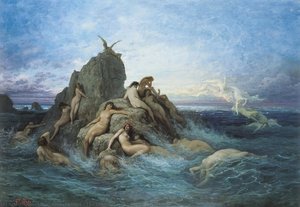
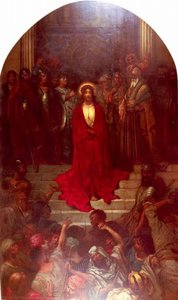
Óleo sobre tela pintado à mão no seu tamanho e moldura, feito sob encomenda pelos nossos artistas. ( Ver impressão do pedido Baixar imagem em alta resolução)





























Escolha entre os nossos tamanhos pré-definidos que respeitam as proporções originais da obra de arte.

Pode inserir as suas próprias dimensões para se adequar a uma moldura ou espaço específico. Se o tamanho selecionado não corresponder às proporções da imagem original, iremos cortar a obra de arte ou estender a pintura com elementos adicionais pintados à mão. Um esboço digital será enviado para sua aprovação antes do início da produção.
Tenha em atenção que a pré-visualização no ecrã não reflete o corte ou extensão real. Apenas o esboço mostrará com precisão a composição final.
Embora tamanhos personalizados estejam disponíveis, recomendamos selecionar uma dimensão da lista predefinida para preservar as proporções originais.
Entrega mundial () em 3 a 4 semanas, em vez das 5 semanas padrão. (8 Agosto). Sem comprometer a qualidade.


Don Quixote (146)
Dimensões da Reprodução
Gustave Doré’s “Don Quixote” isn't merely an illustration; it’s a distillation of Cervantes’ epic tale into a powerfully emotive monochrome print. Executed in the Romantic style, Doré captures not just the narrative action but also the psychological landscape inhabited by Don Quixote and Sancho Panza—a realm where idealism clashes with disillusionment.
The artwork’s breathtaking detail stems from Doré's masterful application of engraving technique. Working on a copper plate, he meticulously incised lines using specialized tools, creating an astonishingly intricate surface texture that conveys both the ruggedness of the Spanish countryside and the palpable tension within the scene. Cross-hatching—the layering of intersecting lines—becomes Doré’s primary tool for achieving tonal variation, subtly shading figures and backgrounds to create a sense of depth and atmosphere.
Doré skillfully orchestrates the visual narrative, positioning Don Quixote and his horse Rocinante prominently in the center frame. The inclusion of Sancho Panza—a grounding presence representing pragmatism—and a reciting poet adds layers of symbolic significance. The receding hillside serves as an anchor for the eye, guiding viewers into the heart of the drama and emphasizing the vastness of Don Quixote’s aspirations against the backdrop of a desolate landscape.
The bleak hilltop setting is deliberately chosen to mirror the protagonist's internal struggle—a confrontation with the harsh realities of existence juxtaposed against his unwavering belief in chivalric ideals. Doré’s muted palette reinforces this mood, conveying melancholy and introspection while simultaneously hinting at the enduring power of imagination and perseverance. The poet’s presence symbolizes the importance of contemplation and artistic expression amidst adversity.
Doré’s “Don Quixote” exemplifies Romantic realism—a movement that sought to depict subjects with unflinching honesty while retaining a heightened sense of emotional intensity. His meticulous attention to detail, combined with his expressive use of line and tone, cemented his place as one of the most influential illustrators of his era. Today, reproductions of this iconic artwork continue to inspire awe and admiration for Doré’s unparalleled artistic vision.

1832 - 1883 , França

Explore the captivating world of Gustave Doré, master of Romantic realism & iconic illustrator. Discover his dramatic wood engravings, paintings, and sculptures – a legacy shaping art history. Learn more at BuyPopArt.
Descubra os 25 tesouros do Museo del Prado! Explore a história de Velázquez, Goya e El Greco. Encontre reproduções de arte em alta qualidade para decorar sua casa com elegância. Inspire-se nas cores vibrantes e nos quadros clássicos espanhóis. Explore a coleção completa na BuyPopArt.com!

Descubra as diretrizes da sobre o uso comercial de obras de arte. Entenda os direitos autorais e explore soluções personalizadas para empresas e colecionadores exigentes.

Explore the vibrant world of Stephen Bone (1904-1958), a key figure in British Neo-Romanticism. Discover his captivating landscapes, impactful war art & unique artistic style. Learn about his life, influences & legacy.

Descubra as 10 obras de arte mais românticas da história, de Monet a Klimt! Explore o amor, a paixão e a beleza em pinturas icônicas. Encontre reproduções de alta qualidade para inspirar sua decoração em BuyPopArt.com.


Fique por dentro das últimas notícias de arte, ofertas exclusivas e ideias de decoração.
Conte-nos sobre o seu projeto e os nossos especialistas em arte fornecerão 3 sugestões de arte personalizadas.
Deixe que selecionamos 3 opções especialmente para você – Grátis!


 Visualizar em escala
 Enviar
 Compartilhar
 Ver detalhes

 Baixar
 Semelhantes
 Raio X
 Apresentação de slides
 Ver mais







 A opção de vidro está disponível apenas para tamanhos inferiores a 110 cm