Michelangelo Buonarroti: A Renaissance Titan
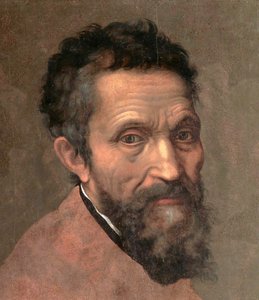
Michelangelo di Lodovico Buonarroti Simoni (6 March 1475 – 18 February 1564), known mononymously as Michelangelo, was an Italian sculptor, painter, architect, and poet of the High Renaissance. Born in the Republic of Florence, his work was inspired by models from classical antiquity and had a lasting influence on Western art. Michelangelo’s creative abilities and mastery in a range of artistic arenas define him as an archetypal Renaissance man, along with his rival and elder contemporary, Leonardo da Vinci. Given the sheer volume of surviving correspondence, sketches, and reminiscences, Michelangelo is one of the best-documented artists of the 16th century. He was lauded by contemporary biographers as the most accomplished artist of his era.
Michelangelo achieved fame early. Two of his best-known works, the Pietà and David, were sculpted before the age of 30. The Pietà, housed in St. Peter's Basilica, showcased his mastery of marble carving and emotional depth. His next landmark work was the colossal statue of David (1501–1504), symbolizing Florentine republican ideals. This sculpture embodies the humanist spirit of the Renaissance, reflecting a renewed interest in Classical art and philosophy—a reaction against the Gothic style that had dominated European art for centuries. Michelangelo meticulously studied anatomical treatises to achieve unparalleled realism, capturing the musculature and posture of David with breathtaking precision. The statue’s pyramidal composition reinforces its stability and grandeur, mirroring the architectural principles prevalent during the Renaissance.
Early Life and Training (1475-1496)
- Michelangelo di Lodovico Buonarroti Simoni was born on March 6, 1475, in Caprese Michelangelo, Tuscany.
- Initially, his father resisted an artistic career but conceded to his son’s exceptional talent for drawing.
- At age 13, he apprenticed with Domenico Ghirlandaio, learning fresco and drawing techniques.
- He soon gravitated towards sculpture, studying classical works in the Medici gardens — a pivotal influence.
Michelangelo’s formative years were marked by an intense fascination with Classical art—particularly sculpture—which profoundly shaped his artistic vision. The Medici family, influential patrons of the arts and humanist scholarship, fostered this interest by commissioning sculptures inspired by Greek and Roman prototypes. Michelangelo's apprenticeship under Ghirlandaio provided invaluable experience in fresco painting, a technique that would become central to his oeuvre. He diligently honed his skills, absorbing the principles of perspective and composition from masters like Brunelleschi and Masaccio—artists who championed the revival of Classical ideals.
Early Period: Establishing Mastery (1490-1505)
- Around 1496, he received his first major commission: the sculpture of the Pietà, completed in 1499.
- The Pietà, housed in St. Peter's Basilica, showcased his mastery of marble carving and emotional depth.
The Pietà represents Michelangelo’s breakthrough achievement as a sculptor—a testament to his unparalleled ability to convey profound emotion through stone. Executed with breathtaking virtuosity, the sculpture depicts Mary cradling the lifeless body of Jesus Christ after his crucifixion. Michelangelo skillfully employed drapery folds to create a sense of volume and texture, capturing the delicate contours of Mary’s face and torso with astonishing realism. The pyramidal composition—a hallmark of Renaissance sculpture—emphasizes stability and grandeur, mirroring the architectural harmony championed by Brunelleschi. This work embodies the humanist ideal of beauty—characterized by proportion, balance, and spiritual contemplation—reflecting the broader cultural currents of the High Renaissance.
The Painting's Composition
The Virgin and Child (verso) features Mary holding the Christ child in her arms, with the child looking up at her. The woman appears to be wearing a dress, which adds to the overall composition of the image. The use of pen as the medium allows for intricate details and shading, creating a sense of depth and dimensionality. Michelangelo’s meticulous attention to detail—evident in every brushstroke—underscores his commitment to artistic excellence.
Historical Significance
The Virgin and Child (verso) is not only a masterpiece of Renaissance art but also an important historical artifact. It was created during a time when the Catholic Church played a significant role in shaping artistic expression, and Michelangelo’s work reflects this influence. The painting exemplifies the humanist spirit of the Renaissance—characterized by a renewed interest in Classical ideals—a reaction against the Gothic style that had dominated European art for centuries.
Other Works by Michelangelo Buonarroti
To learn more about the Graphische Sammlung Albertina and its collection, visit:
The Graphische Sammlung Albertina Museum in Vienna, Austria
For more information on Michelangelo Buonarroti and his works, visit:
Michelangelo Buonarroti: Virgin and Child (verso)
Photo Description: The image is a black and white photograph of a painting by Michelangelo Buonarroti titled Virgin and Child (verso). The painting features a woman holding the Christ child in her arms, with the child looking up at the woman. The woman appears to be wearing a dress, which adds to the overall composition of the image. The painting is quite large, spanning 387 x 195 cm, and it was created using pen as the medium. It is dated back to 1503, making it an older piece of artwork. The painting is currently housed in the Graphische Sammlung Albertina in Vienna, Austria.
Size: 387 x 195 cm
Date: 1503
ARTIST INFORMATION:
==================
Artist: Michelangelo Buonarroti
Birth Year: 1475
Death Year: 1564
Birth City: Caprese Michelangelo
Birth Country: Italy
Biography: Michelangelo di Lodovico Buonarroti Simoni (6 March 1475 – 18 February 1564), known mononymously as Michelangelo, was an Italian sculptor, painter, architect, and poet of the High Renaissance. He was born in the Republic of Florence but was mostly active in Rome from his 30s onwards. His work was inspired by models from classical antiquity and had a lasting influence on Western art. Michelangelo’s creative abilities and mastery in a range of artistic arenas define him as an archetypal Renaissance man, along with his rival and elder contemporary, Leonardo da Vinci. Given the sheer volume of surviving correspondence, sketches, and reminiscences, Michelangelo is one of the best-documented artists of the 16th century. He was lauded by contemporary biographers as the most accomplished artist of his era.