Visualizar em escalaVisualizar em escala Visualizar em RAVisualizar em RA Encomendar impressão Encomendar impressãoComprar imagem em alta resolução Comprar imagem em alta resolução EnviarEnviar
Ver detalhesVer detalhes Adicionar aos favoritos Adicionar aos favoritos BaixarBaixar SemelhantesSemelhantes Raio XRaio X Apresentação de slidesApresentação de slides

اطلب نسخة من Sketch for ''Forest Dwellers''

Admire Nicholas Roerich's Sketch for ''Forest Dwellers'' - نيكولاي ريريتش, una obra maestra del simbolismo y paisajes himalaicos. Encuentra réplicas originales de alta calidad en BuyPopArt.

Explore a vida e obra de Nicholas Roerich: simbolismo, paisagens himalaias, design de ballets Russes e um defensor da preservação cultural. Uma jornada artística e espiritual única.

Reprodução em Óleo Feita à Mão

Óleo sobre tela pintado à mão no seu tamanho e moldura, feito sob encomenda pelos nossos artistas. (Encomendar impressão Encomendar impressãoComprar imagem em alta resolução Comprar imagem em alta resolução)

P118B $10
P118H $10
P118W $10
P438Z $10
P508JH $12
P508YH $12
P805H $10
P805Z $10
P919BZ $10
P919G $10
P919XJ $10
P959ZH $10
P968JZ $12
W106C $8
W218G $10
W218JH $8
W218Y $10
W307PJ $10
W316G $10
W316PJ $8
W316Y $10
W398PJ $8
W4111J $10
W500HY $15
W500JH $15
W692G $12
W849H $8
W940BG $15
W953PJ $8

Standard
custom
CM
INCH

Escolha entre os nossos tamanhos pré-definidos que respeitam as proporções originais da obra de arte.

largura
altura

Pode inserir as suas próprias dimensões para se adequar a uma moldura ou espaço específico. Se o tamanho selecionado não corresponder às proporções da imagem original, iremos cortar a obra de arte ou estender a pintura com elementos adicionais pintados à mão. Um esboço digital será enviado para sua aprovação antes do início da produção.
Tenha em atenção que a pré-visualização no ecrã não reflete o corte ou extensão real. Apenas o esboço mostrará com precisão a composição final.
Embora tamanhos personalizados estejam disponíveis, recomendamos selecionar uma dimensão da lista predefinida para preservar as proporções originais.

Exemplos do que pode ser personalizado: Substituir o rosto pela foto do cliente; Adicionar um animal de estimação (ex: substituir gato por cão); Incluir uma mensagem oculta no fundo; Alterar a paisagem ou elementos do fundo.
Após o pedido, a equipa BuyPopArt.com enviará um e-mail ao cliente para solicitar instruções e fornecer uma prévia do esboço.

Entrega mundial () em 3 a 4 semanas, em vez das 5 semanas padrão. (17 Agosto). Sem comprometer a qualidade.

why_choose_icon
Envio Expresso Gratuito para todo o Mundo
why_choose_icon
Tela de Linho Premium
why_choose_icon
Seguro de transporte total
why_choose_icon
Garantia de Reembolso de Impostos Alfandegários
why_choose_icon
Garantia de Fidelidade de Cor
why_choose_icon
Política de Devolução de 60 Dias (Apenas para Defeitos)
why_choose_icon
Garantia de reembolso de 100%
why_choose_icon
Desconto para múltiplas unidades

Preço Total

$ 338

reproduction

اطلب نسخة من Sketch for ''Forest Dwellers''

Técnica de Reprodução

Dimensões da Reprodução

-

Preço Total

$ 338

Detalhes Rápidos

  • Title: Sketch for ''Forest Dwellers''
  • Subject or theme: Folklore, Landscape
  • Artistic style: Expressionist
  • Artist: Nicholas Roerich
  • Notable elements or techniques: Loose lines, tonal variations
  • Movement: Symbolism

Descrição da Obra

Sketch for ''Forest Dwellers'' – Uma Visão Profunda da Alma Himalaia de Roerich

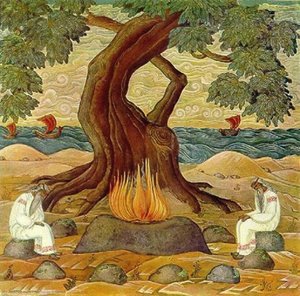
Este esboço para “Floresta Habitada” de Nicholas Roerich não é apenas uma imagem; é um portal para o universo artístico e espiritual do pintor russo. Criado em 1916, durante o período Art Nouveau, este trabalho captura a essência da estética roericiana: uma combinação harmoniosa entre paisagens montanhosas majestosas e simbolismo profundo que busca transmitir mensagens universais sobre equilíbrio e conexão com a natureza. Mais do que um simples desenho técnico, ele revela uma jornada emocional pela mente de Roerich, um artista obcecado por explorar os limites entre realidade e sonho.
  • Estilo Art Nouveau: A influência da corrente artística Art Nouveau é evidente na composição fluida e orgânica do esboço. Linhas curvas suaves dominam o desenho, criando uma sensação de movimento constante que reflete a energia vital das florestas e dos animais presentes na obra original.
  • Técnica Desenho Livre: Roerich empregou uma técnica de desenho livre, caracterizada pela aplicação de linhas rápidas e expressivas para capturar a atmosfera da floresta e transmitir emoções. Essa abordagem permite que o artista transmita sua visão pessoal sobre o mundo natural, enfatizando a beleza estética e a força espiritual.
  • Composição Narrativa: O esboço apresenta uma composição narrativa que sugere uma história em desenvolvimento. Os homens carregando armas e os cavalos posicionados estrategicamente dentro da floresta evocam imagens de aventura e desafio, refletindo temas recorrentes na obra de Roerich relacionados à proteção do meio ambiente e à luta pela liberdade espiritual.
  • Detalhes Significativos: Apesar da simplicidade aparente, o esboço contém elementos simbólicos importantes que enriquecem seu significado. O uso de amarelo ou luz marrom para destacar áreas específicas pode representar a energia vital da floresta e a busca por iluminar os aspectos ocultos da existência humana.

Contexto Histórico e Filosofico: Uma Busca pela Harmonia Universal

O esboço foi criado em um período marcado por mudanças significativas na sociedade europeia e pelo despertar do interesse pela filosofia oriental. Roerich acreditava que a arte tinha o poder de transformar a consciência humana e promover uma compreensão mais profunda da natureza do universo. Sua obra reflete essa visão filosófica, buscando transmitir mensagens sobre equilíbrio entre homem e natureza, entre razão e fé, entre ciência e espiritualidade – valores que permanecem relevantes até hoje.

Simbolismo na Floresta Habitada: Uma Jornada Interior

A floresta em si é um símbolo poderoso na obra de Roerich, representando o mundo interior do artista e a busca pela unidade com o cosmos. Os homens carregando armas simbolizam a necessidade de proteger os valores espirituais e culturais diante das ameaças externas, enquanto os cavalos representam a força física e emocional necessária para superar obstáculos e alcançar objetivos elevados. O esboço convida o espectador a uma reflexão sobre questões existenciais fundamentais e a importância da conexão com o mundo natural como fonte de inspiração e renovação espiritual.

Impacto Emocional: Uma Sinfonia de Luz e Movimento

“Floresta Habitada” é uma obra que transmite uma sensação de tensão emocional e potencial conflito, mas também uma profunda beleza estética e força espiritual. O desenho livre e expressivo captura a energia vital da floresta e convida o espectador a uma jornada interior em busca da harmonia universal. É um lembrete constante da importância de preservar os valores culturais e naturais para garantir um futuro sustentável para toda a humanidade.

Biografia do Artista

A Life Immersed in Art and Spirit

Nicholas Roerich, born October 9, 1874, in the vibrant cultural heart of Saint Petersburg, Russia, was a figure whose life transcended the boundaries of artistic expression. He wasn’t merely a painter; he was an archaeologist, a writer, a philosopher, and a tireless advocate for peace and cultural preservation. His upbringing, steeped in both intellectual rigor – his father was a notary public – and artistic appreciation thanks to his mother, laid the foundation for a remarkably multifaceted career. Roerich simultaneously pursued studies in law and art at St. Petersburg University and the Imperial Academy of Arts beginning in 1893, demonstrating an early commitment to a broad understanding of the world. This dual path wasn’t contradictory for him; rather, it reflected a belief that artistic vision needed grounding in historical context and intellectual discipline. He received his artist designation in 1897 and completed his law degree the following year, setting the stage for a life dedicated to both creative exploration and reasoned action.

The Allure of Symbolism and Theatrical Innovation

Roerich’s artistic development was profoundly shaped by the currents of Russian Symbolism, a movement that sought to evoke emotional and spiritual depths through evocative imagery and suggestive forms. He quickly became involved with Sergei Diaghilev's influential “World of Art” society, eventually assuming its presidency from 1910 to 1916. This association proved pivotal, exposing him to a network of innovative artists, composers, and thinkers who were redefining the landscape of Russian art. His early work revealed a fascination with archaeology and stage design, leading to groundbreaking collaborations with Diaghilev’s Ballets Russes. Roerich's designs for productions like Alexander Borodin's *Prince Igor* (1909) and, most famously, Igor Stravinsky’s revolutionary *The Rite of Spring* (1913), were not simply backdrops; they were integral components of the theatrical experience. He blended meticulous historical research with a bold imaginative vision, creating visually stunning environments that amplified the emotional power of the music and choreography. These designs weren't merely decorative; they were attempts to evoke primordial forces and ancient rituals, reflecting the Symbolist interest in myth and spirituality. His work was also influenced by apocrypha and medieval sectarian writings like the Dove Book, adding layers of esoteric meaning to his artistic creations.

A Journey Towards Mysticism and Himalayan Visions

As Roerich’s career progressed, his paintings underwent a significant transformation, increasingly embracing mystical and spiritual themes. This shift was fueled by his growing interest in Theosophy and Eastern religions, philosophies that emphasized the interconnectedness of all things and the pursuit of inner wisdom. His *Architectural Studies* series (1904–1905) showcased not only his architectural skill but also a deep commitment to preserving cultural heritage, foreshadowing his later advocacy for protecting art during times of conflict. Recurring motifs began to emerge in his work: majestic landscapes, ancient cities shrouded in mystery, and figures imbued with spiritual significance like St. Panteleimon and Kuan Yin. He embarked on extensive travels throughout Central Asia, conducting archaeological research and documenting ancient cultures, experiences that deeply informed his artistic vision and reinforced his belief in the importance of cultural understanding. The Himalayas became a central subject in his paintings, representing not just a geographical location but a realm of profound spiritual power and enlightenment – a place he considered to be the source of all creative energy.

Key Works & Continuing Relevance

  • Saint Nicholas: A detailed monochrome mural showcasing medieval art and heraldic symbolism.
  • City: Evocative depictions of ancient urban landscapes, reflecting his archaeological interests.
  • Lake of the Nagas: A tempera painting blending symbolism and nature, exemplifying his unique artistic vision.
Roerich’s legacy continues to resonate today. In an era marked by cultural conflict and environmental concerns, his advocacy for preservation feels more relevant than ever. His art invites us to contemplate the mysteries of existence, the power of spirituality, and the importance of safeguarding our shared human heritage. He left behind a body of work that is not only visually stunning but also deeply meaningful, offering a timeless message of peace, understanding, and respect for all cultures.

A Pioneer in Cultural Preservation

Beyond his artistic achievements, Nicholas Roerich was a passionate advocate for the protection of cultural treasures. Recognizing the devastating impact of war on art and architecture, he dedicated much of his life to raising awareness about this threat and promoting international cooperation to safeguard these invaluable legacies. His tireless efforts culminated in the creation of the Roerich Pact in 1935 – an unprecedented agreement among nations aimed at preventing the destruction of cultural property during armed conflicts. This initiative demonstrated his profound commitment to humanity and earned him multiple nominations for the Nobel Peace Prize, solidifying his place as a true humanitarian figure. His work serves as a powerful reminder that art is not merely aesthetic pleasure but also a vital link to our past and a crucial element in building a more peaceful future.
Nicolás Roerich

Nicolás Roerich

1874 - 1947 , Rússia

Informações Rápidas

  • Artistic Movement Or Style: Simbolismo, Arte Espiritual
  • Artists Or Movements Influenced By This Artist: ['Simbolismo Russo']
  • Artists Who Influenced This Artist: ['Diaghilev']
  • Date Of Birth: 9 de Outubro de 1874
  • Date Of Death: 13 de Dezembro de 1947
  • Full Name: Nicholas Roerich
  • Nationality: Russo
  • Notable Artworks:
    • Saint Nicholas
    • Cidade
    • Lago dos Nagas
  • Place Of Birth: São Petersburgo, Rússia
Explore obras de arte organizadas por temas, estilos e características.