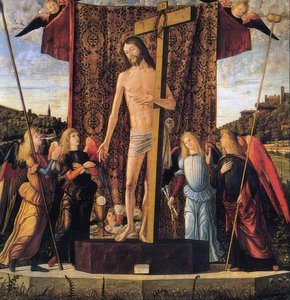
Early Life and Training
Vittore Carpaccio, a pivotal figure in Venetian Renaissance painting, was born around 1465 in Venice, Italy—a city renowned for its artistic patronage during the era. Little is known definitively about his formative years, yet it’s understood that he commenced his artistic education under the tutelage of Gentile Bellini, arguably the most influential artist of the Venetian School at the time. This apprenticeship proved instrumental in shaping Carpaccio's future artistic trajectory and establishing him as a master craftsman. Bellini’s meticulous attention to detail and masterful use of color undoubtedly instilled within Carpaccio a foundational understanding of Venetian painting techniques.
Artistic Style and Influences
Carpaccio’s distinctive style stood apart from the broader humanist currents sweeping across Italy during his lifetime—a movement that dramatically reshaped artistic expression. Unlike many of his contemporaries, he eschewed experimentation with innovative approaches, prioritizing instead a conservative aesthetic rooted in tradition. His artistic vision drew heavily from Antonello da Messina's groundbreaking style and, crucially, incorporated elements of early Netherlandish art. This singular blend resulted in an unparalleled Venetian painting style characterized by its serene compositions, luminous color palettes, and profound narrative depth. The influence of Flemish artists is particularly evident in Carpaccio’s meticulous depiction of drapery folds and his masterful manipulation of light—techniques that would become hallmarks of Venetian art for decades to come.
Notable Works
Carpaccio's artistic legacy rests upon a remarkable corpus of paintings executed between 1490 and 1519, cementing his position as one of the foremost masters of the Venetian Renaissance. Among his most celebrated achievements is “The Legend of Saint Ursula,” a monumental cycle comprising nine canvases now housed in the Gallerie dell’Accademia—a testament to Carpaccio's unparalleled skill in storytelling through visual imagery. The series exemplifies his ability to convey complex narratives with remarkable clarity and emotional resonance, captivating audiences for centuries. Equally impressive is “Glory of St. Ursula Altarpiece,” where Carpaccio skillfully captures the ethereal beauty of Saint Ursula’s chapel—a masterpiece that showcases his mastery of color and light, mirroring Bellini's stylistic brilliance. Furthermore, "Miracle of the Relic of the Cross at the Ponte di Rialto" demonstrates Carpaccio’s exceptional compositional prowess and his capacity to imbue scenes with palpable drama—a feat achieved through careful attention to perspective and dramatic lighting.
Career Highlights and Legacy
Carpaccio’s artistic career unfolded against the backdrop of Venice's flourishing cultural landscape, securing him a prominent place within Venetian art history. He honed his craft under Bellini, Vivarini and Bastiani, absorbing their expertise and furthering the Venetian School’s reputation for excellence. His orientalist inclinations—evident in “St. George Baptizing the Selenites”—reflected a burgeoning fascination with the Levant during the Renaissance, introducing exotic motifs into Venetian art. Despite being somewhat overshadowed by luminaries like Bellini and Giorgione, Carpaccio's enduring influence persists through his masterful depictions of biblical narratives and his contribution to establishing Venice as a center for artistic innovation—a legacy that continues to inspire artists today.
References and Further Reading
Discover more about Vittore Carpaccio and the Venetian School on BuyPopArt.