Pierrot Content: A Window into Rococo Sentiment
Jean Antoine Watteau’s “Pierrot Content,” completed in 1712, transcends mere visual representation; it embodies the very essence of Rococo aesthetics—a celebration of fleeting beauty, delicate emotion, and playful illusion. Currently residing within the Museo Thyssen-Bornemisza in Madrid, Spain, this oil on canvas masterpiece continues to captivate viewers with its masterful depiction of human interaction amidst an idyllic forest setting. Watteau’s genius lies not just in his technical prowess but also in his ability to convey a profound sense of melancholy intertwined with joyous contemplation—a characteristic duality that defines the Rococo spirit.
The Composition and Setting: An Idyllic Illusion
The painting's visual impact begins immediately with its serene backdrop – ancient trees draped in moss and illuminated by dappled sunlight. Watteau skillfully employs atmospheric perspective, subtly blurring distant elements to heighten the sense of depth and create an illusion of boundless space. This deliberate choice contributes significantly to the overall mood, fostering a feeling of tranquility and escape from worldly concerns. Five figures populate the scene—a gentleman, a lady, two actors, and Pierrot himself—each positioned with careful consideration for balance and visual harmony. The inclusion of chairs and a dining table subtly hints at a recent social gathering, grounding the fantastical elements within a recognizable reality. Watteau’s meticulous attention to detail—from the meticulously rendered foliage to the subtle gradations of color—mirrors the Rococo obsession with capturing fleeting moments of sensory experience.
Costumes and Storytelling: Theatre Within Reality
The figures’ attire is undeniably opulent, reflecting the extravagant tastes of the aristocratic patrons Watteau catered to during his time. Elaborate costumes—silk gowns adorned with lace and embroidery, powdered wigs, and richly embroidered jackets—are not merely decorative; they serve as visual cues that underscore the theatrical nature of their encounter. Watteau deliberately merges reality and performance, blurring the boundaries between everyday life and staged drama—a technique emblematic of Rococo art’s fascination with illusion and spectacle. The costumes themselves speak volumes about social status and artistic convention, mirroring the conventions of Italian opera and ballet, which were immensely popular at the time. Watteau’s masterful use of color—pastel hues of pink, peach, and lavender—further enhances the theatrical atmosphere, creating a dreamlike quality that distinguishes it from the darker palettes favored by Baroque painters.
Artistic Significance: Mastering Light and Color
“Pierrot Content” stands as a cornerstone of Watteau's contribution to the Rococo movement, cementing his reputation as one of the era’s foremost painters. Watteau’s distinctive style is characterized by loose brushstrokes—a departure from the rigid formalism of Baroque art—and a masterful manipulation of light and color. He employs chiaroscuro—the dramatic interplay between light and shadow—to sculpt forms and imbue them with emotional resonance, capturing subtle nuances of expression that convey profound feelings of longing and tenderness. Watteau’s palette is muted yet luminous, favoring pastel hues that evoke the ethereal beauty of twilight forests. This technique—particularly evident in the dappled sunlight filtering through the trees—creates a sense of depth and luminosity that elevates the painting beyond mere representation, inviting viewers to contemplate its emotional core.
Relevance in Modern Art: Echoes of Elegance and Emotion
For contemporary art enthusiasts seeking inspiration or delving into European artistic heritage, “Pierrot Content” offers a timeless reminder of the power of visual storytelling. Its enduring appeal stems from Watteau’s ability to distill complex emotions—joyful exuberance tempered by wistful melancholy—into a single frame. The painting’s influence can be discerned in subsequent generations of artists who embraced Impressionism and Symbolism, prioritizing atmosphere and subjective experience over literal representation. Exploring reproductions like
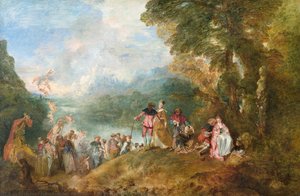
Jean Antoine Watteau's and
Jean Antoine Watteau: Pierrot content allows viewers to appreciate the legacy of Rococo artistry—a celebration of beauty, grace, and the fleeting moments that define human experience. Furthermore, visiting
Musée des Beaux-Arts Strasbourg provides a comprehensive journey through European art history—from the Renaissance to the Impressionists—illuminating the artistic traditions that shaped Watteau’s vision.
Photo Description: The painting is a portrait of a group of people sitting together in a forest setting. There are five individuals in the scene, with one person on the left side, two people in the middle, and two more on the right side. The people appear to be engaged in conversation or enjoying each other's company. The painting is set against a backdrop of trees, creating a natural atmosphere for the group. There are several chairs visible in the scene, with one near the leftmost person, another closer to the center, and two more on the right side. A dining table can also be seen in the middle of the group, suggesting that they might have been sharing a meal or engaging in some other social activity together. The people are dressed in costumes, which adds an element of intrigue and storytelling to the painting. The overall composition of the image is well-balanced, with each person occupying their own space within the frame while still maintaining a sense of togetherness among the group.
Size: 35 x 31 cm
Date: 1712
ARTIST INFORMATION:
==================
Artist: Jean Antoine Watteau
Birth Year: 1684
Death Year: 1721
Birth City: Valenciennes
Birth Country: France
Biography:
A Delicate Brushstroke: The Life and Art of Jean-Antoine Watteau
Jean Antoine Watteau, a name synonymous with the blossoming Rococo style, emerged from the northern French city of Valenciennes in 1684. His brief but incandescent career irrevocably altered the course of eighteenth-century painting, shifting its focus from the grandeur and drama of the Baroque to an intimate world of elegance, leisure, and subtle emotion. Unlike many artists who followed a clearly defined path, Watteau’s journey was marked by initial struggles for recognition within the established art institutions of Paris. Born into a family of modest means—his father a master roofer—young Jean-Antoine displayed an early aptitude for drawing, initially sketching the colorful characters and bustling scenes of his hometown streets. This formative experience instilled in him a keen eye for observation and a fascination with everyday life, themes that would permeate his later work. His initial training with Claude Guillot in Paris opened up the world of the theatre to Watteau, while Claude Audran, his other teacher, brought him into contact with 17\n