Pictură în ulei pe pânză, realizată manual de artiștii noștri la dimensiunea și ramele dorite de dumneavoastră, pe comandă. ( Comandă printul Cumpără imaginea)





























Alegeți dintre dimensiunile noastre prestabilite, care respectă proporțiile originale ale operei de artă.

Puteți introduce propriile dimensiuni pentru a se potrivi unui anumit cadru sau spațiu. Dacă dimensiunea selectată nu corespunde proporțiilor imaginii originale, vom decupa opera de artă sau vom extinde pictura cu elemente suplimentare pictate manual. O simulare digitală vă va fi trimisă pentru aprobare înainte de începerea producției.
Vă rugăm să rețineți că previzualizarea de pe ecran nu reflectă decuparea sau extinderea reală. Doar macheta va arăta cu exactitate compoziția finală.
Deși sunt disponibile dimensiuni personalizate, vă recomandăm să selectați o dimensiune din lista predefinită pentru a păstra proporțiile originale.
Livrare în întreaga lume () în 3-4 săptămâni, în loc de cele 5 săptămâni standard. (14 August). Fără compromisuri în ceea ce privește calitatea.


Evening Bell At Mii Temple
Dimensiune reproducere
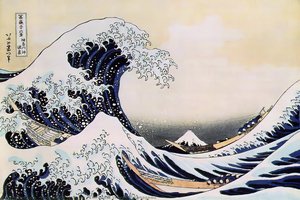
“Evening Bell at Mii Temple,” attributed to Katsushika Hokusai, stands as a cornerstone of Japanese landscape painting and exemplifies the aesthetic sensibilities of the Edo period (1603-1868). More than just a depiction of scenery, it’s an invitation into a moment of contemplative beauty—a carefully crafted visual experience designed to evoke serenity and appreciation for the natural world. Hokusai’s masterful use of Prussian blue pigment, imported from Europe during this era, elevates the print beyond mere observation; it transforms it into a symbol of artistic innovation and cultural exchange.
Hokusai’s technique—woodblock printing (ukiyo-e)—was revolutionary for its time. The artist meticulously carved detailed linework onto wooden blocks, transferring ink to paper with precision and layering colors to achieve astonishing tonal depth and luminosity. Notice the dominant vertical line that anchors the composition, mirroring the towering Mount Fuji in the background – a motif frequently employed by Hokusai to convey grandeur and permanence. The placement of the temple building itself is deliberately asymmetrical, creating visual balance while subtly emphasizing the importance of spiritual contemplation amidst the vastness of nature. Furthermore, the artist skillfully utilizes atmospheric perspective—a technique perfected during this period—to simulate the hazy air surrounding Mount Fuji, enhancing the sense of distance and conveying a feeling of ethereal beauty.
The Edo period witnessed an unprecedented flourishing of artistic creativity fueled by economic prosperity and social stability. Artists like Hokusai were commissioned to produce prints celebrating imperial patronage and commemorating significant events—a practice that fostered stylistic experimentation and broadened artistic horizons. “Evening Bell at Mii Temple” directly reflects the prevailing aesthetic ideals of the era, prioritizing subtlety, restraint, and a profound connection with the natural world. Its influence extends far beyond Japan’s borders, inspiring Impressionist painters like Claude Monet who sought to capture fleeting moments of beauty—a testament to Hokusai's enduring artistic legacy.
Japanese landscape painting held profound symbolic significance within Edo society. Mountains represented stability, resilience, and divine authority – ideals deeply ingrained in Buddhist beliefs prevalent at the time. The temple bell symbolizes enlightenment and spiritual awakening, representing the aspiration for inner peace and harmony. The two women depicted alongside the temple contribute to this symbolism; they embody feminine grace and represent a harmonious relationship between humanity and nature. Their gaze directs our attention upwards towards Mount Fuji, reinforcing the overarching theme of reverence for the sacred landscape.
Ultimately, “Evening Bell at Mii Temple” transcends mere visual representation; it communicates a palpable emotion – tranquility. The muted palette, combined with the careful rendering of light and shadow, invites viewers into a meditative state. It’s a scene designed to inspire contemplation and appreciation for the sublime beauty of nature—a timeless reminder that even amidst the complexities of life, moments of serenity can be found in observing the grandeur of Mount Fuji and reflecting on the spiritual significance of Buddhist temples.

1760 - 1849 , Japonia
Descoperă cele mai frumoase 25 de opere de artă semnate de Katsushika Hokusai, maestru ukiyo-e. Explorează istoria valului Kanagawa și a picturilor japoneze iconice. Reproduceri de calitate muzeală pentru decorul casei tale pe BuyPopArt.com!

Explore the life & art of Ando Hiroshige, Japan's last great ukiyo-e master. Discover his iconic landscapes, poetic style, and profound influence on Western Impressionism. Learn about The Fifty-Three Stations & more!

Explore the history of serene landscapes in art! Discover renowned artists like Monet & Munch, movements from Impressionism to Tonalism, and find the perfect piece to bring tranquility to your home. Expert insights at BuyPopArt.

Journey into Japan's 'Floating World'! Explore 10 Ukiyo-e masterpieces by Hokusai, Hiroshige & more. Discover the stories behind these iconic woodblock prints and bring timeless Japanese art to your home with BuyPopArt.com. Explore the full collection online.

Explore the captivating world of Ukiyo-e – Japan's iconic woodblock prints! Discover masters like Hokusai & Hiroshige, learn about Edo period culture, and find expert art collecting guidance at BuyPopArt.


Rămâneți la curent cu cele mai recente știri din lumea artei, ofertele noastre exclusive și ideile de decor.
Spuneți-ne despre proiectul dumneavoastră, iar experții noștri în artă vă vor oferi 3 sugestii personalizate.
Vom selecta 3 opțiuni special pentru tine – Gratuit!


 Previzualizare
 Trimite
 Distribuie
 Detalii despre lucrare

 Descarcă
 Produse similare
 Radiografie
 Diapozitive automate
 Vezi mai mult







 Opțiunea cu sticlă este disponibilă doar pentru dimensiuni de sub 110 cm