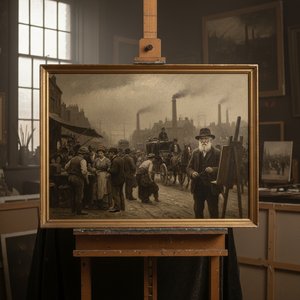
O via înrădinațâ în pământul englez: Lumea lui Gilbert Spencer
Gilbert Spencer, născut pe 4 august 1892, în idilica sat de Cookham, Regatul Unit, a fost un pictor profund conectat la ritmurile și nuanțele vieții englezești. A trăit până în 1979, lăsând în urmă o creație care surprinde, cu o forță discretă, însă esența peisajelor și a oamenilor țării sale. Provenind dintr-o familie numeroasă — al optsprezecelea din elf copii — și având un tată care i-a insuflat pasiunea pentru muzică prin rolul său de organist și profesor, tinerețea lui Spencer a fost una de mijloace modeste, dar bogată în stimulare intelectuală. Această educație a cultivat o sensibilitate care avea să modeleze profund viziunea sa artistică. Probabil cea mai semnificativă legătură familială a fost cea cu fratele său mai tânăr, Sir Stanley Spencer, un pictor renumit al cărui stil distinctiv era adesea comparat cu cel al lui Gilbert; totuși, acesta din urmă și-a croit propriul drum printr-o dedicare neclintită realismului și o interpretare personală, unică, a lumii din jurul său. Deși educația formală a fost limitată de constrângeri financiare, conversațiile vii din cercul său familial au oferit un substitut inestimabil, hrănind o minte curioasă, dornică să exploreze expresia artistică.
Anii formatori și trezirea artistică
Formarea artistică formală a lui Spencer a început în 1911 la Școala de Arte și Craft Camberwell, fiind urmată de studii de sculptură în lemn la Royal College of Art. Totuși, perioada petrecută la Slade School of Fine Art din Londra (1913-1915) s-a dovedit a fi cu adevărat decisivă. Acolo, a fost supus profund influenței lui Henry Tonks, un maestru al desenului, a cărui accent pe observație și pe îndemânarea tehnică a lăsat o amprentă indelibilă asupra abordării picturale a lui Spencer. A excelat la Slade, câștigând premiul pentru desen anatomic în 1914 și obținând recunoaștere pentru proiectul său ambițios de frescă, „Cele șapte vârste ale omului”. Acest succes timpuriu a prevestit un talent pentru compoziții la scară largă, care s-ar fi manifestat ulterior în lucrările sale murale de o importanță majoră. Dincolo de curriculumul formal, expunerea lui Spencer la grupul Bloomsbury, prin intermediul doamnei Ottoline Morrell — o protectoare strălucită a artelor și gazdă la Garsington Manor — i-a lărgit orizonturile artistice și l-a introdus într-un cerc intelectual vibrant. Aceste experiențe timpurii au pus bazele unei cariere caracterizate atât prin măiestrie tehnică, cât și printr-o implicare profundă în curentul cultural al epocii sale.
Stiluri în evoluție și teme durabile
Dezvoltarea artistică a lui Spencer a fost marcată de explorarea unor stiluri diverse, însă el s-a întors constant către un angajament fundamental față de realism. Peisajele sale timpurii, precum „Sashes Meadow, Cookham” (1914), dezvăluie influența impresionismului prin tratarea delicată a luminii și a culorii. Lucrările ulterioare, precum „Peisaj montan cu o moară de vânt”, demonstrează adoptarea unor elemente fauviste și post-impresioniste, caracterizate prin penseze mai îndrăznețe și forme simplificate. Cu toate acestea, Spencer nu și-a abandonat niciodată pe deplin dedicarea de a înscrie cu acuratețe pe pânză pe țாட்டul englezesc și pe locuitorii săi. Subiectele sale s-au concentrat constant în jurul peisajelor, portretelor, scenelor de gen și decorațiunilor murale — toate reflectând o conexiune profundă cu Anglia rurală. El poseda o capacitate excepțională de a surprinde demnitatea liniștită a vieții de zi cu cu zi, încărcând chiar și scenele aparent banale cu un sentiment de frumusețe și semnificație. Această dedicare de a portretiza viața engleză cu claritate și directitudine a devenit o marcă distinctivă a identității sale artistice.
Realizări și moștenire
Pe parcursul întregii sale cariere, Gilbert Spencer a obținut o recunoaștere semnificativă pentru contribuția sa la arta britanică. Crearea frescelor de la Holywell Manor (1934-1936), care ilustrează legenda fondării Colegiului Balliol, i-a demonstrat îndemâna în pictura narativă de mari dimensiuni. În timpul celui de-al Doilea Război Mondial, a servit ca artist de război oficial (1940–1943), documentând scene de instruire militară și viața de pe frontul intern. Această perioadă i-a oferit o oportunitate unică de a observa și de a înregistra impactul conflictului asupra peisajului englezesc și asupra oamenilor săi. Talentul lui Spencer a fost recunoscut în continuare prin alegerea sa ca membru asociat al Royal Academy în 1950, urmată de membriat deplin în 1959. De asemenea, s-a bucurat de o carieră didactică distinsă, ocupând catedre de profesor la Royal College of Art (1932-1948), Glasgow School of Art (1948–1950) și Camberwell School of Arts and Crafts (1950–1957). Operele sale publicate, inclusiv autobiografia sa „Memoirs of a Painter” (1974) și o biografie a fratelui său, Stanley Spencer (1961), oferă perspective valoroase asupra filosofiei sale artistice și a dinamicii creative din cadrul familiei sale. Lucrările notabile includ „Troops in the Countryside”, care surprinde frumos o coexistență pașnică între soldați și viața rurală; „Summer Evening, Durditate Downs”, o reprezentare dramatică a unei adunări sociale; și „Boy Holding a Rabbit” (1931), o portretizare tandră a inocenței copilăriei. Gilbert Spencer este rememorat ca un pictor britanic de seamă, care a capturat esența vieții engleze cu claritate, directitudine și un ochi agut pentru detalii. Opera sa oferă perspective prețioase asupra peisajelor sociale și rurale ale Angliei din secolul XX, iar moștenirea sa continuă să îi inspire atât pe artiști, cât și pe iubitorii de artă. El deține, de asemenea, o importanță istorică în calitate de frate al lui Stanley Spencer, contribuind la înțelegerea carierelor ambelor pictori într-un context familial unitar.