Early Life and Influences
Suzuki Harunobu, a pivotal figure in the history of Japanese art, emerged from the bustling metropolis of Edo (modern-day Tokyo) in 1725. While details about his early years remain shrouded in mystery – historical records offer scant information – it’s believed he spent his formative years in Kyoto, absorbing the artistic atmosphere and traditions of that ancient capital. His work immediately reveals a complex interplay of influences, demonstrating a deep respect for established masters while simultaneously forging a unique and innovative style. Harunobu's artistic journey was shaped by the legacies of several prominent artists: Torii Kiyomitsu, known for his pioneering use of color in monochrome prints; Ishikawa Toyonobu, a master of perspective and composition; the Kawamata School, renowned for its elegant depictions of nature; and, perhaps most significantly, Nishikawa Suke-nobu. The latter’s influence is particularly pronounced, as Suke-nobu's delicate portrayals of women and his sophisticated use of color served as a foundational model for Harunobu’s own artistic approach. The combination of these diverse influences created a distinctive voice within the burgeoning world of *ukiyo-e* art.
Artistic Career and Innovation
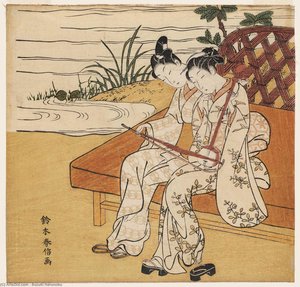
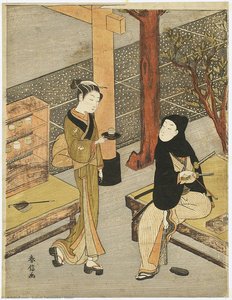
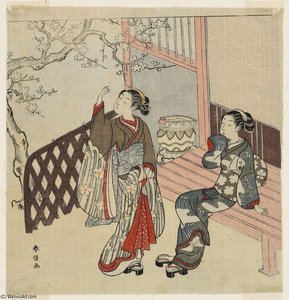
Harunobu’s early career was characterized by skillful, yet somewhat conventional, work in the style of the Torii School. His prints demonstrated technical proficiency but lacked the groundbreaking originality that would later define his legacy. However, a pivotal shift occurred when he became involved with a group of literati samurai – members of the wealthy merchant class who embraced artistic pursuits as a form of leisure and cultural refinement. This association proved transformative, propelling Harunobu towards new creative horizons. In 1764, he was commissioned to design *e-goyomi* calendars for these samurai patrons—a groundbreaking development that marked the birth of *nishiki-e*, or “brocade prints.” These calendar images represented a radical departure from traditional monochrome prints, embracing full-color production and demanding unprecedented technical skill. Harunobu’s experimentation with premium woods and expensive pigments pushed the boundaries of printmaking, establishing new standards for quality and visual impact. A remarkable innovation was his development of a system utilizing notches and wedges to hold multiple separate woodblocks in place during the printing process – a technique that allowed for the creation of complex images composed of ten or more distinct blocks. This ingenious method dramatically increased the intricacy and detail possible within a single print, fundamentally altering the landscape of Japanese art.
Notable Works and Techniques
Suzuki Harunobu’s *nishiki-e* prints quickly gained popularity among the *chōnin* class – the urban merchant elite who sought to adorn their homes with exquisite works of art. His prints depicted scenes from everyday life, capturing the beauty of nature, the elegance of courtesans, and the vibrancy of Edo society. His mastery of color was particularly noteworthy; he skillfully employed a delicate, almost ethereal palette, often utilizing subtle gradations and nuanced tones to create a sense of atmosphere and mood. Unlike many of his contemporaries who favored overtly erotic subjects (*shunga*), Harunobu primarily focused on idyllic scenes of love and beauty, reflecting the refined tastes of his clientele. He also demonstrated a remarkable ability to evoke specific settings – snow-covered landscapes and nighttime scenes – adding depth and emotional resonance to his compositions. His prints were not merely decorative; they conveyed a sense of poetry and contemplation, inviting viewers to immerse themselves in the world he depicted.
Legacy and Influence
Suzuki Harunobu’s contributions were instrumental in shaping Western perceptions of Japanese art during the late 19th century. His innovative *nishiki-e* prints captivated European artists and collectors, becoming a key influence on the *Japonisme* movement – a trend that celebrated the aesthetics of Japanese art. Artists such as Hokusai and Hiroshige, who built upon Harunobu’s techniques and explored similar themes, gained widespread recognition in Europe thanks to his pioneering work. Harunobu's legacy extends far beyond his individual achievements; he essentially established the foundation for full-color woodblock printing in Japan, transforming it from a relatively rare practice into a dominant form of artistic expression. His influence can still be felt today, as his prints continue to inspire artists and captivate audiences worldwide. His work stands as a testament to the power of innovation, artistry, and cultural exchange.