

Картина маслом на холсте в выбранном вами размере и раме, написанная на заказ нашими художниками. ( Перейти к печати Переключиться на изображение)





























Выберите один из наших стандартных размеров, соответствующих оригинальным пропорциям произведения искусства.

Вы можете указать собственные размеры, чтобы картина идеально вписалась в выбранную раму или пространство. Если выбранный вами размер не соответствует пропорциям оригинала, мы либо обрежем полотно, либо расширим его за счет дополнительных элементов, написанных вручную. Цифровой макет будет отправлен вам на утверждение перед началом производства.
Обратите внимание, что предварительный просмотр на экране не отражает фактическую обрезку или расширение. Только макет точно покажет окончательную композицию.
Хотя доступны индивидуальные размеры, мы рекомендуем выбирать вариант из предопределенного списка, чтобы сохранить исходные пропорции.
Доставка по всему миру () за 3–4 недели вместо стандартных 5 недель. (11 Август). Без компромиссов в качестве.


Приведение невесты в постель
Размер репродукции
In the shimmering, decadent atmosphere of mid-18th century Paris, few artists captured the ephemeral essence of Rococo intimacy quite like Pierre-Antoine Baudouin. Born in 1723 to an engraver, Baudouin emerged not merely as a painter, but as a chronicler of the era's most private and whispered moments. His life was deeply entwined with the very fabric of French high society and its artistic elite; through his marriage to Marie-Elisabeth, the daughter of the legendary François Boucher, he became more than just a pupil of the Rococo master—he became an extension of Boucher’s own aesthetic legacy. This connection granted him access to the most refined circles of the French court, where the boundaries between art and life were often blurred by grace, wit, and a touch of scandal.
Baudouin’s artistic development was characterized by a remarkable mastery of delicate mediums. While many of his contemporaries sought the permanence of oil on canvas, Baudouin found his true voice in the ephemeral textures of watercolors, gouache, and crayons. His technique allowed for a luminous, almost translucent quality that perfectly suited his subject matter: idyllic landscapes, soft boudoir scenes, and the playful, often erotic, encounters of the aristocracy. There is a certain breathlessness to his work, a sense that one is catching a fleeting glimpse through a silk curtain. His ability to render the softness of skin, the sheen of satin, and the gentle light of a Parisian afternoon made him a favorite among collectors who sought art that felt as much like a secret as a possession.
Despite his technical brilliance and his prestigious election to the Académie Royale in 1763, Baudouin’s reputation was never without its shadows. He occupied a complex position in the cultural landscape of the 1760s, caught between the frivolous elegance of the Rococo and the rising tide of moralistic scrutiny. The famous critic Denis Diderot, known for his biting assessments of the Salons, famously cast Baudouin in a harsh light. While acknowledging his talent, Diderot condemned him as a "painter-preacher of bad morals," contrasting him unfavorably with Jean-Baptiste Greuze, whom he viewed as a moralizing force. To Diderot, Baudouin’s work—with its focus on rakes and houses of ill repute—represented the decadent decay of a society losing its ethical compass.
This tension between aesthetic pleasure and moral judgment defines much of Baudouin's historical significance. His oeuvre serves as a vital, if controversial, window into the libertine culture of pre-revolutionary France. Whether he was painting a historical subject like his reception piece, Hyperides pleading the cause of Phryne before the Areopagus, or a more intimate miniature, there was always an underlying pulse of worldly sophistication. His life ended prematurely in 1769, amidst rumors that linked his early death to the very lifestyle of pleasure he so exquisitely depicted. Today, Baudouin is remembered not just as a follower of Boucher, but as a singular artist who dared to elevate the miniature and the erotic to a level of profound, delicate artistry, leaving behind a legacy that remains as captivating as it is provocative.

1723 - 1769 , France
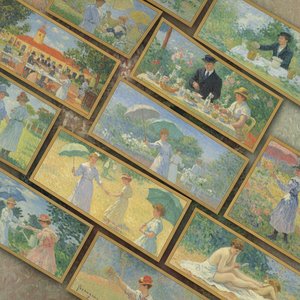
Погрузитесь в мир Ренуара! 🎨 Откройте топ-25 шедевров импрессионизма, историю создания картин и вдохновляющую красоту. Купите репродукции высокого качества для вашего интерьера на BuyPopArt.com – музейное искусство онлайн!

Explore the opulent world of Rococo art! Discover its origins, key artists like Watteau & Boucher, and lasting influence on design. Expert insights for collectors & enthusiasts.

Погрузитесь в мир рококо! Откройте для себя 10 шедевров искусства от Watteau, Boucher и Fragonard. Узнайте историю создания культовых картин и вдохновитесь для декора интерьера. Репродукции высокого качества на BuyPopArt.com.

Explore the opulent world of Rococo art! Discover Watteau, Boucher & Nattier's masterpieces. Expert insights for collectors seeking museum-quality reproductions and custom portraits at BuyPopArt.

Explore the captivating world of Jean-Baptiste Pater, a master of Rococo painting. Discover his elegant *fête galante* scenes and shimmering portraits – a glimpse into 18th-century French aristocracy. Learn about his legacy & find high-quality reproductions.


Будьте в курсе последних новостей из мира искусства, эксклюзивных предложений и идей для оформления интерьера.
Расскажите нам о вашем проекте, и наши эксперты по искусству предложат вам 3 персонализированных варианта произведений искусства.
Мы подберем для вас 3 варианта — бесплатно!


 Предпросмотр
 Поделиться
 Поделиться
 Детали произведения

 Скачать
 Похожие работы
 Рентгенография
 Слайд-шоу


 Читать далее







 Вариант со стеклом доступен только для размеров менее 110 см


