Масло на холстеНастенный декорPost-Impressionism
 1897— Модерн
 65.0 x 81.0 cm
Картина маслом на холсте в выбранном вами размере и раме, написанная на заказ нашими художниками. ( Перейти к печати Переключиться на изображение)





























Выберите один из наших стандартных размеров, соответствующих оригинальным пропорциям произведения искусства.

Вы можете указать собственные размеры, чтобы картина идеально вписалась в выбранную раму или пространство. Если выбранный вами размер не соответствует пропорциям оригинала, мы либо обрежем полотно, либо расширим его за счет дополнительных элементов, написанных вручную. Цифровой макет будет отправлен вам на утверждение перед началом производства.
Обратите внимание, что предварительный просмотр на экране не отражает фактическую обрезку или расширение. Только макет точно покажет окончательную композицию.
Хотя доступны индивидуальные размеры, мы рекомендуем выбирать вариант из предопределенного списка, чтобы сохранить исходные пропорции.
Доставка по всему миру () за 3–4 недели вместо стандартных 5 недель. (8 Август). Без компромиссов в качестве.


"Mont Sainte-Victoire" → "Монт Сент-Виктор"
Размер репродукции
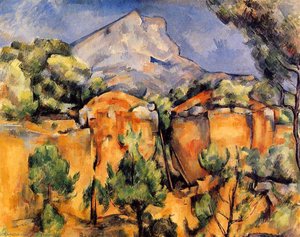
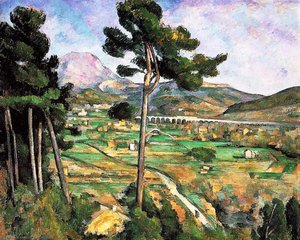
Paul Cézanne’s “Mont Sainte-Victoire” isn’t merely a landscape painting; it’s an immersion into the very heart of Provence, a meditation on light, form, and the enduring power of observation. Painted between 1897 and 1898, this iconic work captures not just the physical presence of the mountain rising majestically above Aix-en-Provence, but also the artist’s profound connection to its essence – a connection that would define his entire artistic trajectory. Cézanne wasn't interested in replicating a photographic representation; instead, he sought to distill the *feeling* of the mountain, its solidity and its ethereal quality, into a visual language entirely his own.
The painting’s palette is deceptively simple – primarily blues, greens, ochres, and whites. However, Cézanne masterfully employs these colors not as descriptive hues but as building blocks for structure. He utilizes broken brushstrokes, layering planes of color to create a sense of depth and volume that defies traditional perspective. Notice how the mountain’s form isn't rendered with smooth transitions; rather, it’s fragmented into geometric shapes – rectangles, triangles, and circles – suggesting an underlying architectural framework. This deliberate simplification, a hallmark of Cézanne’s style, anticipates the radical innovations of Cubism, demonstrating his profound influence on 20th-century art.
Mont Sainte-Victoire held a particularly significant place in Cézanne's life and work. He returned to paint it repeatedly over several decades, each iteration revealing a slightly different facet of the mountain’s character. It became more than just a subject; it was a constant companion, a source of inspiration, and ultimately, a metaphor for the artist’s own quest for understanding. The mountain's imposing presence served as a grounding force, anchoring Cézanne’s artistic explorations while simultaneously pushing him to question established conventions.
Local legend tells of a hermit who once lived on the summit of Mont Sainte-Victoire, adding a layer of spiritual significance to the landscape. Cézanne himself was deeply interested in spirituality and philosophy, and he often sought solace and clarity through his connection with nature. The mountain, therefore, becomes a symbol not only of the physical world but also of the inner realm – a place where the artist could confront fundamental questions about existence and representation.
“Mont Sainte-Victoire” stands as a pivotal work in the transition from Impressionism to modern art. While Cézanne shared with his Impressionist predecessors an interest in capturing fleeting moments of light and color, he moved beyond mere observation to explore the underlying structure of objects and the formal qualities of painting. He rejected the illusionistic techniques of academic art, opting instead for a more direct and expressive approach.
His use of flattened perspective, simplified forms, and bold colors challenged traditional notions of representation, paving the way for artists like Picasso and Braque to develop Cubism. Cézanne’s emphasis on the *process* of painting – the act of seeing and translating that vision onto canvas – is equally revolutionary. He wasn't simply depicting a mountain; he was engaging in a dialogue with it, transforming it into an object of contemplation and artistic expression.
“Mont Sainte-Victoire” continues to resonate with viewers today because of its profound emotional impact and its enduring relevance. The painting’s sense of stillness and serenity invites us to pause, reflect, and connect with the natural world. It's a testament to Cézanne’s ability to capture not just the appearance of a landscape but also the essence of human experience – our longing for beauty, our search for meaning, and our connection to something larger than ourselves.
Reproductions of this iconic work offer a remarkable opportunity to bring the spirit of Cézanne's vision into your home or office. Each brushstroke, carefully recreated with meticulous attention to detail, captures the depth and complexity of this timeless masterpiece.
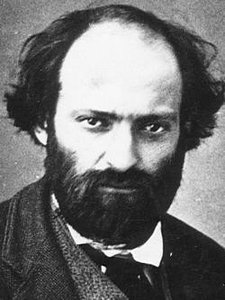
1839 - 1906 , Франция

Explore the profound evolution of art from Impressionism to Post-Impressionism. Discover how masters like Van Gogh revolutionized color and emotion, shaping modern art history through structural innovation and expressive technique.


Будьте в курсе последних новостей из мира искусства, эксклюзивных предложений и идей для оформления интерьера.
Расскажите нам о вашем проекте, и наши эксперты по искусству предложат вам 3 персонализированных варианта произведений искусства.
Мы подберем для вас 3 варианта — бесплатно!


 Предпросмотр
 Поделиться
 Поделиться
 Детали произведения

 Скачать
 Похожие работы
 Рентгенография
 Слайд-шоу
 Читать далее







 Вариант со стеклом доступен только для размеров менее 110 см