

 Akryl na plátneWallArtRenaissance Painting
 1450
1450 141.0 x 46.0 cm
 Pinacoteca Ambrosiana
Ručne maľovaný olej na plátne vo vašej zvolenej veľkosti a v ráme, vyrobený na mieru našimi umelcami. ( Prejsť na tlač Prepnúť na obrázok)





























Vyberte si z našich preddefinovaných rozmerov, ktoré zodpovedajú pôvodným pomeroḿ diela.

Môžete zadať vlastné rozmery tak, aby sa hodili do konkrétneho rámu alebo priestoru. Ak sa váš zvolený rozmer nezhoduje s pôvodnými proporciami obrazu, dielo buď orezáme, alebo ho doplníme ručne maľovanými prvkami. Pred začiatkom výroby vám zašleme digitálny náhľad na schválenie.
Upozorňujeme, že ukážka na obrazovke neodráža skutočné orezanie alebo doplnenie. Skutočnú finálnu kompozíciu zobrazuje iba digitálny náhľad.
Hoci sú k dispozícii vlastné rozmery, odporúčame vybrať rozmer z preddefinovaného zoznamu, aby sme zachovali pôvodné proporcie.
Celosvetová doprava () za 3 až 4 týždne namiesto štandardných 5 týždňov. (10 august). Bez kompromisov v kvalite.


St Francis
Veľkosť reprodukcie
Fra Carnevale’s *St Francis*, painted around 1450 in Urbino, represents more than just a portrait; it embodies the humanist spirit and artistic innovation characteristic of the Florentine Renaissance. This remarkable artwork delves into themes of piety, contemplation, and divine grace—elements profoundly influential during this transformative period.
The architectural backdrop—a simple window or archway—serves as a contextual element without overshadowing the central figure. Carnevale’s meticulous rendering of fabric textures and manuscript details underscores his commitment to artistic craftsmanship, demonstrating the Renaissance preoccupation with accuracy and naturalism.
More than just an aesthetically pleasing depiction, *St Francis* speaks to enduring spiritual values. It exemplifies the humanist conviction that art could illuminate moral truths and inspire contemplation—a legacy that continues to resonate within the broader context of Renaissance culture. Carnevale’s masterpiece stands as a testament to the transformative power of artistic vision.
A reproduction of Fra Carnevale’s *St Francis* would bring a touch of Renaissance elegance and contemplative serenity into any interior space, capturing the essence of this iconic artwork—a symbol of faith, compassion, and artistic excellence.
Early Life & Training: Records indicate Carnevale's formative years were spent in Urbino under the tutelage of Jacopo Veneto, a master known for his innovative use of perspective. This early influence would profoundly shape Carnevale’s artistic style and approach to architectural representation. Veneto’s mastery of spatial illusion—a technique that would become Carnevale’s hallmark—laid the groundwork for his future endeavors.
Florence & Alberti’s Influence: Around 1445, Carnevale traveled to Florence where he studied under Antonio Alberti—a pivotal encounter that cemented Alberti's reputation as “the crucible for artistic experiments by ‘the 1425 generation.’” Alberti championed humanist ideals and advocated for the integration of mathematics and geometry into art, principles Carnevale would wholeheartedly embrace. Alberti’s insistence on rational order and mathematical precision profoundly impacted Carnevale's worldview and artistic practice.
The Workshop of Lippi: Carnevale’s apprenticeship with Filippo Lippi solidified his understanding of Florentine painting techniques—particularly Lippi's masterful handling of color and composition. This period witnessed Carnevale honing his skills alongside some of the era’s most celebrated artists, fostering a collaborative environment that nurtured innovation. Lippi’s meticulous attention to detail and expressive brushwork served as an invaluable lesson for Carnevale.
Return to Urbino & Federico Montefeltro: Returning to Urbino in 1456, Carnevale joined the Dominican Order and became closely associated with Duke Federico Montefeltro—a patron who recognized Carnevale's talent and commissioned ambitious architectural projects, including the facades of San Domenico Cathedral. Montefeltro’s court served as a crucible for artistic experimentation, propelling Carnevale to the forefront of Urbino’s cultural landscape. Montefeltro’s patronage enabled Carnevale to pursue his artistic ambitions without constraint.
Notable Works & Legacy: Carnevale’s surviving paintings—primarily *The Virgin and Temple* altarpiece (circa 1467) and *The Ideal City* (ca 1480–1485)—demonstrate his unparalleled command of architectural perspective and his commitment to humanist ideals. These works stand as testament to Carnevale’s artistic genius—a singular voice amidst the bustling Renaissance, whose enigmatic style continues to captivate audiences today. The *Virgin and Temple* exemplifies Carnevale’s masterful use of illusionistic space, mirroring Alberti’s architectural theories.
Vasari's biographical account—though fragmentary—established Carnevale as a figure of considerable renown among Urbino scholars and cemented his reputation for excellence in architectural design. Lomazzo’s dictionary recognized Carnevale as an architect who championed Alberti’s principles, highlighting the convergence of artistic and intellectual pursuits that characterized Carnevale’s life.
Despite the paucity of surviving artworks—and the ongoing debate surrounding their authenticity—Carnevale's influence on Bramante and Raphael is undeniable. His pioneering use of perspective—particularly in *The Ideal City*—served as a foundational element for the architectural grandeur of St. Peter’s Basilica, securing Carnevale’s place among the titans of Renaissance art.
Ultimately, Fra Carnevale remains an artist shrouded in mystery—a testament to the challenges inherent in reconstructing the lives and artistic achievements of figures whose output was tragically limited. Yet, his enduring legacy—embodied in his masterful paintings and unwavering devotion to humanist ideals—continues to inspire awe and admiration centuries after his death.

1420 - 1484 , Taliansko

Objavte top 25 majstrovských diel Fra Angelica – renesančných fresiek a panelových malieb plných duchovnosti. Prežite príbehy umenia, techniky a farieb. Kvalitné reprodukcie obrazov na BuyPopArt.com! Preskúmajte celú kolekciu online.
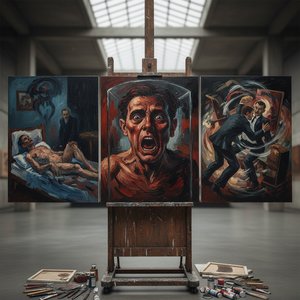
Ponorte sa do sveta Francis Bacona s BuyPopArt.com! Objavte top 25 diel tohto majstra expresionizmu – portréty, triptychy a temné maľby plné emócií. Kúpiť reprodukcie obrazov pre luxusný interiérový dizajn. Preskúmajte celú kolekciu online!

Ponorte sa do sveta El Greca s BuyPopArt.com! Objavte top 25 majstrovských diel španielskeho renesančného maliara – od duchovných náboženských obrazov po ikonické manieristické kompozície. Kúpiť reprodukcie online a inšpirujte sa pre váš interiér.
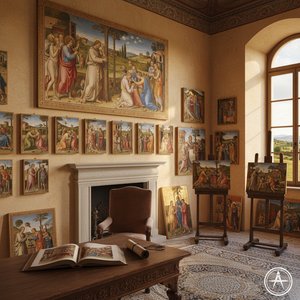
Objavte top 25 majstrovských diel Giotta di Bondone! Fresky, renesančné obrazy a historické motívy plné emócií. Nájdite reprodukcie obrazov pre váš domov na BuyPopArt.com – múzejná kvalita a inšpirácia pre interiérový dizajn.

Explore the rich history of religious painting with BuyPopArt.com! Discover iconic artworks, symbolism & techniques from antiquity to the Renaissance. Enhance your art appreciation today.


Zostaňte v obraze s najnovšími správami zo sveta umenia, exkluzívnymi ponukami a nápormi na dekoráciu.
Povedzte nám o svojom projekte a naši odborníci na umenie vám pripravia 3 personalizované návrhy umeleckých diel.
Nechajte si od nás vybrať 3 možnosti priamo pre vás – zadarmo!


 Náhľad
 Odoslať
 Zdieľať
 Podrobnosti o dielo

 Stiahnuť
 Podobné diela
 RTG skúška
 Prezentácia
 Zobraziť viac







 Možnosť skla je dostupná len pri rozmeroch pod 110 cm


