Olja på dukVäggkonstCubism
 1900talet
 63.0 x 50.0 cm
Handmålad olja på duk i din valda storlek och ram, tillverkad efter beställning av våra konstnärer. ( Beställ tryck Byt till bild)





























Välj bland våra förinställda storlekar som motsvarar konstverkets ursprungliga proportioner.

Du kan ange egna mått för att passa en specifik ram eller yta. Om den valda storleken inte matchar originalbildens proportioner kommer vi antingen att beskära konstverket eller utöka målningen med ytterligare handmålade element. En digital skiss skickas till dig för godkännande innan produktionen påbörjas.
Observera att förhandsvisningen på skärmen inte återspeglar den faktiska beskärningen eller utökningen. Endast skissen visar den slutgiltiga kompositionen korrekt.
Även om anpassade storlekar är möjliga, rekommenderar vi att du väljer en dimension från den fördefinierade listan för att bevara originalproportionerna.
Leverans över hela världen () på 3–4 veckor istället för standard 5 veckor. (5 augusti). Inga kompromisser med kvaliteten.


Self Portrait with Beret
Reproduktionsstorlek
Paul Cézanne’s ‘Self-Portrait with Beret,’ painted in 1900, stands as a cornerstone of Post-Impressionism and an enduring testament to the artist’s profound engagement with his own identity. More than just a depiction of appearance, it delves into the complexities of Cézanne's inner life—a journey mirrored in his revolutionary approach to artistic representation.
Cézanne wasn’t merely aiming for accuracy; he sought to capture the essence of being. Known for his pioneering work that laid the foundation for avant-garde movements, Cézanne’s self-portraits are characterized by bold brushstrokes and an unwavering focus on structure over traditional illusionism. In ‘Self-Portrait with Beret,’ Cézanne presents himself with a beret—a symbol of intellectual curiosity and artistic contemplation—eyes closed as if lost in thought. The sparse background is deliberately rich in geometric elements, subtly reinforcing the painting’s underlying architectural framework.
Cézanne's technique – employing planes of color and small, interlocking brushstrokes – creates a mesmerizing interplay of light and shadow that draws the viewer into the canvas. This method, dubbed “constructive brushstrokes,” was a hallmark of his style and profoundly influenced subsequent artists like Picasso and Matisse. He meticulously built up forms using these strokes, rejecting Impressionistic fleetingness in favor of capturing the fundamental structure beneath the surface—a principle that would become central to Cubism.
The late 19th century witnessed a seismic shift in art criticism, with many contemporaries initially dismissing Cézanne’s work as bizarre and incomprehensible. However, fellow artists like Camille Pissarro recognized his genius early on, championing his vision and paving the way for broader appreciation. The first solo exhibition of Cézanne's paintings in 1895 at Ambroise Vollard’s Paris gallery marked a pivotal moment—a validation that solidified Cézanne’s position as a visionary ahead of his time. ‘Self-Portrait with Beret,’ therefore, isn’t merely an image of Cézanne himself; it represents the decisive transition from Impressionism to modern art.
Considered by Henri Matisse and Pablo Picasso as “the father of us all,” Cézanne's influence extends far beyond his immediate peers. His unwavering commitment to exploring form and structure continues to inspire artists today, reminding us that true beauty lies not in mere visual representation but in conveying a deeper understanding of the human condition.
‘Self-Portrait with Beret’ is available for viewing at the Museum Victoria Art Gallery (Bath, United Kingdom). Additionally, reproductions from BuyPopArt.com offer a chance to experience Cézanne's masterpiece in high quality.
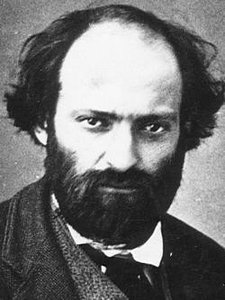
1839 - 1906 , Frankrike

Explore the profound evolution of art from Impressionism to Post-Impressionism. Discover how masters like Van Gogh revolutionized color and emotion, shaping modern art history through structural innovation and expressive technique.


Håll dig uppdaterad med de senaste konstnyheterna, exklusiva erbjudanden och inredningsidéer.
Berätta om ditt projekt så kommer våra konstexperter att ge dig 3 personliga konstförslag.
Vi skapar ett urval av 3 alternativ helt anpassat för dig – gratis!


 Visa i rummet
 Skicka
 Dela
Dela
 Detaljer

 Ladda ner
 Liknande objekt
 Röntgen
 Bildspel
 Läs mer







 Glasalternativet är endast tillgängligt i storlekar under 110 cm.