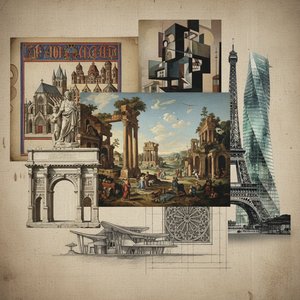
Pierre Jacques Goetghebuer: Architect of Grandeur and Detail
Pierre Jacques Goetghebuer (1788 – 1866) stands as a pivotal figure in Belgian architectural history, celebrated for his meticulous drawings and plans that captured the essence of Neo-classical grandeur. Born into a family steeped in artistic tradition—his father was a sculptor—Goetghebuer’s early life fostered an appreciation for visual representation and craftsmanship that would define his lifelong career. He honed his skills under the tutelage of Jean Baptiste Raspail, a prominent architect and teacher who instilled in him a profound understanding of classical principles and techniques.
- Early Life & Education: Goetghebuer’s formative years were spent studying at Saint-Séverin Abbey in Brussels, where he immersed himself in the study of mathematics and geometry—essential tools for architectural design. This rigorous academic foundation complemented his artistic inclinations, shaping him into a disciplined observer and draftsman with an unwavering commitment to accuracy.
- Architectural Practice & Patronage: Following graduation, Goetghebuer established a successful practice in Brussels, specializing in designing palaces, cathedrals, and civic buildings. He quickly gained recognition for his ability to translate theoretical concepts into breathtaking visual realities. Notably, he collaborated extensively with influential patrons—including Leopold II—who commissioned ambitious projects reflecting the aspirations of the Belgian monarchy.
Goetghebuer’s artistic vision was deeply rooted in Neo-classical ideals – a stylistic movement that championed symmetry, proportion, and restraint as expressions of rational order. Influenced by figures like Johann Christian Necker and Andrea Palladio, he embraced classical forms and ornamentation, prioritizing clarity and elegance over excessive embellishment. His drawings weren't merely technical representations; they were imbued with artistic sensitivity, conveying the grandeur and solemn beauty of his subjects. He meticulously rendered architectural details—columns, arches, moldings—with astonishing precision, capturing subtle nuances of light and shadow that brought his designs to life.
- Notable Projects: Among Goetghebuer’s most celebrated achievements were the plans for the Royal Palace in Brussels (completed after Leopold II's death), a monumental edifice embodying Neo-classical magnificence; the design for St Pancras Cathedral, Antwerp—a testament to his mastery of cathedral architecture and structural engineering; and the reconstruction of the Academy at Liege – demonstrating his ability to revitalize historic spaces with innovative architectural solutions.
- Technique & Legacy: Goetghebuer’s drawings are characterized by their exceptional draughtsmanship, utilizing watercolor and ink on paper with remarkable finesse. He employed a technique known as ‘grisaille,’ applying monochrome washes of gray pigment to create tonal gradations that conveyed depth and realism. His meticulous attention to detail—captured in countless preparatory sketches and finished renderings—established him as one of the foremost architectural draftsmen of his era.
Goetghebuer’s legacy extends beyond his individual projects; he profoundly influenced Belgian architectural aesthetics and contributed significantly to the dissemination of classical principles throughout Europe. His drawings serve as invaluable historical documents, offering insights into the artistic sensibilities and engineering innovations of the 18th and 19th centuries. Today, Goetghebuer's work continues to inspire architects and artists alike—a testament to his enduring contribution to the visual arts and architectural heritage.