

 Акрил на полотніНастінне мистецтвоVictorian Landscape Photography
 1858
1858 38.0 x 48.0 cm
 Музей Дж. Пола Гетті
Написана вручну олією на полотні у вашому розмірі та рамі, виготовлена на замовлення нашими художниками. ( Перейти до друку Перейти до зображення)





























Обирайте з наших стандартних розмірів, що відповідають оригінальним пропорціям твору мистецтва.

Ви можете вказати власні розміри, щоб репродукція ідеально підійшла до конкретної рами або інтер'єру. Якщо вибраний вами розмір не відповідає пропорціям оригіналу, ми або обріжемо полотно, або доповнимо картину додатковими елементами, промальованими вручну. Цифровий макет буде надіслано вам на затвердження перед початком виробництва.
Зверніть увагу, що попередній перегляд на екрані не відображає фактичне обрізання або розширення зображення. Тільки макет точно покаже остаточну композицію.
Хоча ми можемо виготовити виріб у нестандартному розмірі, для збереження оригінальних пропорцій рекомендуємо обирати варіанти зі встановленого списку.
Доставка по всьому світу () за 3–4 тижні замість стандартних 5 тижнів. (10 Серпень). Без жодних компромісів у якості.


Пірамиди Єгипту з заходу
Розмір репродукції
In the mid-nineteenth century, as the Victorian era began to expand its horizons through exploration and industrial prowess, a new kind of artist emerged—one who used the lens rather than the brush to capture the sublime. Francis Frith, born in Chesterfield, Derbyshire, in 1822, was far more than a mere businessman or a pioneer of photography; he was a visual storyteller whose expeditions brought the ancient wonders of the Orient into the parlors of Europe. Though his early life was rooted in the practicalities of the Quaker tradition and even involved apprenticeships in the cutlery trade and success as a wholesale grocer, Frith possessed an innate curiosity that would eventually lead him to the sun-drenched landscapes of Egypt, Palestine, and Syria.
The transition from commerce to the arts was not merely a change in profession but a profound evolution of perspective. After establishing himself in the photographic studio scene in Liverpool during the early 1850s, Frith felt the pull of the distant unknown. His journeys between 1856 and 1860 were Herculean feats of both physical endurance and technical mastery. Carrying heavy glass plate cameras through blistering heat and swirling desert sands, he utilized the challenging collodion process to document monuments that had remained largely unseen by Western eyes. These were not simple snapshots; they were meticulously composed architectural studies that demanded immense patience, as each exposure required a portable wicker darkroom to prepare the wet plates in situ.
What distinguishes Frith’s work from the mere documentation of his contemporaries is his profound sense of composition and scale. He did not simply photograph ruins; he orchestrated scenes that evoked the grandeur of classical painting. Influenced by the sweeping landscapes of masters like Turner and Constable, Frith understood how to use light and shadow to imbue stone and sand with a sense of eternal mystery. His large-format negatives, some measuring as much as 16 by 20 inches, allowed for an incredible level of detail that could transport a viewer from the grey streets of London directly to the towering pylons of Karnak or the silent majesty of Abu Simbel.
His technical achievements were matched by his entrepreneurial brilliance. Recognizing the immense public appetite for these exotic vistas, he established Francis Frith & Co. in 1860. This venture was revolutionary, aiming to document the very fabric of the British landscape alongside his Middle Eastern discoveries. The company grew into one of the largest photographic publishers in the world, amassing a staggering collection of negatives that covered thousands of population centers across Great Britain and Ireland. Through his publications, such as Egypt and Palestine Photographed and Described, Frith democratized the experience of travel, allowing the burgeoning middle class to participate in the era's fascination with Orientalism.
The historical weight of Francis Frith’s contribution cannot be overstated. He was a foundational figure in the development of landscape photography as an art form, bridging the gap between scientific documentation and aesthetic expression. His work provided a vital visual record of archaeological sites that have since been altered by time, conflict, and environmental change, making his archive an invaluable resource for modern historians and archaeologists alike.
As we reflect on his life, several key elements of his legacy remain prominent:
Francis Frith passed away in 1898, leaving behind a world that had been forever changed by his vision. He remains a titan of the photographic medium, an artist who mastered the light of distant lands to illuminate the history of humanity.

1822 - 1898
Відкрийте для себе 10 найвідоміших пейзажів в історії мистецтва! Ван Гог, Моне та інші майстри. Репродукції картин високої якості від BuyPopArt – натхнення для вашого дому. Дослідіть колекцію онлайн!
Відкрийте для себе 25 найкращих шедеврів Джона Констебла! Англійські пейзажі, романтизм та емоційне світло в живописі. Репродукції картин високої якості для вашого дому від BuyPopArt.com. Дослідіть повну колекцію онлайн!
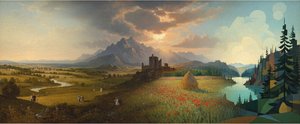
Explore the rich history of landscape art with BuyPopArt. Discover renowned artists, movements like Impressionism & Romanticism, and expert guidance for collecting timeless pieces. Find your perfect serene escape today!

Відкрийте для себе 10 шедеврів романтичного пейзажу! Каспар Давид Фрідріх, Тернер та інші майстри. Історія мистецтва, емоційні кольори природи та ідеї декору з BuyPopArt.com. Дослідіть колекцію онлайн!

Explore photography's pivotal role in shaping modern & contemporary art. Discover key movements, influential artists like Stieglitz, and expert collecting advice from BuyPopArt.


Будьте в курсі останніх новин зі світу мистецтва, ексклюзивних пропозицій та ідей для декорування.
Розкажіть нам про свій проєкт, і наші експерти з мистецтва підготують для вас 3 персоналізовані пропозиції щодо творів мистецтва.
Дозвольте нам підібрати 3 варіанти спеціально для вас — безкоштовно!


 Переглянути в інтер'єрі
 Надіслати
 Поділитися
 Деталі

 Завантажити
 Схожі експонати
 Рентгенівське дослідження
 Слайд-шоу
 Читати далі







 Скляний варіант доступний лише для розмірів до 110 см


