

 Oil On CanvasWallArtImpressionism
 191019th Century
 51.0 x 64.0 cm
 Walker Art Gallery
Написана вручну олією на полотні у вашому розмірі та рамі, виготовлена на замовлення нашими художниками. ( Перейти до друку Перейти до зображення)





























Обирайте з наших стандартних розмірів, що відповідають оригінальним пропорціям твору мистецтва.

Ви можете вказати власні розміри, щоб репродукція ідеально підійшла до конкретної рами або інтер'єру. Якщо вибраний вами розмір не відповідає пропорціям оригіналу, ми або обріжемо полотно, або доповнимо картину додатковими елементами, промальованими вручну. Цифровий макет буде надіслано вам на затвердження перед початком виробництва.
Зверніть увагу, що попередній перегляд на екрані не відображає фактичне обрізання або розширення зображення. Тільки макет точно покаже остаточну композицію.
Хоча ми можемо виготовити виріб у нестандартному розмірі, для збереження оригінальних пропорцій рекомендуємо обирати варіанти зі встановленого списку.
Доставка по всьому світу () за 3–4 тижні замість стандартних 5 тижнів. (10 Серпень). Без жодних компромісів у якості.


Study of Two Sheep
Розмір репродукції
The history of British art is often written in the long, enduring strokes of masters who lived to see their legacies cemented by time. Yet, there exists a more poignant, haunting chapter found in the brief, luminous career of Maxwell Gordon Lightfoot. Born on July 19, 1886, in the Granby Street district of Liverpool, Lightfoot was a figure of immense promise whose life was tragically extinguished at the age of twenty-five. To look upon his work is to witness a soul caught in the transition between the meticulous traditions of the nineteenth century and the burgeoning, experimental spirit of early twentieth-century modernism. His story is not merely one of technical skill, but of a profound, atmospheric sensitivity that captured the ephemeral beauty of the English landscape and the quiet dignity of the human form.
Lightfoot’s artistic lineage was shaped by both familial circumstance and rigorous academic discipline. The unusual name he bore—a tribute from his mother to a father lost at sea—served as a constant, subtle reminder of the fragility of life, perhaps an element that would later manifest in the melancholic undertones of his compositions. His formal education began at the Chester Art School in 1901, providing him with a foundational mastery of draftsmanship. This was further refined during his time in Liverpool, where he attended evening classes at the Sandon Terrace Studios under the guidance of Gerald Chowne and J. Herbert McNair. These mentors, steeped in the delicate traditions of flower painting and the innovative aesthetics of the Glasgow Four, instilled in him an appreciation for subtle color palettes and structural harmony.
Before he was recognized as a rising star of the London art scene, Lightfoot honed his observational precision through a practical apprenticeship. Working as a chromolithographer for Turner and Dunnett, a firm specializing in seed catalogues, he learned the intricate dance of color layering and design. This period of commercial printmaking was far from a detour; rather, it provided him with an invaluable understanding of tonal depth and the graphic power of sepia and earth tones—elements that would become hallmarks of his later paintings. The precision required for botanical illustration undoubtedly informed the meticulous detail found in his more complex figure studies.
The true metamorphosis of his style occurred when he moved to London to study at the prestigious Slade School of Fine Art between 1907 and 1909. At the Slade, Lightfoot emerged as a formidable talent, earning accolades in figure painting, head painting, and composition from the cast. It was during this era that he found himself orbiting the Camden Town Group, a collective known for its gritty, Impressionistic approach to urban and domestic life. While his association with the group was relatively brief, his presence alongside contemporaries such as C.R.W. Nevinson and Mark Gertler placed him at the very heart of Britain's avant-garde movement. His work began to bridge the gap between the pastoral and the modern, utilizing muted browns, deep greens, and evocative sepia tones to create scenes that felt both timeless and intensely atmospheric.
Despite the immense talent that led critics to predict a "most distinguished career in the highest rank of painting," Lightfoot’s journey ended abruptly with his death in September 1911. The loss of such a vibrant talent left a void in the British art world, leaving behind a body of work that serves as a poignant "what if" in art history. His paintings, characterized by their soft, atmospheric light and soulful depictions of figures, remain a testament to a mastery that was never fully realized but was nonetheless deeply felt.
The historical significance of Lightfoot lies in his ability to capture the quiet, often overlooked moments of existence through a lens of refined Impressionism. His contributions can be summarized by several key artistic pillars:
Today, the works of Maxwell Gordon Lightfoot continue to resonate with those drawn to the beauty of the ephemeral. He remains a symbol of the fleeting nature of genius, an artist whose brief time in the sun left behind shadows of immense beauty and enduring grace.

1886 - 1911
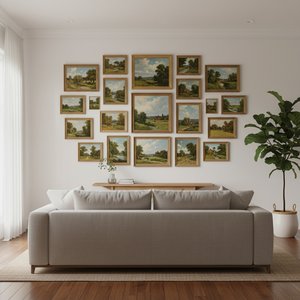
Відкрийте для себе 25 найкращих шедеврів Джона Констебла! Англійські пейзажі, романтизм та емоційне світло в живописі. Репродукції картин високої якості для вашого дому від BuyPopArt.com. Дослідіть повну колекцію онлайн!

Explore the captivating history of pastoral art from classical Arcadia to modern masterpieces. Discover key artists like Millet & Cole at BuyPopArt. Find serene landscape paintings for your home.

Explore the rich history of pastoral art from classical Arcadia to contemporary interpretations. Discover key artists, themes & collecting tips at BuyPopArt.
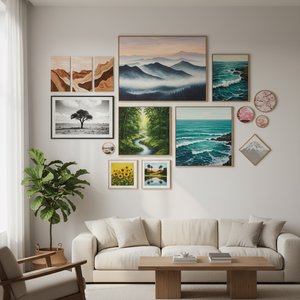
Відкрийте для себе 10 найвідоміших пейзажів в історії мистецтва! Ван Гог, Моне та інші майстри. Репродукції картин високої якості від BuyPopArt – натхнення для вашого дому. Дослідіть колекцію онлайн!

Explore the rich history of rural landscape painting with BuyPopArt. Discover Impressionist masterpieces, key artists & movements. Find your perfect serene artwork and bring nature's beauty home.


Будьте в курсі останніх новин зі світу мистецтва, ексклюзивних пропозицій та ідей для декорування.
Розкажіть нам про свій проєкт, і наші експерти з мистецтва підготують для вас 3 персоналізовані пропозиції щодо творів мистецтва.
Дозвольте нам підібрати 3 варіанти спеціально для вас — безкоштовно!


 Переглянути в інтер'єрі
 Надіслати
 Поділитися
 Деталі

 Завантажити
 Схожі експонати
 Рентгенівське дослідження
 Слайд-шоу
 Читати далі







 Скляний варіант доступний лише для розмірів до 110 см


