

Написана вручну олією на полотні у вашому розмірі та рамі, виготовлена на замовлення нашими художниками. ( Замовити принт Купити цифрове зображення)
Обирайте з наших стандартних розмірів, що відповідають оригінальним пропорціям твору мистецтва.

Ви можете вказати власні розміри, щоб репродукція ідеально підійшла до конкретної рами або інтер'єру. Якщо вибраний вами розмір не відповідає пропорціям оригіналу, ми або обріжемо полотно, або доповнимо картину додатковими елементами, промальованими вручну. Цифровий макет буде надіслано вам на затвердження перед початком виробництва.
Зверніть увагу, що попередній перегляд на екрані не відображає фактичне обрізання або розширення зображення. Тільки макет точно покаже остаточну композицію.
Хоча ми можемо виготовити виріб у нестандартному розмірі, для збереження оригінальних пропорцій рекомендуємо обирати варіанти зі встановленого списку.
Доставка по всьому світу () за 3–4 тижні замість стандартних 5 тижнів. (18 Серпень). Без жодних компромісів у якості.


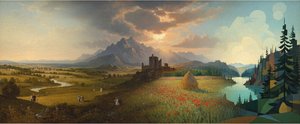
A Child's Funeral in the Highlands
Розмір репродукції
In the vibrant, often tumultuous landscape of late nineteenth-century British art, Ernest Leopold Sichel carved out a space defined by serenity, subtlety, and an almost ethereal grace. Born in Bradford, Yorkshire, in 1862 to a German Jewish family, Sichel’s early life was marked by a profound connection to both classical tradition and the burgeoning modernism of his era. As the son of a manufacturer from Frankfurt-am-Main, his upbringing provided a foundation of stability that allowed him to pursue an intensive artistic education. His journey through the prestigious Slade School of Art, where he studied under masters such as Alphonse Legros, was transformative. It was here that he began to refine a technique that would become his hallmark: a delicate mastery of light and texture that eschewed the aggressive brushwork of his contemporaries in favor of a more contemplative, glazed approach.
Sichel’s artistic development was not merely a pursuit of technical perfection but an emotional exploration of the human condition. While he was deeply rooted in the Beaux Arts ideals of classical form and idealized beauty, he was simultaneously captivated by the atmospheric innovations of Impressionism. This duality allowed him to create works that felt both timeless and immediate. His palette was famously muted, favoring tonal harmonies that evoked a sense of quietude and introspection. Whether capturing the solemnity of a Highland funeral or the intimate stillness of a domestic interior, Sichel possessed a rare ability to translate mood into pigment, making the invisible weight of emotion visible through soft light and delicate color transitions.
The breadth of Sichel’s talent extended far beyond the canvas; he was a true polymath of the decorative and fine arts, excelling as a painter of figures, portraits, and still lifes, while also demonstrating remarkable skill as a sculptor, silversmith, and pastellist. This multidisciplinary approach informed his paintings, lending them a structural integrity and a tactile richness that few could replicate. His portraiture, in particular, remains some of his most celebrated work. In pieces such as Miss Catherine Howard, he moved beyond mere likeness to capture the inner character of his subjects, blending traditional portraiture with a modern flair for psychological depth.
His thematic repertoire was as diverse as his technical skills, often oscillating between the grand and the intimate:
The significance of Ernest Leopold Sichel lies in his ability to bridge the gap between the rigid academicism of the Victorian era and the emotive freedom of the early twentieth century. Heavily influenced by the French painter Puvis de Chavannes, Sichel adopted a philosophy that prioritized emotional expression and atmosphere over meticulous realism. This pursuit of the "essence" of an experience allowed his work to resonate with a sense of spiritual permanence. His friendship with fellow artists like William Strang and his presence within the Slade School community ensured that his influence rippled through the British art scene, contributing to a movement toward a more nuanced, atmospheric aesthetic.
Though the passage of time has occasionally obscured the names of many Victorian masters, Sichel’s legacy endures through the enduring emotional resonance of his work. His ability to find beauty in the muted, the somber, and the still continues to captivate art enthusiasts today. He remains a vital figure for those seeking to understand the transition of British art into the modern age—a painter who proved that true power often resides not in the loudest colors, but in the most delicate whispers of light.

1862 - 1941

Explore the profound beauty of the Scottish Highlands through the lens of Romanticism. Discover the history, technique, and atmospheric mastery behind iconic landscape paintings from the Old Masters to museum-quality oil reproductions for collectors.
Відкрийте для себе 10 найвідоміших пейзажів в історії мистецтва! Ван Гог, Моне та інші майстри. Репродукції картин високої якості від BuyPopArt – натхнення для вашого дому. Дослідіть колекцію онлайн!
Explore the rich history of landscape art with BuyPopArt. Discover renowned artists, movements like Impressionism & Romanticism, and expert guidance for collecting timeless pieces. Find your perfect serene escape today!

Відкрийте для себе 10 шедеврів романтичного пейзажу! Каспар Давид Фрідріх, Тернер та інші майстри. Історія мистецтва, емоційні кольори природи та ідеї декору з BuyPopArt.com. Дослідіть колекцію онлайн!

Explore the serene landscapes & majestic Highland cattle paintings of Louis Bosworth Hurt (1856-1929). Discover his mastery of atmospheric perspective and lasting legacy in British art. Learn more at BuyPopArt.


Будьте в курсі останніх новин зі світу мистецтва, ексклюзивних пропозицій та ідей для декорування.
Розкажіть нам про свій проєкт, і наші експерти з мистецтва підготують для вас 3 персоналізовані пропозиції щодо творів мистецтва.
Дозвольте нам підібрати 3 варіанти спеціально для вас — безкоштовно!


 Переглянути в інтер'єрі
 Надіслати як листівку
 Поділитися
 Детальніше

 Завантажити
 Схожі експонати
 Рентгенівське дослідження
 Слайд-шоу


 Читати далі




































 Скляний варіант доступний лише для розмірів до 110 см


