
x


 PaintingIslamic Calligraphy
 180019th Century
 86.0 x 53.0 cm
 Sakıp Sabancı Museum
Hand-painted oil on canvas in your size and frame, made to order by our artists.





























Pick from our preset sizes that match the artwork's original proportions.

You may enter your own dimensions to fit a specific frame or space. If your selected size does not match the original image's proportions, we will either crop the artwork or extend the painting with additional hand-painted elements. A digital mockup will be sent for your approval before production begins.
Please note that the on-screen preview does not reflect the actual cropping or extension. Only the mockup will accurately show the final composition.
While custom sizes are available, we recommend selecting a dimension from the predefined list to preserve the original proportions.
Worldwide Delivery () in 3/4 weeks instead of standard 5 weeks. (16 July). No compromise on quality.


Levha (calligraphic inscription)
Reproduction Size
In the quiet contemplation of Islamic art, few forms possess the immediate spiritual gravity of the Levha. This exquisite calligraphic inscription, created around 1800 by the venerable scholar-artist Abū Al-Thanā’ Shihāb Ad-Dīn Sayyid Maḥmūd Ibn ‘Abd Allāh Al-Ḥusaynī Al-Ālūsī Al-Baghdādī, serves as a profound meditation on the divine. At its heart, the piece centers on the sacred name "Allah," rendered in masterful Arabic script that dances across a deep, celestial blue background. The composition is framed by a delicate red trim, a warm contrast that anchors the ethereal blue and draws the eye inward toward the luminous center of the work. To behold this painting is to experience a moment of stillness, where the weight of history meets the lightness of spiritual devotion.
The technique employed in this piece reflects the high tradition of 19th-century calligraphic mastery. The artist, who was not only a master of the pen but also one of Baghdad's most esteemed religious authorities, utilizes the fluid, rhythmic strokes characteristic of classical Islamic calligraphy to breathe life into the sacred text. Each curve and terminal point of the script is deliberate, designed to guide the viewer’s gaze in a meditative loop. The interplay between the saturated blue pigment and the precise, dark ink creates a sense of depth, as if the holy name is floating within an infinite cosmic void. For collectors and designers, this piece offers a sophisticated balance of bold color and intricate detail, making it a centerpiece capable of commanding any space.
Beyond its aesthetic brilliance, the Levha is a window into the intellectual and spiritual landscape of the early 19th-century Ottoman era. The artist, Al-Alusi, was a figure of immense prestige—a mufti whose lineage traced back to the Prophet Muhammad himself. His ability to blend scholarly precision with artistic grace is evident in every stroke of this work. This piece does not merely represent a word; it embodies the concept of dhikr, or the remembrance of God, which is central to Islamic practice. The choice of blue—a color often associated with the infinite sky and the depths of the ocean—serves as a symbolic bridge between the earthly realm and the divine presence.
For those looking to integrate such a masterpiece into a contemporary interior, the Levha offers more than just decoration; it provides an atmosphere of tranquility and intellectual heritage. Whether placed in a curated gallery setting or used as a focal point in a refined living space, the painting invites conversation about the intersection of faith, history, and fine art. A high-quality reproduction of this work allows the enduring legacy of Al-Alusi to reside within modern homes, bringing a sense of timelessness and sacred beauty to the walls of any discerning collector.
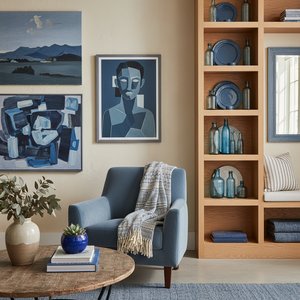
Immerse yourself in the captivating world of slate blue! Explore 10 iconic paintings by Monet, Van Gogh & Renoir. Discover their stories, techniques & find museum-quality art reproductions for your home at .
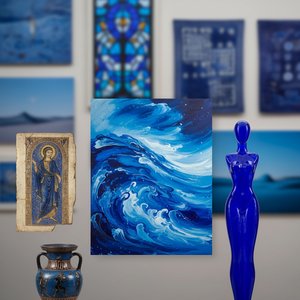
Explore the rich history of blue in art! Discover its symbolism, from ancient pigments to modern masterpieces by Kandinsky & Seurat. Uncover the psychological impact and cultural meanings behind this captivating hue.

Explore the rich symbolism of the red dress in art history! From ancient power displays to iconic portraits like Cézanne’s 'Madame Cezanne', discover the cultural and artistic significance behind this captivating color. Expert analysis & insights.

Explore the profound beauty of calligraphy art. From the fluid running script of Chinese masters to historical ink masterpieces, discover how the elegance of line transforms spaces with timeless grace and scholarly sophistication.

Embark on a profound journey through the soul of Chinese calligraphy. Explore the historical mastery of ink, brush, and script, from ancient Zhuanshu to elegant running script, and discover how this timeless art form reflects the enduring spirit of classical East Asian aesthetics.


Stay updated with the latest art news, exclusive offers, and decoration ideas.
Tell us about your project and our art experts will provide you with 3 personalized art suggestions.
Let Us Curate 3 Options Just for You - Free!


 Buy print
 Send
Send Share
Share
 Details

 Download
 Similars
 X-Ray
X-Ray Diaporama
 Read More







 Glass option is only available in size under 110 CM


