لوحة زيتية مرسومة يدوياً على الكانفاس بالمقاس والإطار الذي تفضله، تُنفذ حسب الطلب على أيدي فنانينا. ( اشترِ نسخة مطبوعة اشترِ الصورة)





























اختر من بين أحجامنا المُعدّة مسبقًا والتي تتطابق مع النسب الأصلية للعمل الفني.

يمكنك إدخال أبعادك الخاصة لتناسب إطارًا معينًا أو مساحة محددة. وإذا لم يتطابق الحجم الذي اخترته مع نسب الصورة الأصلية، فسنقوم إما بقص العمل الفني أو توسيع اللوحة بإضافة عناصر مرسومة يدويًا. سيتم إرسال نموذج رقمي إليك للموافقة عليه قبل بدء الإنتاج.
يرجى ملاحظة أن المعاينة على الشاشة لا تعكس عملية القص أو التوسيع الفعلية؛ حيث إن النموذج الرقمي وحده هو الذي سيوضح التكوين النهائي بدقة.
وعلى الرغم من توفر أحجام مخصصة، إلا أننا نوصي باختيار أبعاد من القائمة المحددة مسبقًا للحفاظ على النسب الأصلية للعمل الفني.
توصيل عالمي إلى خلال 3 إلى 4 أسابيع بدلاً من المدة المعتادة البالغة 5 أسابيع. (16 أغسطس). جودة لا تهاون فيها.


Mandolin
مقاس النسخة المطبوعة
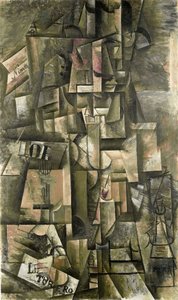
Pablo Picasso’s 1911 drawing, “Mandolin,” isn't merely a depiction of an instrument; it’s a fractured exploration of perception itself. At first glance, the image presents a startling juxtaposition: a bicycle, rendered in the sharp angles and geometric precision characteristic of his early Cubist work, interwoven with a stylized guitar form—a suggestion of musicality emerging from the mechanical. This isn't a straightforward representation; it’s an invitation to question how we see, how we understand, and ultimately, what constitutes reality. The drawing immediately commands attention, pulling the viewer into its dynamic asymmetry and challenging conventional notions of spatial harmony.
The artwork’s monochromatic palette—a carefully orchestrated dance between black, white, and grey—amplifies this sense of disruption. Lines aren't simply delineating shapes; they are actively constructing a new visual language. Angular lines dominate, creating a feeling of restless energy, while meticulous hatching and cross-hatching build up tonal values with remarkable subtlety, suggesting both the solidity of form and the ephemeral nature of light. The visible pencil strokes themselves contribute to an immediate intimacy, as if we’ve stumbled upon a fleeting moment captured on paper – a sketch brimming with intellectual curiosity.
Picasso's masterful manipulation of geometric shapes—triangles, rectangles, and curves—is central to the artwork’s impact. The bicycle frame, composed of sharply defined segments, embodies the Cubist principle of breaking down objects into their constituent parts and reassembling them from multiple viewpoints simultaneously. The guitar element, with its more rounded forms, offers a counterpoint, hinting at organic qualities within this otherwise rigorously constructed composition. This deliberate juxtaposition—the rigid mechanics of the bicycle against the implied warmth of music – speaks to the artist’s desire to dismantle established modes of representation and forge new ways of seeing.
The distortion of perspective is particularly striking. Rather than striving for realistic depth, Picasso flattens the image, creating a two-dimensional effect that emphasizes the interplay between planes and forms. Overlapping shapes contribute to this sense of ambiguity, blurring the boundaries between object and background, foreground and distance. This flattening isn’t simply an aesthetic choice; it mirrors the Cubist exploration of simultaneity – presenting multiple perspectives within a single frame, forcing the viewer to actively engage in the process of interpretation.
Beyond its formal innovations, “Mandolin” carries a potent symbolic weight. The combination of transportation and musical instruments—the bicycle representing movement and the guitar embodying creativity – suggests an exploration of human potential and the relationship between action and expression. The fragmented forms evoke a sense of dynamism and disruption, mirroring the turbulent period in which Picasso was working, grappling with the social and political upheavals of his time. There’s a subtle undercurrent of melancholy, perhaps referencing the loss of his sister Conchita, a recurring theme in his oeuvre.
Ultimately, “Mandolin” is more than just a drawing; it's a meditation on perception, representation, and the very nature of reality. It invites us to reconsider our assumptions about how things ‘should’ look and encourages us to embrace the beauty and complexity of fragmented perspectives. It stands as a testament to Picasso’s revolutionary spirit and his enduring legacy as one of art history’s most influential figures.

1881 - 1973 , إسبانيا

Explore the captivating world of Art Deco paintings & the Gilded Age's enduring legacy. Discover iconic artists like Tamara de Lempicka & invest in museum-quality reproductions with BuyPopArt.

Explore the revolutionary world of Cubism with BuyPopArt. Discover Picasso & Braque's groundbreaking techniques, its philosophical roots, and lasting impact on modern art. Expert insights for collectors.

Explore 10 Cubist masterpieces by Picasso, Braque & more! Delve into the history of this revolutionary art movement. Find museum-quality reproductions and elevate your home decor with BuyPopArt. Discover all masterpieces on BuyPopArt.com

Explore the revolutionary world of Cubism with expert insights from BuyPopArt. Discover Picasso & Braque's groundbreaking techniques, its philosophical roots, and lasting impact on modern art. Expert appraisal & custom reproductions available.

اكتشف روائع التكعيبية! استكشف 10 أعمال فنية خالدة لبيكاسو، برات وغيرهم. تعرف على تاريخ الفن، أساليبه وألوانه الجريئة. BuyPopArt: وجهتك للوحات زيتية عالية الجودة وديكور منزلي فريد. تسوق الآن!


ابقَ على اطلاع بأحدث أخبار الفن، والعروض الحصرية، وأفكار الديكور.
أخبرنا عن مشروعك، وسيقدم لك خبراؤنا الفنيون 3 اقتراحات فنية مخصصة لك.
دعنا نختار لك ٣ خيارات مخصصة تماماً - مجاناً!


 معاينة الحجم الحقيقي
 مشاركة
 مشاركة
 التفاصيل

 تحميل الملف
 قطع مشابهة
 الأشعة السينية
 عرض شرائح

 عرض المزيد







 خيار الزجاج متاح فقط للمقاسات التي تقل عن 110 سم