

طباعة جيكلي أو كانفاس بجودة المتاحف، مع سرعة في التنفيذ وخيارات متنوعة للتشطيب. ( اشترِ لوحة مرسومة يدويًا اشترِ الصورة)
اختر من بين أحجامنا المُعدّة مسبقًا والتي تتطابق مع النسب الأصلية للعمل الفني.

يمكنك إدخال أبعادك الخاصة لتناسب إطاراً أو مساحة معينة. وإذا لم يتطابق الحجم الذي اخترته مع نسب الصورة الأصلية، فسنقوم إما بقص العمل الفني أو تمديد الصورة باستخدام حافة معكوسة أو بلون مصمت. سيتم إرسال نموذج تجريبي رقمي لاعتمادك قبل بدء الإنتاج.
يرجى ملاحظة أن المعاينة على الشاشة لا تعكس عملية القص أو التمديد الفعلية؛ حيث سيوضح النموذج التجريبي فقط التكوين النهائي بدقة.
وعلى الرغم من توفر أحجام مخصصة، إلا أننا نوصي باختيار أبعاد من القائمة المحددة مسبقاً للحفاظ على النسب الأصلية.
توصيل عالمي إلى خلال أسبوعين بدلاً من المدة القياسية البالغة 4/5 أسابيع. 16 أغسطس


Limbo
مقاس النسخة المطبوعة
Pedro Cabrita Reis’s “Limbo,” created in 1990, isn't merely a sculpture; it’s an invitation to contemplate the spaces between – the thresholds of existence, the echoes of memory, and the unsettling beauty of what remains unseen. Captured in a photograph that emphasizes its stark simplicity, the piece immediately commands attention with its almost unnerving austerity. Constructed primarily from cast white material—likely plaster or concrete, judging by its matte surface and subtle shadows—it presents an L-shaped architectural fragment, seemingly adrift within a warm wooden floor. This deliberate juxtaposition of cold, geometric form against the organic texture of the wood creates a powerful tension, suggesting a world both constructed and inherently vulnerable.
The sculpture’s core is defined by precise lines: the sharp angles of the rectangular forms, contrasted with the gentle curve of the cylindrical element. This interplay isn't simply aesthetic; it speaks to Reis’s broader exploration of space and volume – a preoccupation evident throughout his oeuvre. The composition deliberately utilizes negative space, allowing the eye to wander and contemplate the implied architecture beyond what is physically present. It’s a deliberate reduction, stripping away all superfluous ornamentation to reveal the fundamental elements of form and its relationship to the surrounding environment.
“Limbo” firmly situates itself within the context of Neo-Minimalism, an artistic movement that emerged in the late 1980s and early 1990s. Rejecting the expressive gestures of Abstract Expressionism, Neo-Minimalists sought to create works that were purely formal – focused on the inherent qualities of materials and their geometric relationships. Reis’s work embodies this ethos perfectly; there's no narrative content, no overt symbolism, only a carefully considered arrangement of shapes and volumes. This commitment to pure form aligns with a broader philosophical trend questioning representation and embracing the idea that art can exist independently of meaning.
However, “Limbo” transcends simple categorization as Neo-Minimalist. The title itself—borrowed from medieval theology – immediately introduces a layer of symbolic complexity. The ‘limbo’ referred to in this context represents a transitional state, a waiting place for souls who were not fully prepared for heaven but weren't condemned to hell. This concept resonates deeply within the sculpture’s atmosphere of suspended animation and quiet contemplation. The viewer is left with a sense of unease, a feeling that something significant—perhaps even profound—is just beyond reach.
The choice of materials – cast white against warm wood – is crucial to the sculpture’s impact. The stark whiteness creates an illusion of depth, drawing the eye into the geometric forms while simultaneously emphasizing their isolation. The matte finish further contributes to this effect, suggesting a surface that is both solid and ethereal. The wooden floor provides a grounding element, anchoring the sculpture within a recognizable space but also subtly disrupting its rigid geometry.
Furthermore, the photograph’s lighting—diffused and even—highlights the subtle contours of the forms without creating harsh shadows. This careful attention to detail underscores Reis's meticulous approach to his craft. The slight perspective evident in the image – the sculpture receding into the background – reinforces this sense of depth and invites the viewer to step into the artwork’s world, contemplating its implications from multiple viewpoints.
“Limbo” stands as a testament to Pedro Cabrita Reis's profound engagement with space, memory, and the human condition. It’s a work that rewards careful observation and invites ongoing interpretation. Its minimalist aesthetic belies a complex web of symbolic references, prompting viewers to consider themes of transition, waiting, and the inherent ambiguity of existence. Reproductions of this piece offer an exceptional opportunity to bring this evocative sculpture into any setting, transforming interior spaces into contemplative zones—a fitting tribute to Reis’s enduring legacy as one of contemporary art's most insightful and challenging voices.

1956 - , البرتغال
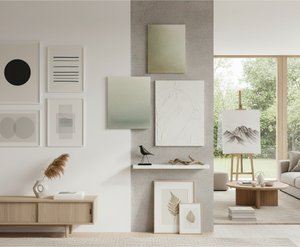
Find serenity with 10 minimalist masterpieces! Explore Agnes Martin, Rothko & more. Discover the stories behind iconic abstract art, neutral palettes & calming designs. Museum-quality reproductions at BuyPopArt.com – elevate your home decor today!

اكتشف كيف يثري الفن العمارة ويخلق مساحات فريدة. خبراء BuyPopArt يقدمون استشارات فنية، نسخًا فاخرة للوحات، وأعمالًا مخصصة لتصميم داخلي يعكس ذوقك الرفيع.

Explore the revolutionary world of Cristóbal Balenciaga, the 'couturier's couturier'. Discover his architectural designs, lasting influence on haute couture, and guide to collecting rare pieces. A connoisseur’s resource.

Explore the revolutionary art of Piet Mondrian and the principles of Neo-Plasticism. Discover De Stijl's influence, iconic compositions like 'Composition with Red, Yellow and Blue,' and Mondrian’s lasting legacy on modern design.

Discover how minimalist abstract art transforms your home into a serene sanctuary. Expert guidance on color, placement & investment from BuyPopArt.com – museum-quality reproductions & custom artwork.


ابقَ على اطلاع بأحدث أخبار الفن، والعروض الحصرية، وأفكار الديكور.
أخبرنا عن مشروعك، وسيقدم لك خبراؤنا الفنيون 3 اقتراحات فنية مخصصة لك.
دعنا نختار لك ٣ خيارات مخصصة تماماً - مجاناً!


 مشاركة
 مشاركة
 التفاصيل

 تحميل الملف
 قطع مشابهة
 عرض شرائح


 عرض المزيد




































 خيار الزجاج متاح فقط للمقاسات التي تقل عن 110 سم


