Купи принт Купи принтКупи изображение Купи изображение ИзпратиИзпрати
ДетайлиДетайли Добавяне към любими Добавяне към любими ИзтеглянеИзтегляне ПодобниПодобни Рентгенова снимкаРентгенова снимка СлайдшоуСлайдшоу

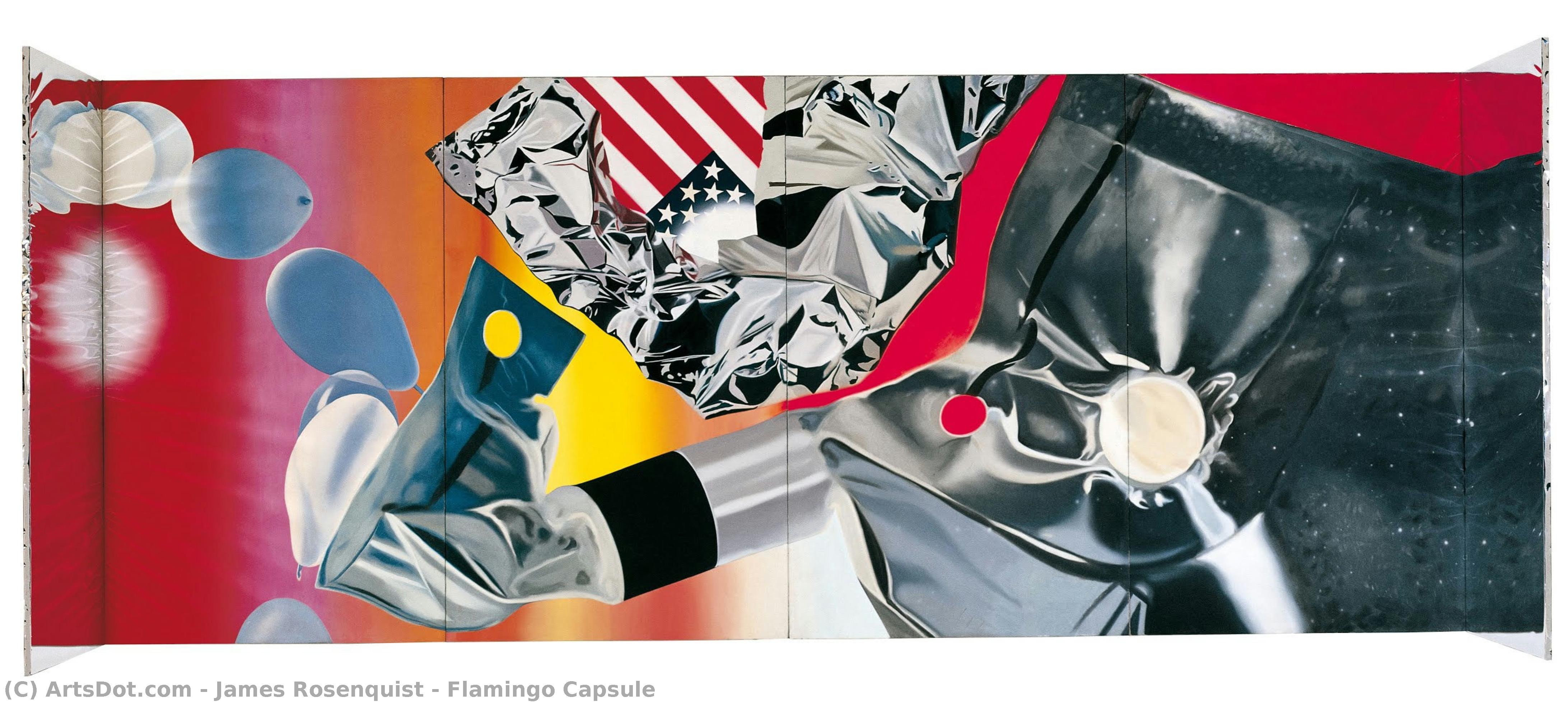
Flamingo Capsule

James Rosenquist’s *Flamingo Capsule* (1970) is a striking canvas featuring a flamingo encased in aluminum foil, alongside balloons, a food bag, and a flag uniform. Measuring over 26 meters long, this artwork embodies Pop Art's fascination with technology and space exploration while presenting an enigmatic composition.

Разгледайте творчеството на Джеймс Розенкьойст – пионер на поп арта! От огромни плакати до монументални картини, той превърна популярната култура и рекламата в изкуство с уникален подход.

Ръчно изработена маслена репродукция

Ръчно рисувана маслена картина върху платно във вашия размер и рамка, изработена по поръчка от нашите художници.


P118B $10
P118H $10
P118W $10
P438Z $10
P508JH $12
P508YH $12
P805H $10
P805Z $10
P919BZ $10
P919G $10
P919XJ $10
P959ZH $10
P968JZ $12
W106C $8
W218G $10
W218JH $8
W218Y $10
W307PJ $10
W316G $10
W316PJ $8
W316Y $10
W398PJ $8
W4111J $10
W500HY $15
W500JH $15
W692G $12
W849H $8
W940BG $15
W953PJ $8

Standard
custom
CM
INCH

Изберете от предварително зададените размери, които съответстват на оригиналните пропорции на произведението.

ширина
височина

Можете да въведете свои собствени размери, за да пасне на конкретна рамка или пространство. Ако избраният от вас размер не съответства на пропорциите на оригиналното изображение, ние ще изрежем произведението или ще удължим картината с допълнителни ръчно рисувани елементи. Дигитален макет ще бъде изпратен за ваше одобрение преди започване на производството.
Моля, обърнете внимание, че прегледът на екрана не отразява действителното изрязване или разширяване. Само макетът ще покаже точно финалния състав.
Въпреки че са налични персонализирани размери, препоръчваме да изберете размер от предварително дефинирания списък, за да запазите оригиналните пропорции.

Примери за това какво може да се промени: Заменете лице с клиентска снимка; Добавете домашен любимец (например заменете котка с куче); Включете скрито послание на фона; Променете пейзажа или елементите на фона.
След поръчка, екипът на BuyPopArt.com ще изпрати имейл на клиента за инструкции и ще предостави преглед на макет.

Доставка по целия свят () в рамките на 3/4 седмици вместо стандартните 5 седмици. (16 Юли). Без компромис с качеството.

why_choose_icon
Безплатна експресна доставка по целия свят
why_choose_icon
Висококачествено ленено платно
why_choose_icon
Пълно застраховане при доставка
why_choose_icon
Гаранция за възстановяване на митнически такси
why_choose_icon
Гаранция за цветова точност
why_choose_icon
60-Дневен период за връщане (Само при дефекти)
why_choose_icon
100% Гаранция за връщане на парите
why_choose_icon
Предложение за отстъпка при поръчка на едро

Обща цена

-

reproduction

Flamingo Capsule

Репродукционен метод

Размер на репродукцията

-

Обща цена

-

Тест за изкуство

Има само един верен отговор за всеки въпрос.

Въпрос 1:
What artistic movement is James Rosenquist primarily associated with?
Въпрос 2:
The painting *Flamingo Capsule* commemorates a significant event in American history.
Въпрос 3:
What material is used to create the end panels of *Flamingo Capsule*, enhancing its visual impact?
Въпрос 4:
The composition of *Flamingo Capsule* reflects Rosenquist's fascination with:
Въпрос 5:
What is the overall stylistic approach of James Rosenquist?

Описание на произведението

Flamingo Capsule: A Monumental Reflection on Tragedy and Technological Ambition

James Rosenquist’s *Flamingo Capsule*, completed in 1970, stands as a striking testament to the artist's fascination with both the mundane realities of American culture—specifically advertising—and the profound implications of space exploration. Measuring an impressive 290 x 701 x 98.5 cm, this monumental canvas commands attention and invites contemplation on themes of loss, resilience, and the relentless march of progress. Rosenquist’s approach to artmaking was deliberately antithetical to the prevailing Abstract Expressionist movement; he eschewed spontaneity for meticulous planning, employing techniques borrowed from sign painting—a craft rooted in precision and repetition—to create a visual language that simultaneously celebrates and critiques the dominant aesthetic sensibilities of his time.
  • Style: Rosenquist’s work embodies New Realism, rejecting illusionistic representation in favor of fragmented imagery and collage-like compositions. This stylistic choice aligns with his broader interest in blurring the boundaries between art and everyday life, mirroring the pervasive influence of commercial culture on the visual landscape.
  • Technique: The painting utilizes oil paint on canvas combined with aluminized Mylar panels—a material commonly employed in aerospace applications—to achieve a remarkable textural effect. Rosenquist meticulously applied pigment to create layered surfaces that capture subtle variations in color and tone, while the aluminized Mylar adds reflectivity, extending the visual scope of the artwork beyond its physical dimensions.
  • Historical Context: *Flamingo Capsule* emerged during a period marked by intense optimism regarding space exploration following Sputnik’s launch in 1957. Rosenquist deliberately referenced this pivotal moment in history—the tragic Apollo 1 fire—incorporating imagery associated with NASA and the American flag into his composition.
The artwork's visual narrative is characterized by a deliberate juxtaposition of disparate elements: crumpled foil bearing the emblem of the United States Air Force, a distorted food bag, and a balloon drifting upwards against a fiery red and yellow backdrop. These objects are not merely decorative additions; they serve as symbolic representations of various facets of American society—military might, consumerism, and aspiration—all rendered in monumental scale. Rosenquist’s masterful manipulation of perspective and color contributes to the painting's unsettling yet captivating atmosphere, prompting viewers to confront questions about mortality, ambition, and the precariousness of human endeavor. Symbolism: The flamingo itself is a recurring motif in Rosenquist’s oeuvre, representing both beauty and vulnerability—a paradoxical emblem that encapsulates his artistic preoccupation with confronting uncomfortable truths amidst dazzling visual spectacle. The aluminized Mylar panels amplify this duality, reflecting not only the painted surface but also mirroring the viewer's gaze, thereby inviting an active engagement with the artwork’s emotional core. Emotional Impact: *Flamingo Capsule* transcends mere aesthetic appreciation; it compels viewers to contemplate the complexities of human experience—the collision between dreams of grandeur and the inevitability of loss. Rosenquist’s deliberate fragmentation of imagery forces us to confront unsettling realities while simultaneously celebrating the enduring power of artistic innovation. It remains a poignant reminder that even amidst technological advancement, we are fundamentally tethered to our own mortality and burdened by the responsibility to grapple with profound existential questions.
  • Recommended Reproduction Size: For optimal visual impact, consider reproducing *Flamingo Capsule* in a large format—approximately 30 x 60 inches—to capture the painting’s monumental scale and textural richness.
  • Interior Design Considerations: The artwork's bold color palette and dynamic composition lend themselves particularly well to contemporary interior spaces characterized by minimalist aesthetics and geometric forms.
Ultimately, James Rosenquist’s *Flamingo Capsule* stands as a timeless masterpiece—a compelling fusion of artistic vision, technical prowess, and intellectual engagement that continues to resonate with audiences today.

Биография на художника

James Rosenquist: A Pioneer of Pop Art and Surrealist Collage

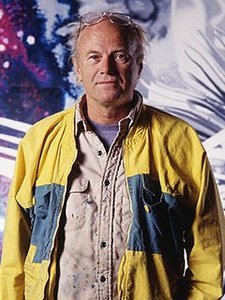
James Rosenquist (1933 – 2017) stands as a monumental figure in American art, recognized primarily for his groundbreaking contribution to the Pop Art movement. Yet, labeling him solely within this stylistic framework diminishes the breadth of his artistic vision—a vision characterized by meticulous craftsmanship and profound engagement with themes of consumer culture, media saturation, and the fragmented nature of modern experience. Born in Grand Forks, North Dakota, Rosenquist’s early life was marked by constant relocation due to his parents' itinerant careers as amateur pilots—an upbringing that instilled a unique perspective on movement and visual perception. This formative influence would permeate his artistic practice throughout his career.
  • Early Artistic Training: Rosenquist began formal art education at the Minneapolis School of Art in junior high school, securing a scholarship that propelled him toward serious artistic pursuits. Subsequently, he studied painting at the University of Minnesota from 1952 to 1954, honing his technical skills and exploring foundational concepts within abstract expressionism.
  • The Influence of Edwin Dickinson & George Grosz: Rosenquist’s formative years in New York City were profoundly shaped by mentorship under Edwin Dickinson and George Grosz at the Art Students League. These teachers instilled a critical approach to artmaking, encouraging Rosenquist to dissect conventional artistic conventions and challenge established norms.
  • Billboard Painting and Commercial Skill Development: Rosenquist's initial foray into professional artistry began with his work as a billboard painter in Times Square from 1957 to 1960—a period that proved instrumental in developing his mastery of large-scale visual communication techniques. This experience honed his understanding of composition, color theory, and the persuasive power of imagery—skills he would later seamlessly integrate into his monumental paintings.

The Surrealist Roots of Pop Art

Rosenquist’s artistic style defied easy categorization, resisting simplistic labels like “Pop Art.” While undeniably influenced by artists such as Andy Warhol and Roy Lichtenstein—who embraced the aesthetic principles of advertising and comic strips—Rosenquist distinguished himself through a distinctive approach rooted in surrealism. Unlike his contemporaries who often employed irony or critique to engage with popular culture, Rosenquist’s work possessed an unsettling beauty—a captivating blend of recognizable imagery juxtaposed in unexpected ways. This technique—characterized by fragmentation and meticulous layering—served as a conduit for exploring anxieties about identity, perception, and the overwhelming influence of media on consciousness.
  • F-111: Rosenquist’s magnum opus, *F-111*, exemplifies this surrealist sensibility. The monumental canvas combines images of an American military aircraft with consumer products—a deliberate provocation that disrupts conventional narratives and confronts viewers with the paradoxical realities of Cold War America.
  • Target II: Similarly, *Target II* dissects the visual language of advertising, revealing its underlying structures and manipulative techniques. Rosenquist’s canvases became arenas for confronting cultural contradictions and questioning accepted notions of reality.

Recognition and Legacy

Rosenquist achieved international acclaim in 1965 with the exhibition of *F-111* at Leo Castelli Gallery—a pivotal moment that solidified his position as a leader within the Pop Art movement. His collaboration with Philip Johnson resulted in the creation of a monumental mural for the World’s Fair, and he continued to produce innovative artworks throughout his life—spanning from printmaking to large-scale installations. Rosenquist's enduring influence can be seen in subsequent generations of artists who embraced collage techniques and explored themes of consumer culture and media saturation. His legacy resides not only in his striking visual style but also in his unwavering commitment to artistic experimentation and intellectual rigor—a testament to his visionary spirit and transformative contribution to the history of art.

Бързи факти

  • Artistic Movement Or Style: Поп арт
  • Artists Or Movements Influenced By This Artist:
    • Andy Warhol
    • Roy Lichtenstein
  • Artists Who Influenced This Artist:
    • Edwin Dickinson
    • George Grosz
  • Date Of Birth: Ноември 29, 1933
  • Date Of Death: Март 31, 2017
  • Full Name: James Albert Rosenquist
  • Nationality: Американски
  • Notable Artworks: ['F-111']
  • Place Of Birth: Гранд Фоксс, Северна Дакота
Разгледайте произведения на изкуството, организирани по теми, стилове и характеристики.