

Ръчно рисувана маслена картина върху платно във вашия размер и рамка, изработена по поръчка от нашите художници. ( Превключване към печат Превключване към изображение)





























Изберете от предварително зададените размери, които съответстват на оригиналните пропорции на произведението.

Можете да въведете свои собствени размери, за да пасне на конкретна рамка или пространство. Ако избраният от вас размер не съответства на пропорциите на оригиналното изображение, ние ще изрежем произведението или ще удължим картината с допълнителни ръчно рисувани елементи. Дигитален макет ще бъде изпратен за ваше одобрение преди започване на производството.
Моля, обърнете внимание, че прегледът на екрана не отразява действителното изрязване или разширяване. Само макетът ще покаже точно финалния състав.
Въпреки че са налични персонализирани размери, препоръчваме да изберете размер от предварително дефинирания списък, за да запазите оригиналните пропорции.
Доставка по целия свят () в рамките на 3/4 седмици вместо стандартните 5 седмици. (5 Август). Без компромис с качеството.


Faith
Размер на репродукцията
John Phillip’s “Faith,” painted in 1864, isn't merely a portrait; it’s a carefully constructed tableau of piety and domestic tranquility, steeped in the cultural currents of late Victorian Scotland. The painting depicts a woman, likely a member of the Scottish upper-middle class, enveloped in a quiet moment of prayer or contemplation. Her posture is graceful yet grounded, her hands clasped gently before her chest – a gesture universally understood as signifying reverence. The muted palette—dominated by earthy browns, soft greens, and subtle blues—evokes a sense of warmth and domesticity, while the carefully rendered fabrics and modest jewelry speak to a life of quiet dignity. Beyond the immediate subject, the inclusion of two figures on either side adds layers of narrative; one appears to be reading, perhaps offering guidance or support, while the other seems absorbed in conversation, suggesting a community bound by shared faith.
Phillip’s style is deeply rooted in the artistic traditions he studied at the Royal Academy and, crucially, his association with the influential “Clique” of Victorian artists. This group, led by Richard Dadd, championed the works of William Hogarth and David Wilkie, seeking to capture the spirit of realism and dramatic storytelling. However, Phillip’s work transcends mere imitation; he infused these influences with a distinctly Scottish sensibility, evident in his meticulous attention to detail—the texture of the woman's shawl, the subtle play of light on her face, the architectural backdrop hinting at a modest church. The composition itself is carefully balanced, drawing the eye inward towards the central figure and creating a sense of intimate serenity.
It’s important to understand that “Faith” emerged from John Phillip's transformative journey to Spain in 1851. He was deeply moved by the religious fervor he witnessed there, particularly within the Catholic communities. This experience profoundly altered his artistic perspective, leading him to dedicate much of his later work to depicting Spanish life and culture – a period that earned him the affectionate moniker “Spanish Phillip.” The painting reflects this newfound inspiration; the subtle warmth of the lighting, reminiscent of the Spanish sun, and the overall atmosphere of quiet devotion are hallmarks of his Spanish-influenced style. The inclusion of elements like the rosary beads and the implied presence of a church subtly allude to the religious context of the scene.
Phillip’s background as a member of the Clique also shaped his artistic approach. The group's admiration for Hogarth, known for his satirical social commentary, is evident in the painting’s ability to subtly convey a sense of moral virtue and domestic harmony. However, Phillip’s work goes beyond mere social critique; it offers a poignant glimpse into the private world of faith—a realm of quiet contemplation and spiritual connection.
The symbolism within “Faith” is both subtle and profound. The woman's closed eyes suggest a deep level of concentration, inviting the viewer to share in her moment of prayer or reflection. The simple setting—a modestly furnished room—underscores the importance of faith as an internal experience rather than an outward display of wealth or status. The two figures flanking the central subject represent the community that supports and nurtures this individual’s spiritual journey, highlighting the interconnectedness of faith within a domestic sphere.
More broadly, “Faith” speaks to the enduring human need for connection—to God, to family, and to one another. The painting's quiet dignity and serene atmosphere evoke a sense of peace and tranquility, offering a respite from the complexities of modern life. It’s a testament to the power of faith to provide solace, guidance, and a profound sense of belonging.
Reproducing “Faith” in high quality offers a beautiful way to bring this evocative Victorian painting into your home or office. The meticulous detail and rich colors of the original are faithfully captured in our hand-painted reproductions, ensuring that you experience the full emotional impact of Phillip’s masterpiece. Whether displayed as a statement piece in a living room or a calming addition to a study, “Faith” will serve as a timeless reminder of the enduring power of devotion and human connection.
Born in the rugged landscape of Aberdeen, Scotland, in 1817, John Phillip would eventually transcend his humble beginnings to become one of the most evocative voices of the Victorian era. Affectionately known by the moniker "Spanish Phillip," his journey was one of profound transformation, moving from the meticulous, somber depictions of Scottish rural life to the sun-drenched, vibrant canvases of Southern Europe. His early years were marked by a burgeoning talent that caught the eye of influential patrons, most notably Lord Panmure, whose generosity provided the essential bridge for Phillip to reach London’s Royal Academy of Arts in 1836. It was within this prestigious institution that Phillip found his artistic tribe, joining the influential group known as The Clique. Led by the eccentric Richard Dadd, this circle of artists shared a deep reverence for the narrative realism of William Hogarth and the dramatic landscapes of David Wilkie, principles that would form the bedrock of Phillip’s early technical mastery.
In his formative years, Phillip’s brush was dedicated to the dignity and hardship of the Scottish people. He captured the quiet, often grueling existence of crofters with a precision that spoke to the soul of his homeland. These early works were characterized by a meticulous attention to detail and a sense of pious domesticity, reflecting the cultural currents of late Victorian Scotland. However, a pivotal shift occurred in 1851, prompted by medical advice to seek warmer climates for his health. This pilgrimage to Spain was not merely a restorative journey but an artistic rebirth. As he wandered through the streets of Seville and Madrid, the shadows of Scotland were replaced by the brilliant light of Andalusia. The influence of Spanish masters Bartolom Tamayo, Bartolomé Esteban Murillo, and Diego Velázquez began to permeate his work, fundamentally altering his palette and his approach to form.
The transition from the detailed, almost documentary style of his Scottish period to a much broader, more painterly technique marks the most fascinating evolution in Phillip’s career. While he initially resisted the burgeoning Pre-Raphaelite movement, his later works, such as The Letter Writer, Seville, began to exhibit a subtle engagement with their luminous qualities. As his travels deepened his connection to the Spanish spirit, his brushwork grew more confident and expressive, mirroring the late-career developments of contemporaries like John Everett Millais. He moved away from rigid outlines toward an exploration of texture and atmosphere, using impasto to capture the heat and dust of the Spanish landscape.
This stylistic maturation reached its zenith in the 1860s, where his compositions became grander and more emotionally resonant. His ability to weave together the following elements defined his mature period:
Major achievements such as The Early Career of Murillo (1864) and La Gloria (1865) stand as testaments to this period of mastery. In these works, Phillip did not just paint subjects; he painted the very history of art itself, paying homage to the masters who had inspired his own metamorphosis. His legacy remains that of a bridge-builder—between the somber traditions of Scottish genre painting and the vibrant, light-filled romanticism of the Mediterranean. Though his life was cut short in 1867, John Phillip left behind a body of work that continues to enchant, inviting viewers to step out of the grey mists of the North and into the eternal, golden glow of his Spanish dreams.

1817 - 1867 , United Kingdom

Explore the dramatic world of Spanish Baroque art! Discover masters like Zurbarán & the powerful influence of religious zeal on painting techniques – a guide for collectors and enthusiasts.

Explore the life & art of James Sant (1820-1916), renowned Victorian portraitist to Queen Victoria. Discover his captivating depictions of childhood, landscapes, and aristocratic society. Learn about his legacy & find fine art reproductions.
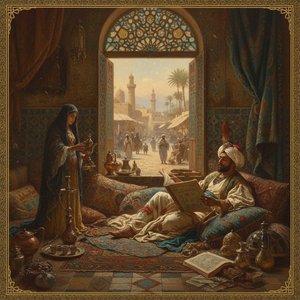
Explore the captivating Orientalist paintings of John Frederick Lewis! Discover his mastery of detail, genre scenes & influence on 19th-century British art. Learn about his life, techniques & legacy at BuyPopArt.
Открийте 25 шедьовъра на Джеймс Абът Макнил Уистлър! Разгледайте историите зад неговите емблематични ноктюрни, портрети и импресионистични картини. Вдъхновете се за вашия интериор с висококачествени репродукции на BuyPopArt.com
Разгледайте топ 25 шедьоври на Франсиско Гоя – от портрети до исторически картини. Открийте историите, техниките и емоциите зад неговите най-известни творби. Луксозни репродукции за вашия дом в BuyPopArt.com!


Бъдете информирани за последните новини в света на изкуството, ексклузивни оферти и идеи за декорация.
Разкажете ни за вашия проект и нашите експерти по изкуство ще ви предложат 3 персонализирани предложения за произведения на изкуството.
Нека подберем 3 варианта само за вас – безплатно!


 Представи си го
 Изпрати
 Сподели
 Детайли

 Изтегляне
 Подобни
 Рентгенова снимка
 Слайдшоу


 Прочетете повече







 Стъклото е налично само в размери под 110 см


