


 Oil On CanvasWallArtCubist Style
 1913Early Medieval
 188.0 x 158.0 cm
Закупете дигитално изображение с висока резолюция и подобрени характеристики, значително по-добро от онлайн прегледа.
Всеки файл е щателно подготвен от нашите специалисти с помощта на съвременни инструменти и експертна ръчна ретуш. Гарантираме, че всяко изображение има изключителна яснота, прецизна цветова точност и фини детайли.
Окончателният файл се доставя по имейл в рамките на 72 часа, оптимизиран за незабавна употреба в професионални, редакционни и печатни среди. Това е същото качество, на което се доверяват водещи дизайнерски студия, издатели и галерии.
Изтеглете файл с висока резолюция за лично показване, принтиране и творчески проекти. ( Превключване към печат Превключване към ръчно рисувана картина)
Когато изберете BuyPopArt.com, вие не получавате само изображение – вие получавате професионално подобрена дигитална творба, създадена с прецизност и подкрепена от гаранция за удовлетворение. Ето всичко, което автоматично се включва в вашата поръчка:

Вашето дигитално изображение с висока резолюция ще ви бъде изпратено по имейл в рамките на 72 часа от поръчката - готово за незабавно използване.

Вашата картина е професионално оптимизирана с помощта на усъвършенствани инструменти за изкуствен интелект и ръчна редакция, осигурявайки максимална детайлност, яснота и точност на цветовете.

Изгубили сте или сте премахнали файла си по погрешка? Не се притежнявайте – ще го изпратим отново на Вас по всяко време, безплатно.

Всредите си веднага без мита, данъци или такси по доставка - дигителните приложения винаги са без данъчно освободени.

Гарантираме, че вашето дигитално изображение отразява оригиналните цветове възможно най-точно, използвайки професионални инструменти и управление на цветовете.

Ако не сте доволни от вашето дигилно изображение, ще го коригираме или ще възмедим 100% в рамките на 60 дни – без никакви въпроси.

Не сте удовлетворени? Получавате пълно възстановяване на сумата в рамките на 60 дни след получаването на вашия цифров файл – без никакви въпроси.

Купете 3 изображения, спестете 10% - Купете 5, спестете 15% - Купете 10+, спестете 20%. Отлично за творчески проекти, галерии и агенства.
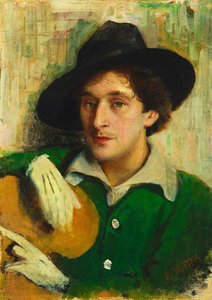
Marc Chagall's "The Fiddler," painted in 1913, isn’t merely a depiction of a man playing his instrument; it’s an immersion into a world brimming with personal mythology and the vibrant spirit of Eastern European Jewish life. This oil on canvas, measuring 188 x 158 cm, stands as a cornerstone of Chagall's early Cubist explorations, seamlessly blending fantastical elements with poignant realism. The painting immediately captivates with its explosion of color – deep blues, fiery oranges, and earthy greens—a palette that evokes both the twilight skies of Vitebsk and the warmth of family gatherings. It’s a scene plucked from memory, rendered not as a literal representation but as a potent distillation of feeling and experience.
At first glance, the composition appears deceptively simple: a man, identified by his distinctive white coat and flowing beard, stands perched atop a table, lost in the melody of his violin. Yet, this seemingly straightforward arrangement is layered with symbolic weight. The inclusion of an umbrella, tilted at a whimsical angle, hints at the unpredictable nature of life – a subtle acknowledgment of both joy and hardship. The other figures surrounding him—a woman gazing intently, a child reaching out, and a group engaged in various activities—suggest a community bound together by shared heritage and traditions. This isn’t just a portrait; it's a snapshot of a world, a testament to the enduring power of collective memory.
“The Fiddler” firmly establishes Chagall within the burgeoning movement of Cubism, though he quickly developed his own distinctive style. While influenced by Picasso and Braque’s exploration of fragmented forms and multiple perspectives, Chagall injects a deeply personal element into the technique. The figures are not rendered with photographic accuracy; instead, they are stylized and abstracted, their bodies flattened and rearranged to emphasize emotional impact over strict spatial representation. The use of bold, intersecting planes creates a dynamic sense of movement, as if the scene is perpetually shifting between moments in time. This deliberate distortion isn’t an exercise in deconstruction but rather a means of conveying the subjective experience of memory—a process where details blur and perspectives shift.
Chagall's masterful use of color further enhances this effect. He employs vibrant hues not to mimic reality, but to amplify the emotional resonance of each element. The deep blues evoke a sense of melancholy and nostalgia, while the fiery oranges represent passion and vitality. The interplay between these colors creates a dreamlike atmosphere, transporting the viewer into Chagall’s inner world.
Delving deeper reveals a rich tapestry of symbolism deeply rooted in Chagall's Hasidic Jewish upbringing. The fiddle itself is a potent symbol—a vehicle for spiritual expression and communal celebration within Jewish tradition. The setting, reminiscent of Vitebsk, the artist’s birthplace, immediately anchors the painting in a specific cultural context. The inclusion of elements like the table, a common gathering place, reinforces this sense of community and shared experience. Even the posture of the fiddler—his head tilted back as if lost in contemplation—suggests a connection to something beyond the earthly realm.
Furthermore, the painting’s overall composition echoes themes prevalent in Jewish folklore – stories of wandering, exile, and the enduring spirit of faith. The floating figures, a recurring motif in Chagall's work, represent a yearning for transcendence and a belief in the power of imagination. “The Fiddler” is therefore not simply a portrait; it’s an allegory—a visual poem exploring universal themes through the lens of personal memory and cultural heritage.
“The Fiddler” stands as one of Chagall's most beloved works, a testament to his unique artistic vision. Its influence extends far beyond the confines of Cubism, inspiring generations of artists with its dreamlike atmosphere and evocative symbolism. Works like “The Betrothed” and “Eiffel Tower,” also available through BuyPopArt.com, demonstrate the breadth of Chagall’s creative exploration. The painting's enduring appeal lies in its ability to transport viewers to a world where reality and fantasy intertwine, inviting us to contemplate the complexities of memory, faith, and the human spirit. Reproductions offer a remarkable opportunity to bring this captivating masterpiece into your home or studio, allowing you to experience the magic of Chagall’s vision firsthand.
1887 - 1985 , Беларусь


Бъдете информирани за последните новини в света на изкуството, ексклузивни оферти и идеи за декорация.
Разкажете ни за вашия проект и нашите експерти по изкуство ще ви предложат 3 персонализирани предложения за произведения на изкуството.
Нека подберем 3 варианта само за вас – безплатно!


 Представи си го
 Изпрати
 Сподели
 Детайли

 Изтегляне
 Подобни
 Рентгенова снимка
 Слайдшоу
 Прочетете повече