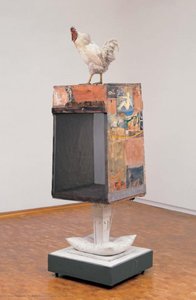
2013
2013 54.0 x 53.0 cm
 The Ramzi and Saeda Dalloul Art Foundation
Закупете дигитално изображение с висока резолюция и подобрени характеристики, значително по-добро от онлайн прегледа.
Всеки файл е щателно подготвен от нашите специалисти с помощта на съвременни инструменти и експертна ръчна ретуш. Гарантираме, че всяко изображение има изключителна яснота, прецизна цветова точност и фини детайли.
Окончателният файл се доставя по имейл в рамките на 72 часа, оптимизиран за незабавна употреба в професионални, редакционни и печатни среди. Това е същото качество, на което се доверяват водещи дизайнерски студия, издатели и галерии.
Изтеглете файл с висока резолюция за лично показване, принтиране и творчески проекти. ( Купете принт Купете ръчно рисувана картина)
Когато изберете BuyPopArt.com, вие не получавате само изображение – вие получавате професионално подобрена дигитална творба, създадена с прецизност и подкрепена от гаранция за удовлетворение. Ето всичко, което автоматично се включва в вашата поръчка:

Вашето дигитално изображение с висока резолюция ще ви бъде изпратено по имейл в рамките на 72 часа от поръчката - готово за незабавно използване.

Вашата картина е професионално оптимизирана с помощта на усъвършенствани инструменти за изкуствен интелект и ръчна редакция, осигурявайки максимална детайлност, яснота и точност на цветовете.

Изгубили сте или сте премахнали файла си по погрешка? Не се притежнявайте – ще го изпратим отново на Вас по всяко време, безплатно.

Всредите си веднага без мита, данъци или такси по доставка - дигителните приложения винаги са без данъчно освободени.

Гарантираме, че вашето дигитално изображение отразява оригиналните цветове възможно най-точно, използвайки професионални инструменти и управление на цветовете.

Ако не сте доволни от вашето дигилно изображение, ще го коригираме или ще възмедим 100% в рамките на 60 дни – без никакви въпроси.

Не сте удовлетворени? Получавате пълно възстановяване на сумата в рамките на 60 дни след получаването на вашия цифров файл – без никакви въпроси.

Купете 3 изображения, спестете 10% - Купете 5, спестете 15% - Купете 10+, спестете 20%. Отлично за творчески проекти, галерии и агенства.
Born in Beirut, Lebanon, in 1951, Mohammad El Rawas is a profoundly influential figure in contemporary Lebanese art. His journey as an artist has been shaped by the tumultuous events of his homeland – the Lebanese Civil War, periods of exile, and ultimately, a deep engagement with both its history and the complexities of modern life. El Rawas’s work isn't merely representation; it’s a layered exploration of memory, trauma, cultural identity, and the enduring spirit of Lebanon itself. He seamlessly blends traditional artistic techniques with innovative approaches, creating pieces that are simultaneously rooted in heritage and strikingly contemporary.
El Rawas’s early life was intrinsically linked to the political instability gripping Lebanon during his formative years. He began his formal art education at the Institute of Fine Arts at the Lebanese University, graduating in 1975. However, the outbreak of the Civil War dramatically altered his trajectory. Forced to flee Beirut, he initially sought refuge in Damascus before eventually relocating to Morocco and then London. It was during this period abroad that he pursued further artistic development, enrolling at the prestigious Slade School of Fine Art at University College London, earning an MA in printmaking in 1981. This international experience proved pivotal, exposing him to a diverse range of artistic styles and techniques – from European masters to emerging contemporary trends – which he would later integrate into his unique visual language.
The Lebanese Civil War profoundly impacted El Rawas’s artistic vision. His early works, produced during this period of intense conflict, are characterized by their complex spatial arrangements and a palpable sense of unease. These pieces weren't simply depictions of war; they were attempts to grapple with its psychological and emotional consequences – the fragmentation of memory, the pervasive feeling of trauma, and the sociopolitical contradictions that fueled the violence. He moved away from straightforward representation, experimenting with collage and graphic imagery, creating works that felt both fragmented and intensely evocative. This period marked a significant departure, establishing him as an artist deeply concerned with exploring the human condition within the context of political upheaval.
Following his return to Lebanon in 1981, El Rawas began to refine his artistic practice. He quickly established himself as a teacher at the Lebanese University and later at the American University of Beirut, where he also founded studios dedicated to etching, engraving, and silkscreen techniques. His style evolved dramatically over time, incorporating elements of mixed media and abstract expressionism. He embraced unconventional materials – wood, aluminum, string – building intricate, layered constructions that often referenced both classical art traditions and contemporary pop culture. The influence of artists like Diego Velázquez (particularly his masterpiece *Las Meninas*) is evident in the complex arrangements and theatrical compositions of many of his works, while simultaneously drawing inspiration from manga, comics, and other visual sources.
Mohammad El Rawas’s work has garnered significant international recognition. His pieces have been exhibited at prestigious venues worldwide, including the Sursock Museum in Beirut, the British Museum in London, and various galleries across Europe and the Middle East. He has received numerous awards for his artistic contributions, solidifying his position as a leading figure in contemporary Lebanese art. His work continues to be studied and appreciated for its ability to capture the spirit of Lebanon – its beauty, its resilience, and its enduring complexities. El Rawas’s legacy lies not only in his individual creations but also in his commitment to fostering artistic education and promoting cultural dialogue through his art. His ongoing practice demonstrates a continued engagement with the themes that have shaped his career—memory, identity, and the ever-evolving narrative of Lebanon.

1951 - , Lebanon


Бъдете информирани за последните новини в света на изкуството, ексклузивни оферти и идеи за декорация.
Разкажете ни за вашия проект и нашите експерти по изкуство ще ви предложат 3 персонализирани предложения за произведения на изкуството.
Нека подберем 3 варианта само за вас – безплатно!


 Представи си го
 Изпрати
 Сподели
 Детайли

 Изтегляне
 Подобни
 Рентгенова снимка
 Слайдшоу
 Прочетете повече