Биография на художника
Early Life and Artistic Beginnings
James Lewis Dine, born June 16, 1935, in Cincinnati, Ohio, emerged from a surprisingly conventional upbringing that would profoundly shape his later artistic explorations. His early years were spent largely with his maternal grandparents, a circumstance that fostered an intimate connection to the tangible world – a foundation he would later deliberately dismantle and reconstruct through his art. Unlike many artists who gravitate towards formal training early on, Dine’s initial exposure to the visual arts came through a serendipitous encounter with prints by German Expressionist masters like Ernst Ludwig Kirchner and Max Beckmann, sparked by a copy of Paul J. Sachs' *Modern Prints and Drawings* in 1954. This encounter ignited a passion for printmaking, leading him to begin experimenting with woodcuts in the basement of his grandparents’ home – an unconventional starting point that underscored his commitment to direct experience and immediate engagement with materials. He attended Walnut Hills High School while pursuing evening courses at the Art Academy of Cincinnati, absorbing techniques and developing a foundational understanding of printmaking under the guidance of Donald Roberts. This early period established a crucial tension within his work: a respect for tradition juxtaposed with a desire to break free from established conventions.
The Rise of Happenings and Early Experiments
Following graduation from Ohio University in 1957, Dine relocated to New York City, a pivotal move that propelled him into the heart of the burgeoning avant-garde scene. He quickly became involved with the Judson Gallery, founded alongside Claes Oldenburg, Marcus Ratliff, Allan Kaprow, and Bob Whitman at the Judson Church in Greenwich Village. This collective played a crucial role in shaping the development of “happenings”—immersive, participatory art events that blurred the boundaries between performance, visual art, and audience interaction. Dine’s early work during this period—notably *The Smiling Workman* (1959)—demonstrates his willingness to challenge traditional notions of artistic creation and reception. This piece, a simple, hand-printed image of a smiling worker, was initially displayed on a billboard in New York City, effectively turning the public into unwitting viewers and participants. This radical approach signaled Dine’s commitment to demystifying art and inviting direct engagement with the viewer—a core tenet that would define much of his subsequent work. He began experimenting with various printmaking techniques – lithography, etching, intaglio, dry paint, and woodcuts – often combining them in unexpected ways, reflecting a restless intellectual curiosity and a desire to push the limits of traditional media.
The Development of “Cut” and Minimalist Aesthetics
The 1960s marked a significant shift in Dine’s artistic trajectory. He began exploring the concept of "cut"—a deceptively simple act of severing or dividing—as a fundamental element of his work. This involved cutting paper, fabric, or other materials into geometric shapes and then reassembling them to create new forms. This process, often executed with meticulous precision, became a central motif in his oeuvre, representing a deliberate attempt to strip away the superfluous and reveal the essential. Simultaneously, Dine began embracing minimalist aesthetics, reducing his work to its most basic components—often just lines or simple shapes. This shift reflected a growing interest in Zen Buddhism and a desire to achieve clarity and directness through reductive means. His “cut” works, such as *Cut Line* (1963), are characterized by their stark simplicity and geometric precision, embodying a profound sense of restraint and control. These pieces stand in contrast to the more chaotic and performative nature of his early happenings, demonstrating a deliberate evolution in his artistic language.
Printmaking as Process and Exploration
Throughout his career, printmaking remained a central focus for Dine, but it evolved beyond its initial role as a starting point. He viewed the process of creating prints—from drawing the original image to manipulating the printing press—as an integral part of the artwork itself. Dine’s approach to printmaking was characterized by a deep engagement with the materials and techniques involved, often experimenting with unconventional methods and pushing the boundaries of traditional print processes. His use of letterpress, for example, allowed him to create works that combined text and image in unexpected ways, exploring themes of language, communication, and meaning. He also embraced the collaborative nature of printmaking, working with assistants and other artists to produce large-scale prints that demanded a shared understanding and collective effort. This emphasis on process underscored his belief that art is not simply about creating finished objects but about engaging in a continuous cycle of exploration and discovery.
Legacy and Historical Significance
Jim Dine’s impact on contemporary art extends far beyond the specific forms of his work. He is recognized as a key figure in the development of American Pop Art, Happenings, and Minimalism—movements that fundamentally challenged traditional notions of artistic value and practice. His commitment to accessibility, directness, and democratic engagement with the viewer has resonated deeply with audiences across generations. Dine’s work continues to be exhibited internationally and is held in major museum collections worldwide. His influence can be seen in the work of countless artists who have followed in his footsteps, demonstrating the enduring relevance of his ideas and techniques. He remains a vital voice in contemporary art, reminding us that art can be found in the most unexpected places—in a simple cut, a hand-printed image, or an act of shared creation.


 1966
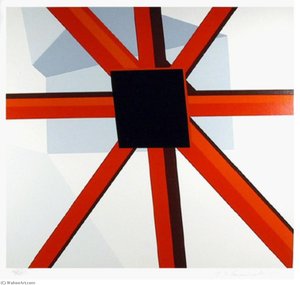
1966 23.0 x 100.0 cm
 Национален музей за съвременно изкуство - Museu do Chiado
 Купете принт





 Представи си го
 Изпрати
 Сподели
 Детайли

 Изтегляне
 Подобни
 Рентгенова снимка
 Слайдшоу
 Прочетете повече




































 Стъклото е налично само в размери под 110 см