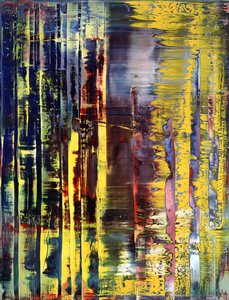
Giclée печат или принт върху платно с музейно качество, бързо производство и гъвкави опции за завършен вид. ( Купете ръчно рисувана картина Купете изображение)





























Изберете от предварително зададените размери, които съответстват на оригиналните пропорции на произведението.

Можете да въведете собствени размери, за да паснат на конкретна рамка или пространство. Ако избраният от Вас размер не съвпада с пропорциите на оригиналното изображение, ние ще изрежем произведението или ще разширим изображението с огледален или едноцветен ръб. Дигитален макет ще бъде изпратен за Ваше одобрение преди започването на производството.
Моля, имайте предвид, че предпрегледът на екрана не отразява реалното изрязване или разширяване. Само макетът ще покаже точно финалната композиция.
Въпреки че са налични персонализирани размери, препоръчваме да изберете размер от предварително дефинирания списък, за да запазите оригиналните пропорции.
Доставка по целия свят () в рамките на 2 седмици вместо стандартните 4/5 седмици. (18 Август)


Ocean
Размер на репродукцията
Vija Celmins’s “Ocean” isn’t merely a painting; it’s an immersion. It’s a deliberate stripping away of all extraneous context, leaving only the raw, insistent presence of water itself. The work, created in 1975, presents a relentlessly horizontal expanse of gray and white – a seemingly simple depiction of waves that, upon closer inspection, reveals itself to be a profound meditation on observation, memory, and the very nature of perception. There’s no horizon line to anchor the eye, no suggestion of sky or distant shore; instead, we are confronted with an infinite field of undulating lines, each meticulously rendered to capture the subtle shifts in texture and tone that define the surface of the sea.
Celmins' approach is deeply rooted in a process of painstaking replication. She began by studying photographs of oceans, not as representations of reality, but as records of light and movement. This foundational act of observation informs every line, every shade, creating an illusion of depth and volume that defies the two-dimensionality of the medium. The work’s hyperrealistic quality isn't about photographic accuracy; it’s about distilling the essence of the ocean – its ceaseless motion, its subtle variations in color, and its inherent quietude – into a visual language that transcends literal depiction.
While often associated with painting, Celmins' technique leans heavily towards printmaking. The incredibly fine lines, achieved through the application of graphite on paper, evoke the delicate tracery of etching or lithography. This choice of medium is crucial to understanding the work’s impact. Graphite allows for an unparalleled level of detail and tonal control, enabling Celmins to capture the subtle nuances of light reflection and wave movement with astonishing precision. The process itself—the countless hours spent meticulously rendering each individual crest – speaks volumes about her dedication to observation and her commitment to translating a sensory experience into a tangible form.
It’s important to note that Celmins' work is not simply a technical exercise; it’s an intensely personal one. She has described the act of drawing as a way of “remembering” – of holding onto fleeting moments and impressions. The repetitive nature of her process, combined with the subject matter—the ocean, a symbol of vastness and timelessness—creates a meditative effect, inviting the viewer to lose themselves in the work’s quiet intensity.
Celmins' early artistic development was profoundly shaped by her encounter with the Italian monochrome still life painter Giorgio Morandi. Like Morandi, she was drawn to the subtle variations in tone and texture—the way light plays across surfaces, the delicate interplay of shadow and highlight. This influence is evident in “Ocean,” where Celmins masterfully manipulates graphite to create a sense of depth and volume through carefully controlled gradations of gray. The work shares Morandi’s quiet contemplation, its focus on the beauty of simple forms and the power of observation.
At first glance, “Ocean” might seem like a purely descriptive image—a straightforward representation of water. However, beneath this surface simplicity lies a wealth of symbolic meaning. The ocean has long been associated with vastness, mystery, and the unknown – representing both the potential for adventure and the inevitability of change. Celmins’s meticulous rendering of its surface suggests an attempt to capture this elusive quality—to hold onto the fleeting moment before it dissolves into nothingness. The work's stillness, despite the implied movement of the waves, speaks to a deeper sense of contemplation, inviting us to consider our place within the larger context of existence.


1938 - , Latvia

Master the high-impact world of contemporary abstraction. Discover how bold colors, textures, and modern movements like Abstract Expressionism can transform your space with premium, high-energy art curated for the design-conscious professional.

Dive into the high-energy world of Lyrical Abstraction. Explore how bold colors, fluid motion, and emotional depth define this modern masterpiece movement. Discover iconic artists and learn to bring this vibrant, soulful energy into your contemporary space.

Discover the power of Neo-Abstract art. Explore how bold geometric forms and high-impact visual energy are redefining modern design. Learn to curate sophisticated, high-energy spaces with the latest trends in contemporary abstraction and structural color.

Dive into the high-voltage world of Abstract Expressionism. Explore the raw energy of Action Painting and the legendary masters of the New York School through a visual journey of pure chaos and color. Discover how to bring bold, high-impact abstract art into your modern space.


Бъдете информирани за последните новини в света на изкуството, ексклузивни оферти и идеи за декорация.
Разкажете ни за вашия проект и нашите експерти по изкуство ще ви предложат 3 персонализирани предложения за произведения на изкуството.
Нека подберем 3 варианта само за вас – безплатно!


 Представи си го
 Изпрати
 Сподели
 Детайли

 Изтегляне
 Подобни
 Рентгенова снимка
 Слайдшоу


 Прочетете повече







 Стъклото е налично само в размери под 110 см