A Life Shrouded in Mystery: The Enigmatic World of A. Haddock
The art world often celebrates the flamboyant personality as much as the artwork itself, yet there exists a compelling counter-narrative embodied by artists who deliberately recede from public view. A. Haddock is such a figure – an artist whose work speaks volumes while their personal history remains remarkably elusive. Born in an undisclosed location and continuing to live and create today, Haddock has cultivated an air of intentional obscurity, allowing the paintings themselves to be the primary source of understanding. This deliberate anonymity isn’t born of shyness, but rather a profound belief that the artwork should exist independently of its creator, judged solely on its aesthetic merit and emotional resonance. What little is known suggests a deeply private individual, dedicated entirely to their craft, eschewing social circles and public pronouncements in favor of sustained artistic exploration. This commitment to pure creation has resulted in a body of work characterized by striking originality and an almost haunting quality.
The Language of Light and Shadow: Exploring Haddock’s Artistic Style
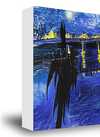
A. Haddock's paintings are immediately recognizable for their masterful manipulation of light and shadow, creating atmospheric scenes that often border on the surreal. While difficult to categorize neatly within a single movement, elements of both Impressionism and Symbolism can be detected in their work. Early pieces demonstrate a clear fascination with the fleeting effects of natural light, reminiscent of Monet’s studies of water lilies or Renoir's dappled landscapes. However, Haddock quickly moved beyond mere representation, employing light not simply to depict form but to evoke mood and psychological states.
The artist frequently utilizes a muted palette, dominated by grays, blues, and ochres, punctuated by occasional bursts of vibrant color that serve as focal points within the composition. These colors aren’t used realistically; instead, they function symbolically, hinting at hidden emotions or underlying narratives. Recurring motifs include solitary figures, desolate landscapes, and architectural fragments – all rendered with a delicate precision that belies the emotional weight they carry.
The brushwork is often loose and expressive, yet always controlled, creating a sense of both immediacy and timelessness.
Influences and Inspirations: A Dialogue with the Past
Despite their self-imposed isolation, Haddock’s work reveals a deep engagement with art history. While they have never explicitly discussed their influences, scholars have identified echoes of various masters within their oeuvre. The melancholic atmosphere and symbolic use of color in paintings like “The Empty Promenade” (date unknown) suggest an affinity for the works of Edward Hopper, while the dreamlike quality of other pieces recalls the landscapes of Giorgio de Chirico.
- A strong influence appears to be the Romantic tradition
- Specifically, the work of Caspar David Friedrich and his exploration of the sublime in nature.
- The artist also demonstrates a keen understanding of chiaroscuro techniques
- Drawing inspiration from Rembrandt and Caravaggio’s dramatic use of light and shadow.
However, Haddock doesn't simply imitate these artists; they synthesize their influences into something entirely new – a unique visual language that is both deeply personal and universally resonant. It’s as if the artist has absorbed the lessons of the past, then filtered them through their own sensibility to create works that feel simultaneously familiar and utterly original.
Major Themes and Recurring Motifs: Unraveling the Subtext
A sense of solitude pervades much of Haddock’s work. Solitary figures are often depicted in vast, empty spaces, seemingly lost in contemplation or adrift from society. This isn't necessarily a depiction of loneliness, but rather an exploration of the human condition – our inherent isolation and search for meaning in a chaotic world. Desolate landscapes also feature prominently, serving as metaphors for inner states of mind.
Ruined architecture, another recurring motif, suggests themes of memory, loss, and the passage of time. These elements aren’t presented in a literal or didactic manner; instead, they are woven into the fabric of the paintings, inviting viewers to interpret their meaning on a personal level.
The artist's refusal to provide explicit explanations only adds to the mystery and allure of their work, encouraging a deeper engagement with the emotional subtext. The interplay between interiority and exteriority is central to Haddock’s artistic vision – the landscapes reflecting the inner turmoil of the figures, and vice versa.
Historical Significance and Legacy: A Quiet Revolution
While A. Haddock has deliberately avoided mainstream recognition, their work has steadily gained a devoted following among collectors and art enthusiasts who appreciate its subtle power and emotional depth. The artist’s commitment to pure artistic expression – unburdened by commercial pressures or the need for public validation – represents a quiet revolution in an increasingly market-driven art world.
Haddock's paintings offer a respite from the noise and spectacle of contemporary life, inviting viewers to slow down, contemplate, and connect with their own inner emotions. Their influence can be seen in the work of several emerging artists who are exploring similar themes of solitude, memory, and psychological states. Although Haddock remains an enigmatic figure, their paintings stand as a testament to the enduring power of art – its ability to transcend boundaries, evoke emotion, and offer profound insights into the human condition. The legacy of A. Haddock is not one of grand pronouncements or public acclaim, but rather a quiet, persistent presence that continues to resonate with those who seek beauty, meaning, and solace in the world around them.



 Objednat reprodukci
 Sdílet
 Podrobnosti o díle
 Přidat do oblíbených
 Stáhnout
 Podobné položky
 Rentgenové snímky
 Slideshow
 1828
1828 73.0 x 54.0 cm






 Sdílet

 Zobrazit více
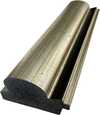
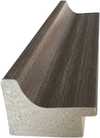
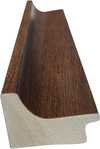
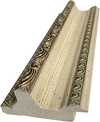
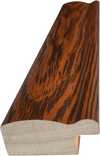
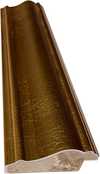
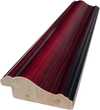
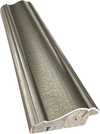
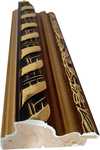
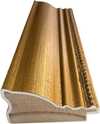
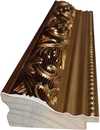
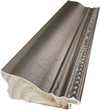
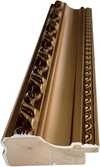
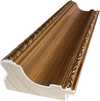
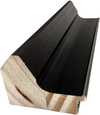
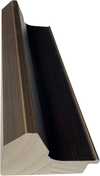


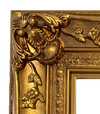
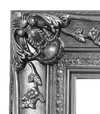
 Skleněná varianta je dostupná pouze u rozměrů menších než 110 cm


