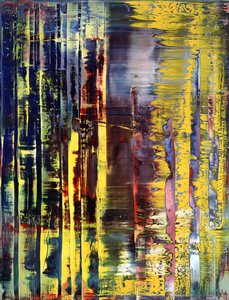
Acrylic On CanvasWallArtNeo-Expressionism
 1989
1989 200.0 x 240.0 cm
 Muzeum moderního umění
Koupě vysoce rozlišeného, vylepšeného digitálního obrazu, který je mnohem kvalitnější než online náhled.
Každý soubor je pečlivě připraven našimi odborníky pomocí pokročilých nástrojů a expertní manuální retuše. Zajišťujeme, aby každý obraz disponoval výjimečnou ostrostí, přesnou barevnou věrností a jemnými detaily.
Finální soubor vám bude do 72 hodin zaslán e-mailem, optimalizovaný pro okamžité použití v profesionálním, redakčním i tiskovém prostředí. Nabízíme stejnou kvalitu, které důvěřují špičková designová studia, nakladatelství i galerie.
Stáhněte si soubor ve vysokém rozlišení pro osobní prohlížení, tisk a kreativní projekty. ( Koupit tisk Koupit ručně malovaný obraz)
Když si vyberete BuyPopArt.com, nezískáváte pouze obrázek – získáváte digitální umělecké dílo s profesionálně vylepšenými detaily, zpracované s precizností a podpořené zárukou za spokojenost. Zde je vše, co vaše objednávka automaticky obsahuje:

Váš digitální obraz ve vysokém rozlišení vám bude zaslán e-mailem do 72 hodin od objednávky – připraven k okamžitému použití.

Vaše umělecké dílo je profesionálně optimalizováno pomocí pokročilých nástrojů umělé inteligence a manuální úpravy, což zajišťuje maximální úroveň detailu, ostrosti a přesnosti barev.

Soubor jste omylem smazali nebo ztratili? Žádný problém – kdykoliv vám ho znovu zašleme zcela zdarma.

Užijte si své umělecké dílo okamžitě bez celních poplatků, daní nebo nákladů na dopravu – digitální stažení je vždy bez daňových povinností.

Pomocí profesionálních nástrojů a správy barev zajišťujeme, aby váš digitální obraz odrážel původní barvy co nejvěrněji.

Pokud nebudete s digitální fotografií spokojeni, provedeme její revizi nebo vám vrátíme 100% během 60 dnů – bez jakýchkoliv dotazů.

Nespokojeni? Získejte plnou částku zpět do 60 dní od přijetí vašeho digitálního souboru – bez jakýchkoliv dotazů.

Koupěte si 3 obrazy, ušetřete 10% - Koupěte si 5, ušetřete 15% - Koupěte si 10+, ušetřete 20%. Ideální pro kreativní projekty, galerie a agentury.
Albert Oehlen's "Untitled," painted in 1989, isn’t merely a depiction of color; it’s an immersive exploration of the act of painting itself. This large-scale work, measuring a substantial 200 x 240 cm, immediately draws the viewer into a vibrant, almost chaotic field of pinks, yellows, and blues. Yet, beneath this initial impression of unrestrained exuberance lies a meticulously considered process – a testament to Oehlen’s radical approach to abstraction and his deliberate rejection of traditional artistic conventions.
The painting's style defies easy categorization. It leans heavily into the gestural qualities of Abstract Expressionism, particularly the work of Pollock, but with a crucial difference: Oehlen doesn’t aim for spontaneous, uncontrolled drips. Instead, he employs a system – a carefully calibrated layering of acrylic paint applied through a combination of brushing and spraying. This technique creates a surface that is both intensely textured and remarkably controlled. The squares, arranged in seemingly random patterns, aren't haphazard; they are the product of repeated application and subtle adjustments, suggesting an underlying structure beneath the apparent chaos.
Oehlen’s work emerged during a pivotal moment in German art history—the late 1970s and early 1980s, a period marked by a reaction against the prevailing Neo-Expressionist movement. Artists like Oehlen, Martin Kippenberger, and Georg Herold sought to dismantle the established hierarchies of the art world, questioning notions of originality, skill, and even beauty. Oehlen famously coined the term “bad painting” – not as an insult, but as a deliberate provocation. He embraced imperfections, mistakes, and the visible traces of his hand, arguing that the process of creation was more important than the finished product.
This philosophy is powerfully evident in "Untitled." The slightly uneven edges of the squares, the subtle variations in color saturation, and the evidence of brushstrokes all contribute to a sense of immediacy and authenticity. Oehlen isn’t striving for photographic realism or idealized beauty; he's presenting us with the raw materials of his artistic practice – the paint itself, the tools he uses, and the act of applying them to canvas.
While seemingly chaotic, “Untitled” is underpinned by a subtle sense of order. The grid-like arrangement of the squares creates a visual framework that anchors the composition. However, this structure isn’t rigid or imposed; it emerges organically from Oehlen's process. The repetition of shapes and colors suggests a system, while the variations within those patterns introduce an element of surprise and unpredictability.
Some art historians interpret the squares as representing the fragmented nature of modern experience – a world increasingly dominated by mass media, advertising, and consumer culture. The bright, synthetic colors evoke the vibrancy of billboards and posters, while the grid-like structure suggests the uniformity and standardization of contemporary society. Yet, Oehlen’s deliberate use of imperfections and gestural marks hints at a resistance to this homogenization, a desire to reclaim individuality and spontaneity.
"Untitled" stands as a cornerstone in Albert Oehlen's oeuvre, demonstrating his commitment to exploring the fundamental principles of painting. Reproductions capture much of the original’s energy and texture, offering an accessible way to experience this complex work. However, nothing truly replicates the immediacy and physicality of the original canvas. The subtle variations in color, the evidence of brushstrokes, and the overall sense of process are all crucial elements that contribute to the painting's unique character.
For collectors seeking a piece with historical significance and artistic depth, or for interior designers aiming to inject a vibrant, thought-provoking element into a space, an authentic reproduction of Albert Oehlen’s “Untitled” offers a compelling connection to one of the most innovative artists of our time. It's a painting that invites contemplation, challenges conventional notions of beauty, and celebrates the enduring power of the creative process.

In the turbulent landscape of late twentieth-century German art, few figures command as much intellectual and visual authority as Albert Oehlen. Born in Krefeld in 1954, Oehlen emerged not merely as a painter, but as a provocateur who sought to dismantle the very sanctity of the canvas. His journey is one of deliberate disruption, a career defined by a refusal to settle into any single movement or aesthetic certainty. While his contemporaries often leaned into the emotional weight of Neo-Expressionism, Oehlen embarked on a more cerebral and rebellious path, treating the act of painting as a site of experimental collision where abstraction and figuration engage in a perpetual, restless struggle.
Oehlen’s formative years were steeped in the avant-garde energy of Berlin and Hamburg. Studying at the Hochschule für bildende Künste Hamburg between 1978 and 1981 under the legendary Sigmar Polke, he inherited a legacy of questioning the boundaries of medium and meaning. This period of academic rigor was balanced by a gritty, hands-on engagement with the art scene, where he worked as a decorator and waiter, absorbing the raw textures of urban life. Alongside figures like Martin Kippenberger and Georg Herold, Oehlen became a central pillar of the Neue Wilde movement, yet he always maintained a distance from its more predictable tropes, preferring instead to explore what he termed the "failures" of painting—finding beauty in discordance, error, and the breakdown of traditional composition.
The evolution of Oehlen’s technique is a testament to his fascination with the tension between the handmade and the mechanical. His oeuvre is famously categorized by several distinct, yet overlapping, stylistic phases that showcase an incredible breadth of vision. In the 1980s, he gained notoriety for his "Bad Paintings," works that intentionally embraced a sense of amateurism and aesthetic friction to challenge the polished standards of the art world. These pieces utilized brash juxtapositions of color and discordant symbols, suggesting that true innovation lies in the ability to break fundamental rules.
As his practice matured, Oehlen introduced even more complex layers of complexity through several groundbreaking series:
In works such as Object (Dinge), one can witness his mastery of visual density, where elements of Dada and Constructivism are woven together with vibrant greens and geometric forms to create a provocative commentary on identity. His ability to blend the surrealist gesture with expressionist brushwork allows him to push the essential components of color, motion, and time to their absolute extremes.
Today, Albert Oehlen stands as a monumental figure whose influence stretches far beyond the borders of Germany. His significance lies in his ability to keep the medium of painting perpetually relevant by treating it as an evolving language rather than a static tradition. By embracing collage, digital motifs, and even "deliberate amateurism," he has provided a blueprint for how contemporary artists can engage with history without being imprisoned by it. His recent exhibitions, such as those at the Serpentine Galleries, continue to demonstrate his capacity to remix the past—appropriating elements from Modernist masters like John Graham to create something entirely new and startlingly contemporary.
Ultimately, Oehlen’s work is a celebration of process over product. He invites the viewer into a space where the collision of figuration and abstraction serves as a powerful reminder of the many forces that drive the resurgence of art in an increasingly digital age. Through his radical embrace of the unexpected, he has ensured that the act of painting remains a vital, breathing, and profoundly unpredictable force in the global art dialogue.

1954 - , Germany


Buďte na tahu s nejnovějšími novinkami ze světa umění, exkluzivními nabídkami a inspirativními nápady na dekoraci.
Sdělte nám více o svém projektu a naši odborníci na umění vám připraví 3 personalizované návrhy uměleckých děl.
Nechť pro vás vybereme 3 možnosti – zdarma!


 Náhled
 Sdílet
 Sdílet
 Podrobnosti o díle

 Stáhnout
 Podobné položky
 Rentgenové snímky
 Slideshow
 Zobrazit více