

Ručně malovaná olejná barva na plátně ve vašem zvoleném rozměru i s rámem, vyrobená našimi umělci na zakázku. ( Koupit tisk Koupit obrázek)





























Vyberte si z našich přednastavených velikostí, které odpovídají původním proporcím díla.

Můžete zadat vlastní rozměry pro konkrétní rám nebo prostor. Pokud se vámi vybraná velikost neshoduje s proporcemi původního obrazu, dílo buď ořízneme, nebo jej doplníme ručně malovanými prvky. Před zahájením výroby vám bude zaslán digitální náhled ke schválení.
Upozorňujeme, že náhled na obrazovce neodpovídá skutečnému ořezu ani rozšíření. Pouze digitální náhled přesně zobrazí finální kompozici.
Ačkoliv je možné zvolit vlastní velikost, pro zachování původních proporcí doporučujeme vybrat rozměr z předdefinovaného seznamu.
Celosvětová doprava () za 3–4 týdny namísto standardních 5 týdnů. (23 srpen). Bez kompromisů v kvalitě.


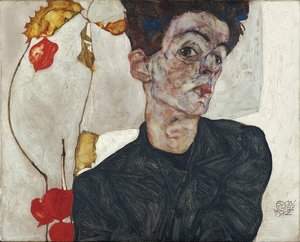
untitled (792) – Egon Schiele
Rozměry reprodukce
Egon Schiele's untitled (792) is not merely a painting; it’s a visceral outpouring of emotion, a raw and unflinching exploration of the human condition rendered in swirling lines and unsettling color. The work depicts a solitary female figure, dramatically posed with arms raised – an ambiguous gesture that can be interpreted as supplication, ecstasy, or even despair. Her body, painted in a striking shade of yellow, dominates the canvas, its form both vulnerable and defiant. This isn’t a celebration of the nude in the classical sense; rather, it's a psychological portrait, a window into an interior landscape fraught with tension and longing. The presence of two figures in the background, seemingly detached observers or perhaps participants in her emotional turmoil, adds to the painting’s enigmatic quality.
Schiele was a pivotal figure in Austrian Expressionism, a movement that sought to convey subjective emotion and experience rather than objective reality. untitled (792) exemplifies this approach through its distorted forms, jarring color palette, and energetic brushwork. The artist eschews traditional notions of beauty and anatomical accuracy, prioritizing instead the conveyance of inner turmoil. His lines are often jagged and angular, creating a sense of unease and instability. The yellow hue enveloping the figure is particularly significant; it can be seen as representing illness, decay, or perhaps even a feverish intensity of feeling – all themes frequently explored in Schiele’s oeuvre. He wasn’t interested in replicating what he *saw*, but rather translating what he *felt* onto the canvas. This painting isn’t about precise representation; it’s about emotional resonance.
To understand Schiele’s work, one must consider the context of his tragically short life (1890-1918). Born into a world grappling with societal upheaval and personal loss – including the early death of his father to syphilis and a complex upbringing under the control of an uncle – Schiele channeled his experiences into art. His work often reflects themes of sexuality, mortality, and alienation. He was deeply influenced by Gustav Klimt, who served as a mentor, but quickly surpassed his teacher in terms of radical experimentation and emotional intensity. Schiele’s willingness to confront taboo subjects and depict the human body with such unflinching honesty led to controversy during his lifetime; he even faced obscenity charges for his work. Yet, this very boldness is what continues to captivate audiences today.
The raised arms in untitled (792) are a powerful symbol open to multiple interpretations. They could represent a reaching out for salvation, a desperate plea for connection, or even an expression of liberation. The figure’s nakedness isn’t simply about physical exposure; it symbolizes vulnerability and emotional rawness. The painting doesn’t offer easy answers or comforting resolutions. Instead, it invites the viewer to confront their own anxieties and desires. It is a work that lingers in the mind long after viewing, prompting introspection and challenging conventional notions of beauty and representation. The overall effect is profoundly moving – a testament to Schiele's ability to translate the complexities of the human psyche onto canvas.
Schiele’s oeuvre is marked by a preoccupation with themes of sexuality, mortality and alienation. He was deeply influenced by Gustav Klimt, who served as a mentor, but quickly surpassed his teacher in terms of radical experimentation and emotional intensity.
Schiele's willingness to confront taboo subjects and depict the human body with such unflinching honesty led to controversy during his lifetime; he even faced obscenity charges for his work. Yet, this very boldness is what continues to captivate audiences today.
1890 - 1918 , Rakousko

Dive into the raw, visceral world of Figurative Expressionism. Explore how icons like Schiele and Bacon use bold textures and intense human forms to redefine modern aesthetics. Discover high-impact art that brings unapologetic energy and emotional depth to your contemporary space.


Buďte na tahu s nejnovějšími novinkami ze světa umění, exkluzivními nabídkami a inspirativními nápady na dekoraci.
Sdělte nám více o svém projektu a naši odborníci na umění vám připraví 3 personalizované návrhy uměleckých děl.
Nechť pro vás vybereme 3 možnosti – zdarma!


 Náhled
 Sdílet
 Sdílet
 Podrobnosti o díle

 Stáhnout
 Podobné položky
 Rentgenové snímky
 Slideshow
 Zobrazit více







 Skleněná varianta je dostupná pouze u rozměrů menších než 110 cm


