

Giclée nebo plátěný tisk muzeální kvality s rychlou výrobou a flexibilními možnostmi povrchové úpravy. ( Koupit ručně malovaný obraz Koupit obrázek)





























Vyberte si z našich přednastavených velikostí, které odpovídají původním proporcím díla.

Můžete zadat vlastní rozměry tak, aby výtvor odpovídal konkrétnímu rámu nebo prostoru. Pokud zvolená velikost nebude odpovídat poměru stran původního obrazu, dílo buď ořížeme, nebo obraz rozšíříme pomocí zrcadlového efektu či jednobarevného okraje. Před zahájením výroby vám bude zaslán digitální náhled k schválení.
Mějte prosím na paměti, že náhled na obrazovce neodráží skutečné oříznutí nebo rozšíření. Pouze digitální náhled přesně zobrazí finální kompozici.
Ačkoliv jsou k dispozici i vlastní rozměry, pro zachování původních proporcí doporučujeme vybrat si rozměr z předdefinovaného seznamu.
Celosvětové doručení () do 2 týdnů namísto standardních 4/5 týdnů. (16 srpen)


Kostka
Rozměry reprodukce
The artwork “Bone” by Dutch designer Joris Hendricus Laarman isn't merely a chair; it’s a manifesto of innovation—a testament to the transformative potential of merging scientific research with artistic vision. Far from adhering to the minimalist aesthetic typically associated with contemporary design, Laarman’s creation deliberately challenges conventions, drawing inspiration from the structural growth patterns of bones and trees.
Laarman's design prioritizes efficiency and material conservation, stripping away superfluous ornamentation to reveal a strikingly organic skeleton. This isn’t simply about mimicking bone structure; it’s about embodying its fundamental principles—strength derived from minimal mass and structural integrity achieved through strategic reinforcement.
While acknowledging influences from Art Nouveau’s celebration of flowing lines and organic forms—a stylistic movement that flourished in the early 1900s—Laarman firmly establishes “Bone” within the context of the twenty-first century. The chair's aesthetic isn’t a nostalgic homage to the past; it’s an assertive reimagining of design principles, demonstrating how scientific advancements can inspire artistic expression.
“It’s about challenging the geometric aesthetic usually associated with minimalist design,” Laarman explains. “We wanted to explore how we could use algorithms—inspired by evolutionary processes—to generate shapes that are both beautiful and incredibly efficient.”The chair’s skeletal form evokes a powerful symbolism—representing fragility alongside unwavering strength, mirroring the resilience inherent in natural structures. Simultaneously, it embodies the spirit of innovation—a commitment to embracing new technologies while honoring timeless artistic ideals. “Bone” isn't just furniture; it’s an emblem of how creativity can flourish at the intersection of science and art.

1979 - , Netherlands

Prozkoumejte sílu černé, bílé a šedé v moderním interiéru! Odborný průvodce abstraktním uměním, psychologií barev a inspirace od mistrů jako Richter a Rothko. Vytvořte sofistikovaný prostor s BuyPopArt.

Explore the exquisite world of Georges Barbier, a leading Art Nouveau illustrator celebrated for his opulent fashion designs & masterful pochoir technique. Discover his legacy and find collectible art at BuyPopArt.
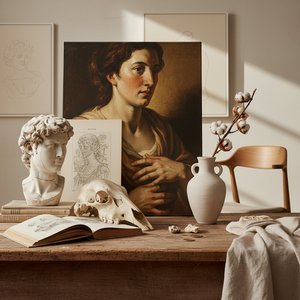
Prozkoumejte 10 slavných obrazů v kostěných tónech od Van Gogha, Rembrandta a dalších mistrů. Objevte příběhy umění, techniky a inspiraci pro váš interiér s reprodukcemi nejvyšší kvality na BuyPopArt.com.

Discover the profound psychological impact of minimalist Color Field paintings for luxury villas. Explore Rothko & curated art reproductions with BuyPopArt.com – expert guidance, museum-quality prints, and investment advice.

Objevte 10 ikonických děl secese od Muchy, Klimta a dalších. Ponořte se do příběhů umění, technik a barev tohoto fascinujícího hnutí. Reprodukce obrazů v muzeální kvalitě na BuyPopArt.com! Prozkoumejte celou kolekci online.


Buďte na tahu s nejnovějšími novinkami ze světa umění, exkluzivními nabídkami a inspirativními nápady na dekoraci.
Sdělte nám více o svém projektu a naši odborníci na umění vám připraví 3 personalizované návrhy uměleckých děl.
Nechť pro vás vybereme 3 možnosti – zdarma!


 Náhled
 Sdílet
 Sdílet
 Podrobnosti o díle

 Stáhnout
 Podobné položky
 Rentgenové snímky
 Slideshow

 Zobrazit více







 Skleněná varianta je dostupná pouze u rozměrů menších než 110 cm


