EngravingRenaissance
 1523Renaissance
 118.0 x 75.0 cm
 Metropolitan Museum of Art
Håndmalet olie på lærred i din valgte størrelse og ramme, udført efter bestilling af vores kunstnere. ( Skift til print Skift til billede)





























Vælg mellem vores forudindstillede størrelser, der matcher kunstværkets originale proportioner.

Du kan indtaste dine egne mål for at passe til en bestemt ramme eller plads. Hvis den valgte størrelse ikke stemmer overens med det originale billedes proportioner, vil vi enten beskære kunstværket eller udvide maleriet med yderligere håndmalede elementer. En digital skitse sendes til din godkendelse, før produktionen påbegyndes.
Bemærk venligst, at forhåndsvisningen på skærmen ikke afspejler den faktiske beskæring eller udvidelse. Kun skitsen vil nøjagtigt vise den endelige komposition.
Selvom specialmål er mulige, anbefaler vi at vælge en dimension fra den foruddefinerede liste for at bevare de originale proportioner.
Levering i hele verden () på 3/4 uger i stedet for de standard 5 uger. (5 august). Ingen kompromiser med kvaliteten.


St Simon
Størrelse på reproduktion
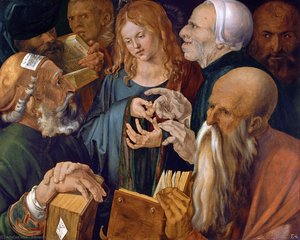
In the quiet, meticulous world of the German Renaissance, few hands could command the copper plate with as much spiritual authority as Albrecht Dürer. His 1523 engraving, Saint Simon, is not merely a portrait of an apostle; it is a profound meditation on the weight of faith and the dignity of the human spirit. As one gazes upon this monochrome masterpiece, the viewer is immediately transported to an era where every line etched into paper served as a vessel for divine narrative. The figure of Saint Simon emerges from the starkness of the medium with a palpable presence, his weathered features and steady gaze inviting a moment of silent contemplation. This work transcends its historical boundaries, offering a timeless window into the soul of a man caught between the earthly struggle and heavenly promise.
The technical brilliance of this engraving lies in Dürer’s unparalleled mastery of hatching and cross-hatching. Without the luxury of color, the artist relies entirely on the density and direction of fine lines to sculpt form from emptiness. Through these delicate, rhythmic strokes, he achieves a remarkable tonal gradation that breathes life into the subject's heavy, draped robes and the rugged texture of his skin. The interplay of light and shadow creates a sculptural volume, making the figure appear almost three-dimensional against the paper. This meticulous craftsmanship does more than showcase technical prowess; it builds a sense of physical weight and gravity, mirroring the solemnity of the saint’s character. For the discerning collector or interior designer, such detail provides an anchor of sophistication, offering a texture that commands attention in any curated space.
Beyond its aesthetic splendor, Saint Simon is rich with the symbolic language of the sixteenth century. The presence of the sword held by the saint serves as a potent emblem of divine judgment and the protective strength required of a spiritual leader. It is a sharp, decisive element that cuts through the softness of the drapery, reminding the observer of the trials faced by the early apostles. The heavy folds of his garments are not merely decorative; they signify holiness, stability, and the venerable status of a man dedicated to a higher calling. Dürer weaves these elements together to reflect the broader humanist concerns of his time—exploring the intersection of individual morality and religious duty during the turbulent years of the Reformation.
The emotional resonance of the piece is found in its quiet strength and a subtle, underlying melancholy. There is a dignity in the saint's aged appearance, a sense of a life lived through persecution and unwavering belief. This emotional depth makes the artwork particularly compelling for those seeking to infuse their environments with character and intellectual depth. Whether displayed as a focal point in a classical study or as a nuanced accent in a modern gallery-style room, this reproduction of Dürer’s work brings with it an aura of historical significance and contemplative peace. It is an invitation to slow down, to look closer, and to find beauty in the precision of a single, perfectly placed line.
Dürer’s indflydelse resonerer gennem århundredernes kunsthistorie. Hans præcise realisme, hans innovative brug af trykkunst og hans teoretiske skrifter inspirerer stadig kunstnere og forskere i dag.

1471 - 1528 , Tyskland

Explore the artistic innovation of the German Renaissance! Discover Dürer, the Danube School & Reformation art. Learn about techniques, materials & lasting influence. Find museum-quality reproductions at BuyPopArt.

Explore the life & art of Albrecht Dürer, a pivotal German Renaissance master. Discover his groundbreaking printmaking techniques, iconic self-portraits, and lasting influence on Western art history. A deep dive into innovation & symbolism.

Harmoniser din boligindretning med historiske kunststile! Få ekspertråd om farvepsykologi, belysning & valg af malerier. Skab et unikt og balanceret hjem – læs vores guide nu!

Få ekspertråd til at vælge den perfekte kunststil til dit hjem! Lær om farvepsykologi, populære stilarter og find inspiration hos – din partner i smuk indretning.

Oplev mannerismens elegance! Udforsk de 10 mest ikoniske kunstværker fra Pontormo, El Greco & Rosso Fiorentino. Find inspiration til din indretning og køb museumskvalitets reproduktioner på BuyPopArt.com.


Hold dig opdateret med de seneste kunstnyheder, eksklusive tilbud og indretningsideer.
Fortæl os om dit projekt, og vores kunsteksperter vil give dig 3 personlige kunstforslag.
Vi kuraterer 3 valgmuligheder kun til dig – Gratis!


 Se i fuld skala
 Del
Del Del
Del
 Detaljer

 Download
 Lignende værker
 Røntgenundersøgelse
 Diasshow
 Se mere







 Glasmulighed er kun tilgængelig i størrelser under 110 cm