Bestil maleri Bestil maleriKøb højopløseligt billede Køb højopløseligt billede DelDel
DetaljerDetaljer Tilføj til favoritter Tilføj til favoritter DownloadDownload Lignende værkerLignende værker RøntgenundersøgelseRøntgenundersøgelse DiasshowDiasshow

Dots

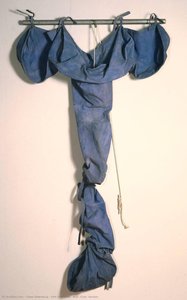
  • Dimensioner20.0 x 42.0 cm

Bernar Venet (b. 1941) is a French conceptual artist renowned for minimalist sculptures, 'Arcs,' & 'Indeterminate Lines.' Pioneering art that explores form, space, and the history of sculpture internationally. Exhibited globally; Chevalier de La Legi

Giclée / Kunsttryk

Giclée- eller lærredstryk i museumskvalitet med hurtig produktion og fleksible muligheder for finish.

Standard
custom
CM
INCH

Vælg mellem vores forudindstillede størrelser, der matcher kunstværkets originale proportioner.

bredde
højde

Du kan indtaste dine egne mål for at passe til en specifik ramme eller et bestemt område. Hvis den valgte størrelse ikke stemmer overens med det originale billedes proportioner, vil vi enten beskære kunstværket eller udvide billedet med en spejlet eller ensfarvet kant. En digital mockup vil blive sendt til din godkendelse, før produktionen påbegyndes.
Bemærk venligst, at forhåndsvisningen på skærmen ikke afspejler den faktiske beskæring eller udvidelse. Kun mockuppen vil nøjagtigt vise den endelige komposition.
Selvom specialmål er tilgængelige, anbefaler vi at vælge et mål fra den foruddefinerede liste for at bevare de originale proportioner.

Verdensomspændende levering () på 2 uger i stedet for de sædvanlige 4/5 uger. (20 juli)

why_choose_icon
Gratis ekspresforsendelse til hele verden
why_choose_icon
Lærred af linned i høj kvalitet
why_choose_icon
Fuld transportforsikring
why_choose_icon
Garanti for refusion af told og importafgifter
why_choose_icon
Garanti for præcis farvegengivelse
why_choose_icon
60 dages returret (kun ved fabrikationsfejl)
why_choose_icon
100% Tilfredshedsgaranti
why_choose_icon
Mængderabat tilgængelig

Samlet pris

-

reproduction

Dots

Giclée / Kunsttryk

Størrelse på reproduktion

-

Samlet pris

-


Kunstnerens biografi

Robert Delaunay: A Pioneer of Color and Rhythm

Robert Delaunay, born Robert-Victor-Felix Delaunay on April 12th, 1885, in the bustling heart of Paris, was a pivotal figure in the evolution of modern art. His life, marked by both artistic innovation and personal transformation alongside his wife Sonia Delaunay, ultimately shaped the vibrant world of Orphism and significantly influenced subsequent generations of artists. Initially apprenticed to a theatrical designer, Delaunay’s early career focused on decorative arts, but it was a growing dissatisfaction with conventional forms that propelled him toward a radical exploration of color and abstraction – a journey he undertook with an unwavering belief in the inherent power of visual sensation. His artistic trajectory is inextricably linked to the vibrant energy of Paris during the early 20th century, a period characterized by intellectual ferment and groundbreaking experimentation across various disciplines.

Early Influences and the Rise of Neo-Impressionism

Delaunay’s formative years were deeply impacted by the artistic currents swirling around him. He began his artistic pursuits influenced by Neo-Impressionism, a movement characterized by its meticulous application of small dots of pure color to recreate the effects of light and atmosphere. This technique, championed by figures like Paul Signac, provided a foundation for Delaunay’s later explorations of color theory. However, he quickly recognized the limitations of this approach, finding it too reliant on imitation and lacking in expressive potential. His time spent studying the works of Vincent van Gogh, particularly his bold use of color and emotional intensity, proved to be another crucial influence. The desire to capture not just visual reality but also the subjective experience of seeing fueled his artistic experimentation.

The Birth of Orphism: A Celebration of Color

Around 1912, Delaunay embarked on a radical departure from traditional representation, driven by a profound conviction that color itself possessed an independent existence and could be used to create powerful visual effects. This period marked the genesis of Orphism – a term coined by Apollinaire – which sought to liberate color from its subservient role in depicting objects. Delaunay’s paintings during this time were characterized by their dynamic compositions, bold geometric shapes, and an almost ecstatic celebration of pure color. He moved away from representational imagery, focusing instead on the interplay of hues, rhythms, and spatial relationships. His canvases became fields of vibrant energy, pulsating with a sense of movement and joy. Influenced by theories of light and color developed by scientists like Michel Eugène Chevreul, Delaunay believed that colors could be combined to create new sensations and evoke specific emotional responses.

Collaboration with Sonia Delaunay and the Development of Abstract Forms

The partnership with his wife, Sonia (née Tatiana Rozanova), proved to be a cornerstone of Delaunay’s artistic development. Together, they established a shared studio and explored new avenues of creative expression. Sonia's contributions were crucial in pushing the boundaries of color theory and geometric abstraction. Initially, she focused on textile design, but her innovative use of color and pattern profoundly influenced Robert’s paintings. As the years progressed, their collaboration evolved into a deeply intertwined artistic dialogue, resulting in works that seamlessly blended abstract forms with vibrant colors. They began to experiment with relief painting, creating textured surfaces that added another dimension to their compositions.

Later Works and Legacy

In the 1930s, Delaunay’s style underwent a subtle shift, moving towards more structured and geometric abstractions. He continued to work with large-scale panels, often incorporating circular discs and rhythmic patterns. His later works, particularly those created during his time in Spain and Portugal, demonstrate a refined mastery of color and composition. Despite facing challenges during World War II, including the loss of his studio and many of his paintings, Delaunay’s influence on 20th-century art remains undeniable. He is considered a key figure in the development of Cubism, Orphism, and Abstract Art, paving the way for countless artists to explore the expressive potential of color and form. His legacy endures through his groundbreaking theories about color perception and his vibrant, emotionally charged paintings that continue to captivate viewers today. Robert Delaunay died on October 25th, 1941, leaving behind a body of work that remains a testament to his revolutionary vision.

Kort om kunstneren

  • Artistic Movement Or Style:
    • Divisionism
    • Cubism
    • Orphism
    • Abstract art
  • Artists Or Movements Influenced By This Artist:
    • Stanton-Wright
    • Morgan Russell
    • Patrick Bruce
    • Der Blaue Reiter
    • Macke
    • Marc
    • Klee
    • Benton
    • Feininger
    • Apollinaire
  • Artists Who Influenced This Artist:
    • Neoimpressionism
    • Cézanne
  • Date Of Birth: April 12, 1885
  • Date Of Death: October 25, 1941
  • Full Name: Robert Delaunay
  • Nationality: French
  • Notable Artworks:
    • Endless Rhythm
    • Cubism
    • Orphic Cubism
    • Simultanism
  • Place Of Birth: Paris, France