

Giclée- eller lærredstryk i museumskvalitet med hurtig produktion og fleksible muligheder for finish. ( Køb håndlavet maleri Køb billede)





























Vælg mellem vores forudindstillede størrelser, der matcher kunstværkets originale proportioner.

Du kan indtaste dine egne mål for at passe til en specifik ramme eller et bestemt område. Hvis den valgte størrelse ikke stemmer overens med det originale billedes proportioner, vil vi enten beskære kunstværket eller udvide billedet med en spejlet eller ensfarvet kant. En digital mockup vil blive sendt til din godkendelse, før produktionen påbegyndes.
Bemærk venligst, at forhåndsvisningen på skærmen ikke afspejler den faktiske beskæring eller udvidelse. Kun mockuppen vil nøjagtigt vise den endelige komposition.
Selvom specialmål er tilgængelige, anbefaler vi at vælge et mål fra den foruddefinerede liste for at bevare de originale proportioner.
Verdensomspændende levering () på 2 uger i stedet for de sædvanlige 4/5 uger. (21 august)


Landscape1
Størrelse på reproduktion
To step into the world of Fernand Léger is to abandon the delicate shadows of the past and embrace a reality that pulses with the rhythmic, metallic hum of a city in motion. His masterpiece, Landscape1, serves as a profound gateway into this vibrant universe. Painted during the transformative decades between 1920 and 1930, this enigmatic canvas transcends mere depiction to embody the very essence of the industrial revolution. It is not simply a view of an outdoor setting; it is a carefully engineered visual experience that celebrates the strength, geometry, and unapologetic beauty of the machine age.
At first glance, the composition presents a deceptively simple arrangement of objects—bottles scattered across the plane, a tree trunk rendered as a bold vertical line, and a prominent vase anchoring the right side of the frame. Yet, beneath this apparent austerity lies a complex tapestry of innovation. Léger, a pioneer of geometric abstraction, eschewed traditional representational methods in favor of exploring fundamental shapes. Through his unique lens, circles, squares, and triangles become the building blocks of a new visual language, creating a flattened perspective that rejects illusionistic depth to emphasize compositional clarity and structural integrity.
The technique employed in Landscape1 is nothing short of visceral. Léger utilizes bold, contrasting colors—primarily striking reds, yellows, and blues—applied with thick, impasto strokes that lend a palpable texture to the artwork’s surface. This physicality allows the painting to command attention, making it an ideal centerpiece for those seeking to inject energy into a sophisticated interior. The way the light interacts with the heavy paint creates a sense of movement, as if the objects themselves are vibrating with the kinetic energy of a modernizing world.
This approach aligns Léger with the movements of Cubism and Constructivism, yet he forged a path entirely his own. While contemporaries like Picasso were often preoccupied with the fragmentation of space, Léger sought to rebuild the world through a lens of volume and robust presence. His style, sometimes referred to as "tubism," celebrates the cylinder and the solid form, mirroring the architectural precision of the era's technological advancements. For the collector or interior designer, this piece offers a perfect balance of avant-garde intellect and aesthetic boldness.
The historical context of Landscape1 adds a layer of profound emotional resonance to its geometric beauty. Emerging from the devastation of World War I, Léger responded to the era's societal upheaval not with melancholy, but with an optimistic assertion of form. He believed that abstraction could capture the dynamism and progress of the modern age without sacrificing beauty. The painting acts as a bridge between the tranquil, rural landscapes of his youth in Normandy and the roaring, high-voltage atmosphere of the Parisian avant-garde.
For those looking to adorn a space with a high-quality reproduction, Landscape1 offers more than just decoration; it offers an invitation to contemplate the intersection of humanity and industry. It is a piece that inspires conversation, inviting viewers to find harmony in the mechanical and grace in the abstract. Whether placed in a minimalist contemporary gallery or a richly textured study, this work remains a timeless declaration of the beauty found within the structured, vibrant rhythm of modern life.
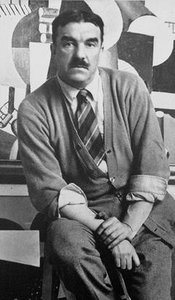
1881 - 1955 , Frankrig

Discover the power of Neo-Abstract art. Explore how bold geometric forms and high-impact visual energy are redefining modern design. Learn to curate sophisticated, high-energy spaces with the latest trends in contemporary abstraction and structural color.

Discover the high-impact world of Geometric Abstraction. From Cubist roots to modern urban trends, explore how bold shapes and colors redefine contemporary design. Elevate your space with expert art insights and custom-made abstract masterpieces.


Hold dig opdateret med de seneste kunstnyheder, eksklusive tilbud og indretningsideer.
Fortæl os om dit projekt, og vores kunsteksperter vil give dig 3 personlige kunstforslag.
Vi kuraterer 3 valgmuligheder kun til dig – Gratis!


 Se i fuld skala
 Del
Del Del
Del
 Detaljer

 Download
 Lignende værker
 Røntgenundersøgelse
 Diasshow

 Se mere







 Glasmulighed er kun tilgængelig i størrelser under 110 cm


